What Type of Steel Do I Need for Global Sourcing?

Choosing the right steel for global sourcing starts with the application, not the supplier’s catalog. If you need steel for a bridge component, food-processing frame, warehouse beam, or precision shaft, each use demands different performance. Strength, corrosion resistance, weldability, hardness, and temperature exposure can change the correct grade. A low-carbon structural steel may suit an indoor frame, while stainless steel may better protect equipment near saltwater. The cheapest option can become expensive after coating, repairs, or early replacement.

Experienced buyers examine more than a grade number. They compare ASTM, EN, JIS, or other applicable standards, then confirm chemical limits and mechanical properties. Mill test certificates should show heat numbers, yield strength, tensile strength, elongation, and inspection results. Traceability matters. A stamped plate and a complete test record should match. Independent inspection can also verify thickness, surface condition, dimensions, and packing before shipment. I have seen purchasing plans fail because the buyer trusted a familiar grade without checking regional standards. That assumption is risky.

Supplier capability deserves equal attention. Ask whether the mill has produced similar products, controlled batch consistency, and handled export packaging. Clarify tolerances, minimum order quantities, lead times, and documentation before signing. Small details matter. A few millimeters of thickness loss can affect fabrication and safety. This guide will help you connect steel selection with real operating conditions, dependable verification, and total landed cost. Some choices remain uncertain until samples, drawings, and service data are reviewed. That is not a weakness; it is responsible sourcing.
What Type of Steel Do I Need for Global Sourcing?

Define Loads and Service Conditions: A36 and S275 Start at 250–275 MPa

What Type of Steel Do I Need for Global Sourcing?

Steel selection should begin with loads and service conditions, not a familiar grade name. A36 and S275 typically start near 250–275 MPa yield strength, depending on the applicable standard and product thickness. These values are starting points, not complete design answers.

A forklift frame may face repeated impacts, while an indoor support may carry a steady load. The difference matters. Check bending, tension, buckling, fatigue, and connection forces. Also record operating temperature, moisture, salt exposure, and expected service life. A neat spreadsheet is not proof of safe selection.

Tips:

Ask for the exact standard, thickness range, heat number, and inspection documents. Compare yield strength, tensile strength, elongation, and impact requirements. Confirm that the supplier can provide traceable mill certificates. Small wording differences can create large procurement risks.

For outdoor platforms, corrosion protection may influence the specification more than a small strength increase. For welded assemblies, review carbon equivalent and the proposed welding procedure. Low temperatures can reduce toughness, even when strength looks adequate.

Do not assume A36 and S275 are automatically interchangeable. Their chemistry, testing rules, and delivery conditions may differ. An experienced engineer should verify the design loads and approve the final grade.

I have seen projects focus heavily on price, then discover that plate thickness, weld access, or local testing requirements changed the real cost. That mistake is avoidable, but only when the service conditions are written clearly before quotations arrive.
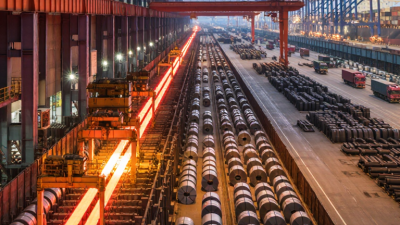
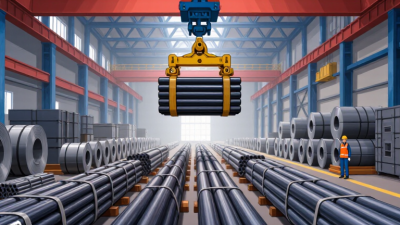
Choose Carbon, Alloy, Stainless, or Tool Steel by ASTM and EN Grade

What Type of Steel Do I Need for Global Sourcing?

Global steel demand remains enormous. The World Steel Association reported about 1.89 billion tonnes of crude steel production in 2023. That scale creates choice, but also confusion. ASTM and EN grades are not always direct equivalents.

For general structures, ASTM A36 offers a familiar baseline, while EN 10025 S275 or S355 may suit European specifications. S355 provides higher nominal yield strength than S275, but weldability and thickness still matter.

Do not approve a cross-reference by name alone. Check chemistry, yield strength, tensile strength, impact testing, and delivery condition. A mill certificate should show the heat number and test results.

Carbon steel is practical for frames and brackets. Alloy steel, such as ASTM AISI 4140, fits shafts requiring higher strength after heat treatment. Stainless steel, including ASTM A240 Type 304 or EN 1.4301, resists many atmospheric and food-processing environments. Chlorides can still cause pitting.

Tool steel needs a different question: Will the tool face wear, shock, or heat? Grades such as D2, H13, and their EN counterparts should be selected by service temperature and hardness targets.

The details matter.

ASTM and EN documents define test methods differently in some cases. “Equivalent” can be an unsafe shortcut. Request third-party inspection when volume or risk justifies it.

The USGS Mineral Commodity Summaries 2024 also shows how concentrated raw-material supply can affect price and lead time. I would challenge my own first choice: the cheapest grade may cost more after machining, coating, or failed weld repairs.

Specify Corrosion Resistance: 304 Uses ~18% Cr; 316 Adds 2–3% Mo

What Type of Steel Do I Need for Global Sourcing?

Specify Corrosion Resistance: 304 Uses ~18% Cr; 316 Adds 2–3% Mo

Choosing stainless steel starts with the environment, not the supplier’s lowest quote. Grade 304 typically contains about 18% chromium, creating a protective passive layer. It suits kitchens, indoor equipment, and many mild industrial settings. Grade 316 adds approximately 2–3% molybdenum, improving resistance to chlorides and pitting. Coastal air, saltwater spray, and chemical exposure can justify the upgrade. The correct choice still depends on temperature, cleaning chemicals, and service life.

Tips: Request the full chemical composition, heat number, and test certificate. Check chromium and molybdenum percentages against the purchase specification. Ask for corrosion testing when the application is severe. Small wording differences can create costly disputes.

During sourcing, define surface finish, thickness tolerance, welding requirements, and inspection standards before requesting prices. A polished surface may reduce contamination, but it does not replace suitable alloy selection. I once treated “corrosion resistant” as a complete specification. That shortcut was wrong. Local water quality and storage conditions changed the actual risk. Review samples after fabrication, especially around welds, corners, and drilled holes. 316 can perform better there, but poor cleaning or iron contamination may still cause staining. Supplier documentation supports confidence, yet independent verification remains valuable for critical components.

Check Global Compliance: EN 10204 3.1 Certificates and ISO 9001 QA

What Type of Steel Do I Need for Global Sourcing?

Global steel sourcing starts with the specification, but compliance protects the purchase. Request an EN 10204 3.1 certificate for each material batch. It should identify the steel grade, heat number, dimensions, delivery condition, and applicable standard. The chemical analysis and mechanical test results must match the ordered specification. Check values such as carbon content, yield strength, tensile strength, and elongation carefully.

A 3.1 certificate is not just paperwork. Its heat number should connect the certificate to the markings, packing list, and physical material. Ask for clear scans before shipment, not after a dispute. ISO 9001 certification supports the supplier’s quality management process, but it does not replace product testing or a 3.1 certificate. That distinction is often missed. A polished document can still contain mismatched numbers or incomplete traceability. Review details twice.

Tips: Compare the certificate with your purchase order line by line. Confirm the issuing manufacturer, test standard, inspection date, and authorized approval. Ask whether samples were tested from the same heat. Consider independent inspection for critical parts or unfamiliar suppliers. Keep photos of markings and packaging. Small records matter.

Do not accept vague statements like “mill tested.” Specify the certificate type, inspection requirements, and document language in your contract. Requirements can differ across countries and industries, so verify current rules with a qualified local inspector. Some specifications need extra testing, such as impact performance, corrosion resistance, or ultrasonic examination. I would not assume standard compliance without written evidence.

What Type of Steel Do I Need for Global Sourcing? - Check Global Compliance: EN 10204 3.1 Certificates and ISO 9001 QA

Steel type / grade Relevant standard Typical characteristics Common sourcing applications Key selection factors EN 10204 3.1 certificate checks ISO 9001 quality-assurance checks
S235JR
Non-alloy structural steel
EN 10025-2 General-purpose structural steel with a specified minimum yield strength of 235 MPa for thickness up to 16 mm; suitable for ordinary fabrication. Frames, brackets, platforms, supports, base plates and non-critical fabricated structures. Load level, plate or section thickness, weldability, impact requirement and corrosion protection. Confirm heat number, product dimensions, chemical analysis, tensile results, yield strength, elongation and impact-test status where specified. Verify a valid ISO 9001 certificate, certificate scope, document-control process, calibration system and nonconforming-product procedure.
S275JR
Non-alloy structural steel
EN 10025-2 Structural steel with a specified minimum yield strength of 275 MPa for thickness up to 16 mm and good general fabrication performance. Machine bases, welded assemblies, support structures, frames and medium-duty construction components. Strength-to-weight ratio, welding procedure, section thickness, service temperature and required surface condition. Match the certificate grade and delivery condition to the purchase order; trace each item or bundle to its heat number. Check internal inspection records, welding controls, measuring-equipment calibration and corrective-action records.
S355JR / S355J2
Higher-strength structural steel
EN 10025-2 Higher-strength structural steel with a specified minimum yield strength of 355 MPa for thickness up to 16 mm. S355J2 has a lower specified impact-test temperature than S355JR. Heavy-duty frames, cranes, bridges, pressure-support structures and load-bearing fabricated equipment. Design load, thickness, notch toughness, low-temperature service, welding heat input and fatigue requirements. Confirm the exact subgrade, impact-test temperature, test energy, delivery condition and heat-treatment information where applicable. Review production traceability, welding qualification controls, inspection plans, test-laboratory competence and release authorization.
1.4301 / 304
Austenitic stainless steel
EN 10088-1 and applicable product standard Chromium-nickel stainless steel with good corrosion resistance, formability and weldability in many general environments. Food-processing equipment, architectural components, tanks, enclosures, fasteners and general industrial parts. Chloride exposure, temperature, surface finish, forming method, weld sensitization risk and cleaning requirements. Verify chemical composition, solution-annealed or specified delivery condition, mechanical properties, dimensions and surface finish. Check segregation controls, heat-treatment records, surface-inspection procedures, PMI capability and complaint handling.
1.4404 / 316L
Low-carbon austenitic stainless steel
EN 10088-1 and applicable product standard Molybdenum-alloyed, low-carbon stainless steel offering improved resistance to chloride-containing environments compared with common chromium-nickel stainless grades. Chemical-processing equipment, marine-adjacent components, pharmaceutical equipment and welded hygienic assemblies. Chloride concentration, pitting risk, weld condition, surface passivation, temperature and regulatory cleanliness requirements. Confirm molybdenum and carbon content, heat number, corrosion-related test requirements if specified, surface condition and mechanical results. Review material segregation, passivation or cleaning controls, contamination prevention, calibration and final-release records.
1.4016 / 430
Ferritic stainless steel
EN 10088-1 and applicable product standard Chromium stainless steel with useful oxidation and general atmospheric corrosion resistance; normally selected where high nickel-alloy performance is unnecessary. Appliance panels, decorative components, indoor equipment and moderately corrosive service. Indoor or outdoor exposure, forming limits, magnetic response, finish, temperature and chloride environment. Check grade designation, chemical composition, mechanical properties, surface finish, thickness and heat-number traceability. Verify process inspection, finish inspection, dimensional controls, calibration and documented handling of rejected material.
42CrMo4
Quenched-and-tempered alloy steel
EN 10083-3 Chromium-molybdenum alloy steel commonly used for high-strength parts after the specified heat treatment. Shafts, pins, gears, bolts, axles and highly loaded machine components. Required hardness, toughness, section size, fatigue duty, machinability, heat-treatment condition and weldability. Confirm chemical analysis, heat-treatment condition, hardness or tensile results, dimensions, sampling method and heat-number linkage. Review furnace calibration, time-temperature records, hardness mapping, test-equipment calibration and batch-release controls.
Low-carbon steel for general fabrication
Grade must be specified by the applicable standard
Applicable regional or international product standard Economical, formable and generally weldable steel; performance depends strongly on the specified grade, thickness and delivery condition. Cabinets, light brackets, ducts, fabricated frames and non-pressure general-purpose parts. Do not purchase by “mild steel” alone; define standard, grade, thickness, tolerances, finish, coating and mechanical requirements. Ensure the certificate identifies the exact standard and grade rather than only a commercial description; verify chemistry, mechanical results and dimensions. Confirm documented purchasing controls, incoming inspection, material identification, process monitoring and corrective-action effectiveness.
Global compliance note: An EN 10204 3.1 inspection certificate is product-specific evidence of conformity to the applicable order and material requirements. It should identify the manufacturer, product, quantity, heat or batch number, applicable specification, test results and authorized validation. ISO 9001 certification demonstrates that a quality-management system is established; it does not replace material testing, product certification or regulatory approval. Always verify the current edition of the applicable standard, purchaser specifications, destination-country requirements and any required third-party inspection.

Compare Landed Cost and Supply: 2024 World Steel Output Was 1.88 Gt

What Type of Steel Do I Need for Global Sourcing?

The world produced about 1.88 Gt of crude steel in 2024. That figure matters beyond industry statistics. It shows the scale of available supply, but not equal access to every grade or market. Large output can support competitive pricing, yet regional capacity, production schedules, and export logistics still shape your decision. A steel buyer should compare grade availability, monthly volume, certification, and realistic lead times.

Landed cost gives a clearer view than the mill price alone. Include material cost, inland transport, ocean freight, insurance, duties, port handling, inspection, and financing time. A quote that looks cheaper can lose its advantage after a six-week delay or expensive port storage. Ask for recent production records, test certificates, sample dimensions, and packing photographs. Check whether the supplier can repeat the same chemistry and mechanical performance. Small variations may affect welding, forming, or machining. My own comparison would not rely on one spreadsheet; freight assumptions are often too optimistic.

Tips:

Build three scenarios: normal freight, delayed freight, and emergency replacement. Compare cost per usable ton, not cost per quoted ton. Confirm Incoterms, minimum order quantity, and inspection responsibility in writing. Keep a second qualified source for critical grades. It may cost more initially, but supply resilience can protect production. I would also review the model quarterly, because steel prices, freight rates, and trade rules change quickly.