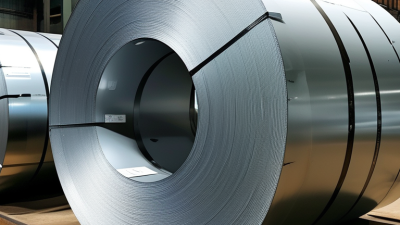
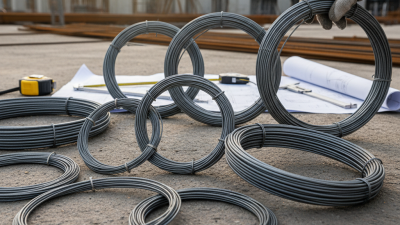
What Is the Best Carbon Steel Supplier in China?

Choosing the best carbon steel supplier in China requires more than comparing a shipment price. It requires evidence.

China remains the world’s largest steelmaking country. The World Steel Association’s World Steel in Figures 2024 reports that China produced about 1,019 million tonnes of crude steel in 2023. That scale creates opportunities, but it also makes supplier selection more complicated. Quality can vary between mills, trading companies, and processing facilities.

A reliable supplier should provide complete mill test certificates, heat numbers, chemical composition, mechanical results, and traceable production records. Buyers should also check grades, dimensions, coating requirements, inspection procedures, and delivery performance. A useful supplier can explain standards such as ASTM, EN, GB, and JIS without hiding behind technical language. Small details matter. A clear certificate, sealed bundle, and readable marking can prevent expensive disputes.

The OECD’s Steel Market Developments reports have repeatedly discussed global steel overcapacity and competitive pressure. This reminds buyers that low prices may reflect market conditions, but they may also conceal risk. As Lakshmi Mittal, Executive Chairman of ArcelorMittal, stated, “Steel is the backbone of modern economies.” The statement is broad, yet relevant to every bridge, warehouse, pipeline, and machine built from carbon steel.

The best supplier is not automatically the largest one. Nor is it always the cheapest. Experience, inspection access, consistent chemistry, export capability, and honest communication deserve greater weight. No shortlist is perfect. Buyers should still verify production claims, audit documents, and test samples before signing a long-term agreement.
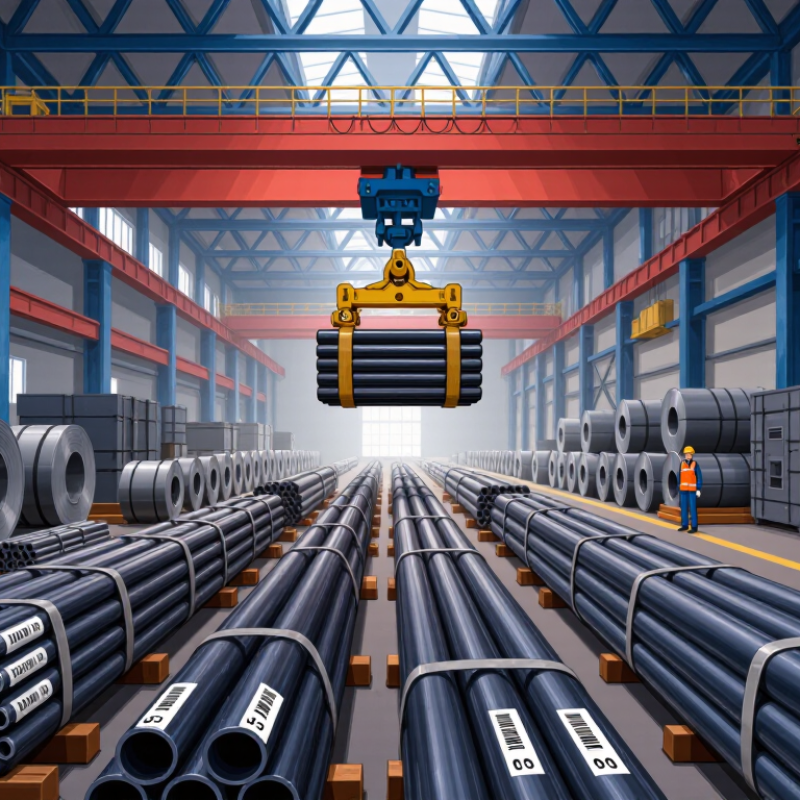
What Is the Best Carbon Steel Supplier in China?

Carbon Steel Defined: Up to 2.11% Carbon and Key Grade Standards

What Is the Best Carbon Steel Supplier in China?

Carbon steel is an iron-based material containing up to 2.11% carbon by weight. Its carbon level affects hardness, strength, weldability, and forming performance. Low-carbon steel is usually easier to weld and shape. Higher-carbon grades can offer greater hardness, but they may crack more easily during fabrication. This balance matters in construction, machinery, pipelines, and pressure equipment.

Grade standards help buyers compare materials accurately. Common systems include ASTM, EN, JIS, and GB standards. For example, ASTM A36 is widely used for structural applications, while ASTM A106 covers seamless carbon steel pipe for elevated-temperature service. These designations are not interchangeable without checking chemical limits, mechanical properties, dimensions, and test requirements. A common mistake is choosing by grade name alone. That approach can create costly mismatches.

Tips:

Ask the supplier for a mill test certificate, heat number, chemical analysis, tensile results, and impact data when required. Confirm whether testing follows the stated standard. Check traceability from raw billet to finished product. Small details matter. A reliable supplier should also explain tolerances, surface condition, packing, and inspection methods clearly. Still, certificates deserve verification; paperwork can look complete while key values remain unclear. The best choice is not always the lowest quotation. It is the supplier that matches the grade, test evidence, production capability, and application risk.

China’s 2023 Crude Steel Output Reached 1.019 Billion Tonnes

What Is the Best Carbon Steel Supplier in China?

China’s 2023 crude steel output reached 1.019 billion tonnes, according to widely reported industry data. This scale matters when evaluating a carbon steel supplier. Large production capacity can support stable availability, varied grades, and flexible order volumes. However, volume is not proof of quality. A reliable supplier should provide mill test certificates, heat numbers, chemical analysis, and mechanical results for every shipment. In practical purchasing, check plate edges, surface marks, thickness tolerance, and packaging before approving repeat orders. Small defects become expensive during cutting and welding. They should not be ignored.

The best supplier is a partner with measurable controls, not merely the largest producer. Ask how raw materials are inspected and how furnaces are monitored. Traceability should connect every bundle to its production record. Independent inspection can strengthen confidence for structural applications.

Delivery performance deserves equal attention. A perfect certificate cannot repair a missed production schedule. Buyers should compare lead times, loading protection, communication, and after-sales response using written records. Some suppliers may reduce inspection depth to offer lower prices. That saving can disappear during fabrication.

In real purchasing, verbal promises often create unclear specifications. Write tolerances, testing standards, dimensions, and acceptance rules into the contract. Any unresolved requirement should be clarified before the deposit is paid.

How to Compare Chinese Suppliers by Capacity, Quality, and Lead Time

Choosing the best carbon steel supplier in China requires more than comparing quoted prices. Capacity, quality, and lead time reveal how reliably a supplier can support your project.

Ask for monthly output by steel grade, thickness, and product form. A large factory may still lack capacity for your exact specification. Request recent production records and inspect whether key processes occur in-house. Production lines, storage areas, and loading schedules can reveal practical capacity better than brochures. I once treated total annual output as sufficient evidence. That was too broad. Product-specific capacity matters more.

Quality checks should cover chemical composition, tensile strength, hardness, dimensions, and surface condition. Request mill certificates linked to heat numbers and actual test results. Independent inspections can verify samples before shipment. Check calibration records for testing equipment and review how the supplier handles nonconforming material. A polished certificate is not enough. Traceability matters. Compare one sample against the material promised in the contract.

Lead time should include production, inspection, packing, port handling, and inland transport. Ask for a written schedule with milestones and realistic buffer days. Review delivery performance from similar orders, not only standard products. Confirm how quickly the supplier responds to specification changes or quality concerns. Delays often begin with unclear drawings or late approvals. A short promise may sound attractive, but a stable schedule is usually more valuable. Test communication with a small trial order before committing to larger volumes.

What Is the Best Carbon Steel Supplier in China? - How to Compare Chinese Suppliers by Capacity, Quality, and Lead Time

Supplier Profile Estimated Monthly Capacity
(Metric Tons)
Typical Product Range Common Standards Material Test Certificate Typical Lead Time Best Fit for Buyers Overall Assessment
Profile A: Large Integrated Mill 50,000–200,000 Hot-rolled coil, plate, structural sections, bars GB/T, ASTM, EN, JIS Usually available with heat number traceability 30–60 days Large infrastructure and repeat orders Best for volume and stable supply
Profile B: Regional Rolling Mill 10,000–50,000 Carbon steel coil, sheet, plate, flat bar GB/T, ASTM, EN, JIS Available; third-party inspection commonly accepted 20–45 days Medium-volume industrial procurement Strong balance of capacity and flexibility
Profile C: Specialized Processing Mill 3,000–15,000 Cut-to-length plate, precision sheet, pickled and oiled coil ASTM, EN, JIS, customer specifications Usually available; detailed inspection records often provided 15–35 days Custom sizes, smaller lots, and value-added processing Best for customization and shorter production runs
Profile D: Trading and Stocking Supplier 1,000–10,000 in stock Standard plate, sheet, pipe, bar, and coil sizes Primarily GB/T; ASTM and EN subject to availability Depends on the original mill and stock batch 7–20 days for stock items Urgent, small-volume, and mixed-size orders Fastest availability but less production control
Profile E: Export-Oriented OEM Supplier 5,000–30,000 Carbon steel plate, coil, fabricated parts, and project orders ASTM, EN, JIS, AS/NZS, customer specifications Usually available with export documentation 25–50 days International buyers requiring documentation and logistics support Best for export compliance and project coordination
Benchmark note: The capacity and lead-time figures are indicative ranges commonly used for supplier screening in China's carbon steel market. Actual performance depends on product grade, thickness, order quantity, production schedule, inspection requirements, port, and shipping method.
Recommended comparison priorities: Confirm monthly capacity, verify heat-number traceability, request recent material test certificates, define acceptable dimensional tolerances, obtain a written production schedule, and compare the total delivered cost rather than the unit price alone.

Verify ISO 9001, GB/T, ASTM Compliance, Mill Test Certificates, and Traceability

Choosing the best carbon steel supplier in China requires evidence, not attractive promises. China produced about 1.005 billion tonnes of crude steel in 2024, according to World Steel Association data. That scale makes supplier verification essential. A serious supplier should provide a current ISO 9001 certificate, issued for the correct facility and scope. The ISO Survey 2022 recorded more than 1.26 million ISO 9001 certificates worldwide, but certification alone does not prove product quality.

Ask for compliance records against the required GB/T or ASTM standard. Check the exact grade, dimensions, heat-treatment condition, and inspection criteria. The mill test certificate should match the purchase order and show heat number, chemical composition, yield strength, tensile strength, elongation, and impact results when applicable. Compare these values with the standard yourself. Small inconsistencies matter.

Traceability must continue from billet or slab to finished coil, plate, pipe, or bar. Request heat-number records, production dates, inspection reports, and packing photographs. Independent testing can confirm disputed results. It is not excessive for critical applications. In practice, paperwork may look complete while the physical markings are unclear. That weakness deserves attention. I would also verify the issuing laboratory, calibration status, and sample identity before accepting a shipment. A supplier that resists these checks may still offer a low price, but the commercial risk is harder to measure.

Select the Best Supplier Through Cost, Export Experience, and Customer Evidence

Choosing the best carbon steel supplier in China requires more than comparing the lowest quotation. My first comparison was too simple. I focused on the price per ton and ignored cutting fees, inland transport, packaging, inspection, and possible delivery delays. A reliable supplier should provide a clear cost sheet, realistic production timing, and stable material specifications. Ask whether the quotation includes mill certificates, surface treatment, loading, and export documentation. Small omissions can change the final cost.

Export experience also deserves close attention. Suppliers with regular international shipments usually understand container loading, moisture protection, customs paperwork, and destination requirements. Request examples of export documents with sensitive details removed. Check whether the supplier can explain steel grades, tolerances, test reports, and batch traceability in practical terms. Vague answers are warning signs. Still, export history alone is not proof of quality. Some records may be outdated.

Tips: Compare landed cost, not unit price. Ask for two recent customer references. Review invoices, inspection reports, loading photos, and delivery records when available. Customer evidence should show repeat orders, consistent dimensions, and responsive after-sales communication. A short video call can reveal more than polished brochures. Visit the factory if the order is substantial, but do not treat one visit as complete proof. Independent inspection remains sensible. Mistakes happen. My own lesson is clear: supplier selection needs several kinds of evidence, not one impressive promise.