How to Choose the Right Steel Bar Stock for Your Needs?

Choosing the right steel bar stock begins with the service environment, not the supplier’s catalog. A shaft exposed to repeated torsion needs different properties from a machined spacer, bearing pin, or welded frame. Diameter, grade, hardness, machinability, corrosion exposure, and heat treatment all matter. Small choices become visible at the cutting table: a bar that machines smoothly, a surface that resists scoring, or a part that bends instead of cracking.

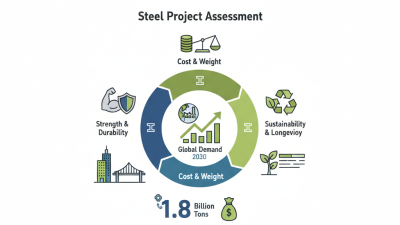
Industry data shows the scale of this decision. The World Steel Association reported approximately 1.88 billion tonnes of crude steel production in 2024, confirming the material’s global importance. The U.S. Geological Survey also identifies steel as a critical manufacturing foundation, although broad production figures do not tell engineers which bar grade to select. That gap requires practical judgment. As metallurgist George Krauss wrote in Steels: Processing, Structure, and Performance, “Steel is not a single material; its performance depends on composition, processing, and service conditions.” His point remains useful. Grade names alone are not enough.

A reliable selection process connects specifications with real operating details. Check the applicable ASTM or EN standard. Confirm the mill certificate. Review tensile strength, yield strength, impact toughness, and dimensional tolerance. Then consider machining waste and delivery availability. This is where decisions become less tidy. The strongest bar may machine poorly. The cheapest bar may create extra finishing work. Even experienced buyers can overlook a hidden cost. The right steel bar stock is therefore the grade that performs safely, consistently, and economically in its actual application—not merely the grade with the most impressive numbers.

How to Choose the Right Steel Bar Stock for Your Needs?

Define the Purpose and Working Conditions of the Steel Bar

How to Choose the Right Steel Bar Stock for Your Needs?

Define the Purpose and Working Conditions of the Steel Bar

Start with the job, not the steel grade. A bar for a machine shaft faces different demands than one used for a bracket or handrail. Write down the expected load, movement, impact, and required service life. A rotating shaft may need high tensile strength and good fatigue resistance. A support pin may require hardness and wear resistance. Small differences matter.

Check the working environment carefully. Will the bar face moisture, salt, chemicals, heat, or outdoor temperature changes? Carbon steel can perform well in dry indoor equipment, but it may need protection in humid areas. Stainless or alloy steel may suit harsher conditions, although higher cost is not always justified. Measure the available space, too. A bar that is strong enough may still fail if its diameter is undersized.

Manufacturing steps also influence the choice. Consider cutting, drilling, welding, threading, bending, and heat treatment before ordering material. Some harder grades resist machining and may increase tool wear. I have seen projects focus on strength while ignoring weldability. That mistake creates delays. Review engineering drawings, applicable material standards, and supplier test certificates. Do not rely on appearance alone. Surface color cannot confirm chemistry, internal quality, or actual mechanical performance. When conditions remain uncertain, test a sample or consult a qualified materials engineer. Safety should not depend on guesswork.

Select the Appropriate Steel Grade and Chemical Composition

How to Choose the Right Steel Bar Stock for Your Needs?

The steel grade should match the part’s working conditions, not just its purchase price. Start with strength, hardness, toughness, corrosion exposure, and fabrication requirements. Carbon content strongly affects strength and weldability. Higher carbon can improve hardness, but it may increase cracking risk during welding. Manganese often supports strength and hardenability. Chromium and nickel can improve corrosion resistance and toughness. Sulfur and phosphorus should remain controlled, especially where impact resistance or welding quality matters.

Check the applicable material standard before ordering. Similar grade names may have different chemical limits under different standards. Request the mill test certificate, heat number, tensile results, and full chemical analysis. Do not rely on a supplier’s short description alone. A bar labeled “high strength” may still machine poorly or fail in a cold environment. The actual application decides whether that trade-off is acceptable.

In shop work, drilling and cutting behavior often reveal problems early. Excessive burrs, tool wear, or unexpected bending can indicate an unsuitable grade or heat treatment. I once underestimated machining needs and focused too heavily on yield strength. The part met the strength target but consumed more production time than expected. That mistake remains useful: review the complete composition, not one impressive number. Small sulfur changes, heat-treatment history, and bar diameter can affect performance. Test a sample when safety, welding, or repeated loading matters.

Choose the Right Bar Shape, Size, and Dimensional Tolerance

How to Choose the Right Steel Bar Stock for Your Needs?

Choose the Right Bar Shape, Size, and Dimensional Tolerance

Choosing steel bar stock starts with the part’s final function, not the material catalog. Round bars suit shafts, pins, and turned components. Square bars provide stable edges for brackets and frames. Flat bars work well for plates, supports, and welded assemblies. Hexagonal bars can reduce machining during fastening operations. I have seen projects lose time because the shape was selected for availability rather than production needs.

Size also affects machining time, weight, and material waste. Specify the closest practical size that leaves enough stock for finishing. Avoid choosing an oversized bar without checking handling and cutting costs. Dimensional tolerance deserves equal attention. A tight tolerance may improve assembly accuracy, but it can raise the purchase price. A loose tolerance may create extra machining work. Check the drawing, expected fit, and measurement method before ordering. Confirm the actual dimensions against inspection records or mill certificates. Paperwork helps, but physical verification still matters.

Tips: Compare the required finished size with the available stock size. Leave a realistic machining allowance. Check straightness, surface condition, and end squareness. Use calibrated tools when dimensions matter. Ask whether the stated tolerance applies across the full bar length. I once treated a tolerance as acceptable without checking its measurement location. That small oversight caused rework. A careful review is cheaper than a second cutting operation.

Compare Strength, Machinability, Corrosion Resistance, and Cost

Choosing steel bar stock starts with the load, machining method, and service environment. Strength is not everything. A rotating shaft needs yield strength, fatigue resistance, dimensional stability, and suitable straightness. ASTM A370 provides recognized mechanical testing methods, but test results still depend on heat treatment and bar condition. A hardened bar may carry higher loads, yet it can consume more cutting tools and require slower machining.

Machinability often changes the real purchase price. Free-machining steel can reduce cycle time and tool wear, but added sulfur may reduce weldability and toughness. I have seen material savings disappear during drilling and deburring. Not always. Ask the supplier for machinability data, hardness, surface condition, and heat-treatment records. Then compare the complete process cost, including scrap, tooling, labor, and finishing.

Corrosion resistance deserves a lifecycle calculation. The NACE IMPACT Study estimated global corrosion costs at approximately $2.5 trillion, or 3.4% of global gross domestic product. A corrosion-resistant alloy may cost more initially, but it can reduce coating, inspection, and replacement expenses. Carbon steel remains practical in controlled indoor environments. Stainless or alloy steel becomes more defensible near moisture, salts, or chemical exposure. The World Steel Association reported about 1.89 billion tonnes of crude steel production in 2023, showing the market’s scale, but volume does not guarantee the right grade. Consider availability and lead time carefully. A cheaper bar is not cheaper when it arrives late or needs rework.

How to Choose the Right Steel Bar Stock for Your Needs?

Comparison of common steel bar materials using normalized 0–100 indexes. Higher scores indicate greater tensile strength, easier machining, better corrosion resistance, or higher relative cost. Values represent typical, non-brand-specific material characteristics and may vary by condition and supplier.

AISI 1018 is economical and easy to machine, AISI 1045 provides higher strength, AISI 4140 offers the strongest performance among these options, and 304 stainless steel provides the best corrosion resistance but usually has the highest cost and lower machinability.

Verify Quality Standards, Supplier Certifications, and Availability

Choosing steel bar stock should begin with verification, not price. Define the required grade, diameter, surface condition, and mechanical properties before contacting suppliers. Check whether the material meets the applicable ASTM, EN, or ISO specification for your project. Standards matter.

Request a current mill test certificate for each heat or batch. It should show chemical composition, tensile strength, yield strength, elongation, and test methods. Match the certificate details with the bar markings and delivery documents. A heat number stamped on the bundle supports traceability. Without that link, quality claims become difficult to prove. Independent inspection can add confidence when the application involves heavy loads, fatigue, or tight tolerances.

Supplier certifications also deserve careful review. Look for a valid quality management certificate, documented inspection procedures, and evidence of calibrated testing equipment. Verify the certificate with the issuing organization when possible. A certificate alone is not proof of consistent performance. I have seen purchasing decisions rely too heavily on paperwork, while packaging damage and poor storage were ignored. That is an easy mistake to repeat.

Availability affects quality planning as well. Confirm in-stock quantities, exact lengths, cutting limits, packaging methods, and realistic lead times. Ask how replacement material will be handled if inspection fails. A lower-cost bar that arrives late can disrupt fabrication and increase labor costs. Record every requirement in the purchase order, including tolerances, certification documents, and delivery conditions. Supplier responses should be specific, not vague.

How to Choose the Right Steel Bar Stock for Your Needs? - Verify Quality Standards, Supplier Certifications, and Availability

Typical Need Recommended Standard or Grade Common Bar Forms Key Mechanical or Physical Data Quality Documents to Request Availability Considerations
General structural fabrication, brackets, frames, and base plates ASTM A36 / A36M Round, square, and flat bar Minimum yield strength: 36 ksi (250 MPa); minimum tensile strength: 58 ksi (400 MPa) Material test report, heat number, chemical composition, tensile results, and dimensional inspection Generally widely stocked in standard sizes; nonstandard thicknesses may require cutting or mill lead time
Reinforced-concrete construction and deformed reinforcement ASTM A615 / A615M Grade 60 Deformed reinforcing bar Minimum yield strength: 60 ksi (420 MPa); minimum tensile strength: 90 ksi (620 MPa) Mill test certificate, bar size and deformation inspection, heat identification, and chemical analysis where required Common construction sizes are usually easier to source; project specifications may require a specific bar size or supplemental seismic requirements
General engineering components requiring higher strength than basic structural steel ASTM A572 / A572M Grade 50 Round, square, flat, and structural bar Minimum yield strength: 50 ksi (345 MPa); minimum tensile strength: 65 ksi (450 MPa) Material test report, grade confirmation, heat number, chemical composition, tensile test, and dimensional report Often available through industrial metal distributors; availability can decrease for small quantities or unusual dimensions
General-purpose stainless components with corrosion resistance ASTM A276 / A276M Type 304 Round, square, hexagonal, and flat bar Austenitic stainless steel; typically selected for corrosion resistance and formability; mechanical properties depend on product condition and size Material test report, chemical composition, corrosion-grade confirmation, heat number, surface-finish details, and dimensional inspection Common sizes and finishes are usually available; bright, precision-ground, or custom bars may require longer lead times
Outdoor, marine, and chloride-exposed components requiring improved corrosion resistance ASTM A276 / A276M Type 316 Round, square, hexagonal, and flat bar Contains molybdenum for improved resistance to many chloride-containing environments compared with Type 304; performance depends on exposure conditions Chemical analysis confirming grade, heat number, material test report, surface condition, and dimensional inspection Usually less readily stocked than Type 304; confirm exact diameter, finish, and minimum order quantity before purchase
European structural applications requiring a higher-strength carbon steel EN 10025-2 S355 Structural round, flat, and square bar Minimum yield strength is 355 MPa for product thicknesses up to 16 mm; the specified value decreases as thickness increases EN 10204 inspection certificate, heat number, chemical composition, tensile results, impact-test requirements where specified, and dimensions Stock is often region-dependent; verify whether the supplied condition is normalized, normalized rolled, or thermomechanically rolled
Wear-resistant parts such as liners, blades, and high-abrasion supports Abrasion-resistant quenched-and-tempered steel; select hardness class according to the design specification Flat bar and cut plate sections Hardness is commonly specified rather than a single universal yield value; welding and forming limits must be checked before fabrication Hardness test results, heat-treatment condition, material test report, heat number, ultrasonic testing if specified, and dimensional report Usually more application-specific and less readily stocked; confirm cut-size tolerance and processing capability
Precision-machined shafts, pins, and wear-resistant machine components Cold-finished carbon or alloy steel bar; specify the applicable product standard and grade Cold-drawn round, turned-and-polished round, and ground round bar Tighter dimensional tolerances and improved surface finish than standard hot-rolled bar; mechanical properties depend on grade and processing condition Material test report, dimensional and straightness report, surface-finish data, heat number, and hardness results when specified Standard diameters may be available from stock; ground or special-tolerance sizes commonly require additional processing time
Applications requiring documented traceability and controlled quality systems Any approved material grade with supplier quality controls aligned to the purchase specification Any required bar form The material must meet the selected standard, dimensions, tolerances, heat-treatment condition, and application-specific acceptance criteria ISO 9001 certificate, valid scope of certification, EN 10204 Type 3.1 certificate, heat traceability, nonconformance procedure, and calibration records where relevant Confirm certificate validity, certificate scope, lot traceability, and whether the supplier can provide replacement documentation after delivery
Selection checklist: Confirm the required grade, bar shape, nominal size, dimensional tolerance, surface condition, heat-treatment state, corrosion or wear environment, welding requirements, minimum order quantity, delivery date, and complete material traceability before placing the order.