Choosing the right stainless steel grades begins with understanding the working environment, not just comparing price tags. A polished sheet may look impressive, yet appearance rarely reveals how it will perform near saltwater, cleaning chemicals, or constant heat. In practical fabrication work, small material choices can affect welding quality, maintenance costs, and service life.
This guide explains how chromium, nickel, molybdenum, and carbon influence stainless steel performance. It compares common grades such as 304, 316, 430, and 2205, while connecting their properties to real applications. A kitchen backsplash, for example, faces different demands than a marine pump or a high-temperature exhaust component. The right choice depends on corrosion exposure, strength, forming requirements, temperature, and budget.
Standards matter.
Reliable selection should be checked against recognized specifications, including ASTM, EN, or ISO documents, supported by current mill certificates and supplier data. Experienced engineers also consider weld procedures, surface finish, thickness, and local maintenance conditions before approving a material. Still, no chart can replace a site-specific assessment. A grade labeled “marine suitable” may perform poorly if crevices trap saltwater or cleaning chemicals remain on the surface.
Some recommendations are not absolute. That is worth remembering. Service conditions can change, and a previously successful grade may become unsuitable after redesign or process changes. By examining chemistry, performance evidence, fabrication experience, and lifecycle cost together, this guide helps readers make a more defensible stainless steel decision.
Stainless steel grades use several classification and numbering systems. The most practical starting point is metallurgical structure: austenitic, ferritic, martensitic, duplex, or precipitation-hardening. Each family balances corrosion resistance, strength, formability, and heat performance differently. Austenitic grades usually suit food equipment and chemical processing. Duplex grades offer higher strength and better chloride resistance. That difference matters.
The three-digit AISI system remains familiar, but it can hide important details. A 300-series grade generally indicates austenitic stainless steel, while many 400-series grades are ferritic or martensitic. The UNS system adds precision. For example, UNS S30400 identifies a widely used 18% chromium and 8% nickel composition. European notation gives another view, such as EN 1.4301 or X5CrNi18-10. These systems are related, but they are not interchangeable in every specification.
According to the World Stainless Association’s 2024 industry statistics, global stainless crude steel production reached about 58.4 million tonnes in 2023. That scale reflects extensive use, not universal suitability. ASTM A240/A240M also shows why thickness, chemistry, and mechanical requirements must be checked together. A grade number alone cannot predict service life. Site experience often reveals overlooked factors, including weld heat tint, stagnant water, and surface contamination. I have found that “corrosion resistant” is an incomplete answer. The environment still decides the outcome. Sodium chloride, temperature, cleaning chemicals, and fabrication quality can change the recommendation.
Choosing stainless steel starts with service conditions, not a familiar grade number. Chromium forms a passive oxide film that protects the surface from many corrosive environments. Nickel generally improves ductility, toughness, and performance at low temperatures. Molybdenum can strengthen resistance to chloride pitting, which matters near seawater, road salt, and cleaning chemicals. At a fabrication site, a sample may look bright while its hidden chemistry decides whether it survives.
Austenitic grades usually offer strong corrosion resistance and easy forming. Ferritic grades provide magnetic behavior, lower nickel content, and useful resistance in moderate environments. Martensitic grades can achieve higher hardness after heat treatment, although their corrosion resistance may be lower. Duplex grades combine strength with good resistance to stress corrosion cracking. Carbon content also deserves attention. Low-carbon versions reduce the risk of weld-related corrosion, but welding procedures still require control. Small details matter.
Temperature, surface finish, weld quality, and exposure time can change the decision. A polished surface sheds contaminants more easily than a rough one. However, polishing cannot repair unsuitable chemistry. Review the material certificate, design temperature, chloride level, and required mechanical properties. Simple tests, such as hardness checks or corrosion screening, can reveal problems before installation. It is tempting to choose the cheapest acceptable grade. That choice sometimes becomes expensive after staining, cracking, or replacement. Engineers should also question incomplete data, because a neat specification can still hide an unrealistic service assumption.
How to Choose the Right Stainless Steel Grades?
How to Match Grades with Corrosion and Temperature Conditions
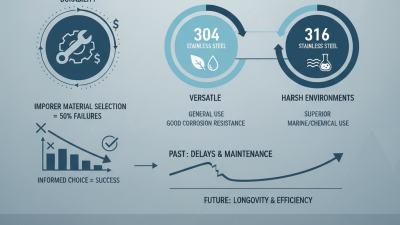
Grade selection should begin with the actual environment, not a familiar material name. Check chloride levels, moisture, acidity, cleaning chemicals, and oxygen exposure. A 304 grade often suits indoor equipment and ordinary atmospheric service. However, coastal air, salt spray, or repeated washdown may require a more resistant option, such as 316. Chlorides can attack stainless steel inside narrow gaps, under deposits, or around poorly finished welds.
Temperature changes the decision. A grade that performs well at room temperature may weaken, oxidize, or distort during repeated heating. For elevated-temperature equipment, engineers may consider heat-resistant grades such as 310S. Stabilized grades, including 321, can help where welding and thermal cycling create sensitization concerns. The correct choice depends on exposure time, load, temperature peaks, and cooling speed. Do not rely on one maximum-temperature number.
Details matter. Field inspections often find corrosion near fasteners, stagnant corners, and rough weld zones rather than on open surfaces. Cleaning procedures also deserve attention. Strong chemicals may create risks that the original design never considered. A grade chart is useful, but it can mislead when it ignores fabrication and maintenance. I have seen suitable grades fail after an unsuitable finish or trapped moisture. Testing a sample under realistic conditions is slower, yet often cheaper than replacing a damaged component.
| Stainless Steel Grade | Typical Composition / Structure | Approx. PREN | Corrosion Conditions Matched | Temperature Guidance | Important Limitations | Common Applications |
|---|---|---|---|---|---|---|
| 304 / 304L | Austenitic stainless steel with approximately 18% chromium and 8% nickel. The low-carbon 304L version improves weldability. | ≈18 | Good resistance to atmospheric corrosion, many organic chemicals, food-processing environments, and freshwater. | Oxidation-service guidance is approximately 870°C for intermittent exposure and 925°C for continuous exposure. Actual design temperature depends on load, atmosphere, and fabrication. | Susceptible to chloride pitting, crevice corrosion, and chloride stress-corrosion cracking, particularly at elevated temperatures. | General fabrication, kitchen equipment, tanks, piping, architectural components, and indoor or mild outdoor service. |
| 316 / 316L | Austenitic stainless steel containing molybdenum, typically about 16–18% chromium, 10–14% nickel, and 2–3% molybdenum. | ≈24 | Better than 304 in chloride-bearing atmospheres, marine exposure, salt-contaminated environments, and many chemical-processing services. | Oxidation-service guidance is approximately 870°C for intermittent exposure and 925°C for continuous exposure. Verify strength and corrosion performance at the operating temperature. | Not immune to seawater corrosion, crevice attack, or chloride stress-corrosion cracking. Stagnant seawater and deposits can still cause localized corrosion. | Marine hardware, chemical equipment, pharmaceutical equipment, heat exchangers, food-processing systems, and coastal architecture. |
| 321 | Titanium-stabilized austenitic stainless steel, generally based on 18% chromium and 9–12% nickel. | ≈18 | Similar general corrosion resistance to 304, with improved resistance to intergranular corrosion after welding or prolonged exposure in the sensitization range. | Suitable for elevated-temperature service; oxidation guidance is approximately 870°C continuous and 925°C intermittent, subject to design verification. | Does not provide the chloride resistance of molybdenum-bearing grades such as 316. Stabilization does not eliminate all high-temperature corrosion mechanisms. | Welded high-temperature piping, exhaust components, expansion joints, heat-treatment equipment, and chemical-process equipment. |
| 347 | Niobium-stabilized austenitic stainless steel, commonly containing approximately 17–20% chromium and 9–13% nickel. | ≈18 | General corrosion resistance comparable to 304, with improved resistance to intergranular attack following welding and high-temperature exposure. | Often selected for high-temperature service; practical limits are controlled by creep strength, oxidation, thermal cycling, and the specific design code. | Limited resistance to chlorides and reducing acids compared with molybdenum-bearing or highly alloyed grades. | Boiler and superheater components, refinery piping, aircraft exhaust parts, and welded high-temperature equipment. |
| 430 | Ferritic stainless steel containing approximately 16–18% chromium and little or no nickel. | ≈17 | Suitable for dry indoor atmospheres, mildly corrosive environments, and applications where moderate corrosion resistance and magnetic properties are required. | Oxidation guidance is approximately 815°C for continuous exposure and 870°C for intermittent exposure; thermal cycling and embrittlement must be considered. | Lower corrosion resistance and weldability than common austenitic grades. Not preferred for severe chloride, marine, or strongly acidic service. | Appliance panels, automotive trim, kitchen equipment, decorative components, and indoor architectural applications. |
| 2205 Duplex | Duplex stainless steel with an approximately balanced ferritic-austenitic structure, about 22% chromium, 5% nickel, 3% molybdenum, and nitrogen. | ≈35 | Strong resistance to chloride pitting, crevice corrosion, and chloride stress-corrosion cracking compared with 304 and 316 in many services. | For many pressure-containing applications, long-term service is commonly limited to roughly 250–300°C to reduce embrittlement risks. Short-term exposure limits may differ. | Welding and heat treatment must be controlled to preserve phase balance. Avoid prolonged exposure in ranges that can form harmful intermetallic phases. | Desalination equipment, offshore systems, chemical tanks, pressure vessels, pulp and paper equipment, and chloride-bearing piping. |
| 904L | Highly alloyed austenitic stainless steel with approximately 19–23% chromium, 23–28% nickel, 4–5% molybdenum, and copper. | ≈34 | Designed for demanding sulfuric-acid environments and improved resistance to chloride pitting and crevice corrosion compared with 316L. | Can be used at elevated temperatures, but corrosion rates can change sharply with acid concentration and temperature. A project-specific limit, often around 400°C or lower in corrosive service, must be verified. | More expensive and difficult to fabricate than standard austenitic grades. Performance is highly dependent on the exact chemical concentration, impurities, aeration, and temperature. | Chemical-processing equipment, acid-handling systems, heat exchangers, pollution-control equipment, and specialized process tanks. |
| 310 / 310S | High-chromium, high-nickel austenitic stainless steel, typically containing about 24–26% chromium and 19–22% nickel. The 310S version has lower carbon for improved weldability. | ≈25 | Good resistance to oxidation and carburizing atmospheres at high temperature. It is not a universal solution for wet chloride or strongly reducing chemical environments. | Oxidation-service guidance is approximately 1100°C for continuous exposure and 1150°C for intermittent exposure, subject to load, atmosphere, and thermal cycling. | High-temperature strength decreases with temperature; thermal fatigue, carburization, nitridation, sulfidation, and creep may control the design. | Furnace parts, heat-treatment fixtures, combustion equipment, high-temperature ducting, and refractory supports. |
Choosing stainless steel starts with the working environment, not appearance. For general fabrication, grade 304 offers good corrosion resistance, weldability, and forming performance. It suits kitchen equipment, indoor panels, tanks, and many architectural parts. Grade 316L is safer around salt, cleaning chemicals, and frequent moisture because molybdenum improves chloride resistance. However, it usually costs more. The cheapest grade may become expensive after staining or repairs.
Hygiene depends on more than the grade. Use smooth, polished surfaces that are easy to inspect and clean. Avoid sharp crevices, rough welds, and poorly drained joints where residue can remain. Low-carbon grades can reduce corrosion risks near welded areas. Fabricators should also prevent iron contamination from carbon-steel tools. Even excellent stainless steel can rust when installation practices are careless. That detail is often missed.
Tips: Match the grade to real exposure, not assumptions. Check temperature, cleaning agents, salt contact, and welding requirements. For routine maintenance, use compatible cleaners and soft tools. Test a small area first. I have seen suitable material fail because maintenance schedules were unrealistic. Grade selection is not always perfect; reviewing early inspection results can reveal a better choice.
How to Choose the Right Stainless Steel Grades?
A Practical Process for Comparing Cost and Long-Term Performance
Choosing stainless steel by purchase price alone can create expensive problems later. A lower-cost grade may require thicker sections, more frequent cleaning, or earlier replacement. Compare the full service cost instead. Include material price, fabrication, installation, maintenance, downtime, and disposal.
Start with the actual environment. Record chloride exposure, temperature changes, humidity, cleaning chemicals, and contact with other metals. A grade that performs well indoors may stain near coastal air. Check strength, corrosion resistance, weldability, and forming requirements together. One property rarely decides the result.
In maintenance reviews, I compare expected service life with five-year and ten-year costs. A slightly higher initial cost can be sensible when access is difficult or shutdowns are costly. Request certified chemical analysis and mechanical test results from the supplier. Confirm that the supplied grade matches the design documents.
Do not trust a neat spreadsheet too quickly. Assumptions can be wrong. I have seen projects underestimate cleaning chemicals and installation damage. Small scratches, trapped moisture, and poor drainage can shorten service life. Include inspection records, sample testing, and advice from a qualified materials engineer. The best choice is not always the most corrosion-resistant grade. It is the grade that fits the environment, manufacturing process, maintenance plan, and realistic budget.
The chart compares common stainless steel grades using a normalized material cost index and an engineering corrosion-resistance rating. Grade 430 is typically the lowest-cost option for mild indoor environments, while 316L and 2205 provide stronger resistance in chloride-rich or more aggressive conditions. The right choice should balance purchase cost, expected service environment, maintenance requirements, and replacement risk.
Cost index: 304 stainless steel = 100. Corrosion-resistance rating: practical engineering scale from 1 to 10. Actual prices and performance vary with thickness, finish, fabrication, temperature, and site conditions.