Top Stainless Steel Grades You Need to Know?
In the world of manufacturing and design, understanding the various stainless steel grades is crucial. Industry expert Dr. Emily Hart, a respected metallurgist, emphasizes, "Choosing the right stainless steel grade can make or break a project." The selection process can be complex due to the many options available. Each grade has unique properties, affecting durability, corrosion resistance, and cost.
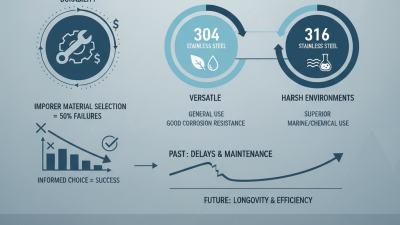
Stainless steel grades vary significantly in their composition. Common grades include 304, known for its versatility, and 316, which offers enhanced corrosion protection. These grades are not just numbers; they represent specific applications. For instance, 304 stainless steel is often used in kitchen equipment, whereas 316 is favored in marine environments.
Still, the challenges of understanding stainless steel grades remain. Miscommunication about requirements can lead to unsuitable choices. Additionally, some may overlook the importance of material certifications. These oversights can impact project outcomes and overall performance. Navigating the landscape of stainless steel requires careful thought and informed decision-making.
Understanding Stainless Steel: What Makes It Unique
Stainless steel has unique properties that set it apart from other metals. Its corrosion resistance is a key feature. According to the International Stainless Steel Forum, stainless steel’s chromium content forms a protective layer to prevent rust. This makes it ideal for various environments, including kitchens and outdoor installations.
Another important characteristic is its strength-to-weight ratio. Stainless steel is known for its durability while remaining lightweight. A report by the Steel Recycling Institute indicates that stainless steel can withstand high stresses. This makes it suitable for construction and industrial applications. Yet, its fabrication can be challenging. Manufacturers often face difficulties in machining and welding, leading to potential inconsistencies in the final product.
Aesthetically, stainless steel offers a modern look. It can be polished to a mirror finish or left with a matte surface. While its appearance is appealing, it's essential to ensure a proper finish to avoid fingerprints and smudges. Maintenance practices can sometimes fall short, especially in high-traffic areas. Understanding these nuances can enhance its longevity and performance, inviting further discussion on best practices and innovative applications in the industry.
Top Stainless Steel Grades: Composition and Applications
Overview of Stainless Steel Grades and Their Properties
Stainless steel is known for its durability and resistance to corrosion. Various grades are designed for specific applications. The most common grades include 304 and 316.
Grade 304 is popular for kitchen equipment and appliances. It's versatile and offers good corrosion resistance. Grade 316 has added molybdenum, making it ideal for marine environments. It provides enhanced resistance against saltwater.
Tips: When selecting stainless steel, consider the environment. Harsh conditions require grades with higher corrosion resistance. Don't overlook the importance of surface finish. It affects both aesthetics and performance.
Another notable grade is 430, which is magnetic and has good oxidation resistance. It’s used in decorative applications. However, it is less resistant to corrosion than 304 or 316. Each grade has unique characteristics. Choosing the right one is crucial for long-term performance. Always consult with a specialist when in doubt. Their expertise can save you from costly mistakes.
Tips: Research common applications of each grade. This will guide your selection. Assess the physical and chemical environments where the stainless steel will be used. Understanding these factors ensures better outcomes.
Common Applications of Different Stainless Steel Grades
Stainless steel comes in various grades, each suited for specific applications. The choice of grade can make a significant difference in durability and performance. For example,
304 stainless steel is versatile and commonly used in kitchen equipment and food processing. Its resistance to corrosion and ease of cleaning are key advantages.
Another popular option is 316 stainless steel. Often found in marine environments, this grade withstands corrosion from saltwater better than other options. It’s ideal for boat fittings and chemical processing equipment. If you’re in the construction business, 430 stainless steel might be your go-to. It's magnetic and has good resistance to oxidation, making it suitable for appliances and automotive parts.
Tips: Selecting the right stainless steel grade is crucial. Consider the environment where it will be used. For high-corrosion areas, opt for 316. Understanding the application can help prevent costly mistakes. Always consult industry guides for detailed specifications. Careful research leads to smarter choices in materials.
Comparing AISI, ASTM, and ISO Standards for Stainless Steel
When evaluating stainless steel, understanding the standards set by AISI, ASTM, and ISO is essential. Each organization plays a critical role in defining material properties. AISI (American Iron and Steel Institute) primarily focuses on composition and categorizes grades like 304 and 316. These grades are popular in various industries due to their excellent corrosion resistance.
ASTM (American Society for Testing and Materials) standards are crucial for testing procedures and specifications. For instance, ASTM A240 outlines the requirements for stainless steel sheet and plate. This standard ensures that the material meets performance and safety criteria. It is vital for industries like construction and manufacturing, where material integrity is non-negotiable.
ISO (International Organization for Standardization) provides globally recognized standards. ISO 9445, for example, specifies tolerances in stainless steel sheet production. Without adherence to these standards, manufacturers risk producing subpar materials. Despite the advancements, some manufacturers still struggle with consistent adherence to these standards, raising concerns about product reliability. Understanding these different standards is crucial for anyone involved in the selection or use of stainless steel.
Top Stainless Steel Grades You Need to Know
| Stainless Steel Grade |
AISI Type |
Key Properties |
Applications |
| 304 |
Austenitic |
Good corrosion resistance, weldability, and formability |
Food industry, kitchen equipment, chemical containers |
| 316 |
Austenitic |
Excellent corrosion resistance, especially against chlorides |
Marine applications, chemical processing, pharmaceuticals |
| 430 |
Ferritic |
Moderate corrosion resistance, good ductility |
Appliances, automotive parts, decorative applications |
| 410 |
Martensitic |
Good hardness and wear resistance |
Cutlery, surgical instruments, valve components |
| 2205 |
Duplex |
High strength, excellent resistance to pitting and stress corrosion |
Oil and gas, chemical plants, pulp and paper industry |
Tips for Choosing the Right Stainless Steel Grade for Your Project
Choosing the right grade of stainless steel for your project requires careful consideration.
Different grades offer various properties that can influence durability, corrosion resistance, and appearance.
For example, austenitic stainless steels
like grade 304 are widely used due to their excellent corrosion resistance and formability.
However, depending on the environment, you might need a different grade, such as 316,
which has added molybdenum for enhanced corrosion resistance.
Understand your project's specific needs. Think about the conditions the stainless steel will face.
If you expect exposure to saltwater or harsh chemicals, opt for higher grades.
Take note of the mechanical properties too. Some grades can handle more stress,
making them suitable for structural applications. Don't overlook the finish;
it can affect not just aesthetics but also how easy it is to maintain.
Sometimes, you may think a higher grade is always better. This is not always true.
Higher grades can be more expensive and may not be necessary for all applications.
It's essential to balance performance with budget.
Research and consult with experts if unsure about your choices.
Making an informed decision is crucial.