10 Best Wire Rod Suppliers for Global Buyers

Choosing among the 10 best wire rod suppliers takes more than comparing prices or browsing polished product pages. Buyers need to match grade, diameter, coil weight, and delivery schedule to the demands of their mills and projects. A small mismatch can mean extra drawing adjustments, delayed production, or costly rework. Details matter.

Quality-management expert W. Edwards Deming is often quoted as saying, “Quality is everyone’s responsibility.” His principle applies to wire rod sourcing: reliable results depend on supplier controls, clear specifications, and careful incoming inspection. Ask how each supplier manages chemistry ranges, dimensional tolerances, surface condition, and test documentation. Request mill certificates, and check that sample coils perform consistently on your actual equipment. A certificate helps. Verification matters more.

This guide compares suppliers through practical buyer considerations, including product range, production capability, export experience, communication, and delivery reliability. These factors can reveal strengths, but they do not guarantee a perfect fit. Even a respected supplier may struggle with a particular grade, route, or delivery window. That is worth remembering. Treat the shortlist as a starting point, confirm current capabilities directly, and assess samples against your own requirements. The best choice is not always the biggest producer or the lowest quote. It is the supplier whose evidence, process, and service fit your needs—with room for questions before the first order.
10 Best Wire Rod Suppliers for Global Buyers

Wire Rod: Product Types and Common Applications

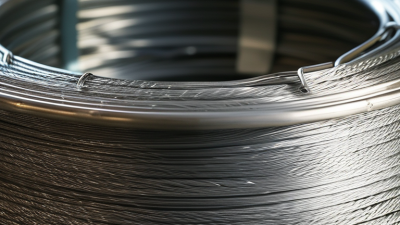
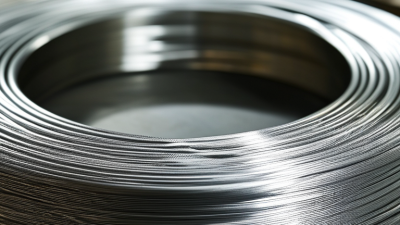
Wire rod is hot-rolled steel supplied in coils, then drawn or processed into narrower wire. Low-carbon grades are commonly drawn into binding wire, nails, mesh, and fencing. High-carbon rod supports prestressing strand, tire cord, and hard-drawn wire, where tensile strength matters. Alloy and stainless grades serve demanding mechanical or corrosion-resistant uses. Small differences matter. Surface seams or inconsistent chemistry can become costly defects after drawing.

Buyers should match grade, diameter, coil weight, and surface condition to the next production step—not just the quoted price. A fine wire drawing line may need clean, uniform rod; construction mesh may prioritize weldability and consistent feed. World Steel Association’s World Steel in Figures 2025 reports 1,882.6 million tonnes of crude steel production in 2024. That figure describes the broader steel supply base, not wire rod output, so it should not be used as a direct measure of rod availability. One practical caveat: specifications and naming can differ across markets, and a familiar grade label may not guarantee identical processing performance. Check the mill test certificate and, where possible, trial a coil before committing to volume.

Key Quality Standards and Specifications for Wire Rod

For global buyers, wire rod quality starts with a clearly stated grade and applicable standard. Common references include ASTM A510/A510M and EN 10016, but their requirements are not interchangeable. Specify the standard, grade, and edition in the purchase order. Details matter.

Check the chemical composition, especially carbon, manganese, silicon, sulfur, and phosphorus. These elements affect strength, ductility, weldability, and performance during drawing. Confirm diameter and dimensional tolerance, coil weight, and test requirements. Depending on the intended use, tensile strength, elongation, or other mechanical properties may need verification. Ask for a mill test certificate that links each heat number to the supplied coils.

Surface condition deserves close attention. Look for seams, cracks, heavy scale, and corrosion, as these can cause trouble during processing. Small defects travel. A coil may look clean while containing issues that only appear after drawing, so visual inspection alone is not enough. Agree on sampling, testing, packaging, and traceability before shipment. One detail buyers sometimes overlook is specifying acceptable surface limits; standards may not describe every application’s needs. A precise specification reduces disputes, though it cannot replace a sensible incoming inspection.

How to Evaluate Wire Rod Suppliers for Global Sourcing

When evaluating wire rod suppliers for global sourcing, begin with the material specification, not the sales brochure. Confirm steel grade, carbon range, diameter tolerance, tensile requirements, and coil weight in writing. Ask for recent mill test certificates and check that heat numbers connect the documents to the delivered coils. A polished catalog is not evidence.

Consistency matters

Request production records or sample results from more than one batch, then compare chemistry and mechanical properties. Ask how the supplier controls surface defects, scale, and dimensional variation. If your process depends on drawing performance, discuss lubrication compatibility and trial lengths before placing a large order. A small test can prevent costly surprises. It is not foolproof.

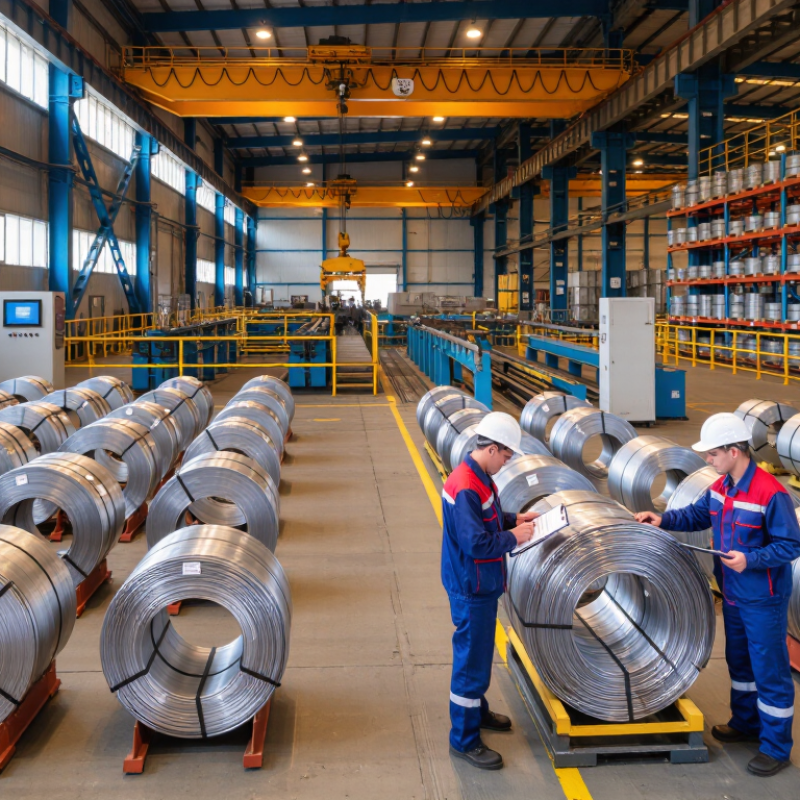
Evaluate delivery capability as carefully as product quality. Confirm monthly output, realistic lead times, export packaging, and how coils are protected against moisture during transit. Clarify who provides updates if production slips, and ask for examples of corrective actions taken after a quality complaint. Check that quoted specifications, inspection terms, and shipping details match across the offer and purchase documents. Some answers may remain vague; treat that as a reason to investigate further, not as proof of failure. Request a video inspection or an independent pre-shipment check when the order size warrants it.

10 Best Wire Rod Suppliers for Global Buyers

For global buyers, the 10 best wire rod suppliers are not simply the largest producers. Strong candidates offer consistent grades, clear technical documents, and dependable export coordination. Compare carbon content, available diameters, coil weights, and dimensional tolerances against your drawing or production needs. Ask for recent mill test certificates and confirm how each batch is traceable. Details matter. A supplier’s brochure may look reassuring, but it cannot replace verifiable quality records or a sample review.

Delivery capability deserves equal attention. Check production lead times, coil protection, loading methods, and experience shipping to your destination port. Discuss how the supplier handles specification changes or delayed vessels before placing a large order. One caveat: a low quote can hide added costs for testing, packaging, or inland transport. Rankings are useful starting points, not proof that a supplier fits every application. Request comparable quotations and clarify payment terms, inspection arrangements, and claim procedures in writing.

Tips: Send the same specification sheet to every candidate, including grade, diameter, tolerance, coil size, and required documents. Ask for a small trial order when practical. Keep written records of agreed standards; even careful buyers can overlook a detail.

Comparing Suppliers by Product Range, Reach, and Service

Buyers comparing wire rod suppliers should look beyond catalogue breadth. Product range should match target grades, diameters, coil weights, and downstream processes. Ask for current technical data, tolerances, surface condition, and test documentation before requesting a quotation. A broad list is useful only when products are regularly available. That matters.

Reach involves more than the locations shown on a supplier’s website. Check whether shipping options, export packaging, and documentation suit your delivery point. Ask for realistic lead times and how the supplier handles production changes or port delays. A supplier may serve many markets but still have limited capacity for a particular grade or shipment size. Confirm the details in writing.

Service shows up in the small interactions: clear answers to technical questions, consistent updates, and a named contact when an order changes. Request a sample order timeline, from inquiry to dispatch, and compare it with your own production schedule. A spreadsheet can make differences look cleaner than they are; response quality is harder to score, yet often matters during a disruption. Ask how claims are reviewed and what records are needed.

10 Best Wire Rod Suppliers for Global Buyers - Comparing Suppliers by Product Range, Reach, and Service

Anonymized, non-ranked comparison of supplier profiles by region and production focus. Product availability, dimensions, export coverage, and services vary by mill and order; confirm specifications and current capabilities directly with suppliers.

Supplier Profile Typical Product Range Common Applications Indicative Reach Typical Service Strengths Buyer Checks
Integrated Asian steel mill profile Low- and high-carbon wire rod; selected alloy grades; common rolled sizes often start around 5.5 mm, subject to mill capability. Wire drawing, fasteners, mesh, nails, and general engineering wire. Domestic supply with export shipments to multiple regions, depending on trade conditions and logistics. Large production volumes; mill test certificates and export packing may be available on request. Confirm grade, chemistry, dimensional tolerances, coil weight, and applicable standard.
Specialty steel producer profile Selected alloy, bearing, spring, and other higher-specification wire rod grades; availability is grade-specific. Automotive components, springs, precision fasteners, and other engineered products. Often serves domestic industrial customers and export markets through approved channels. Technical grade selection, traceability documentation, and closer process or quality coordination. Request relevant test data, heat-treatment condition, surface requirements, and qualification records.
Large-volume South Asian mill profile Common carbon-steel wire rod grades for drawing and construction-related downstream products. Reinforcement-related wire products, nails, fencing, and general wire drawing. Strong regional distribution; exports may be available subject to capacity and destination requirements. Potentially competitive for full-coil or larger-volume orders and established regional transport routes. Check export eligibility, loading port, shipment schedule, and packaging for the destination climate.
European long-products mill profile Carbon and selected alloy wire rod, with grades and sizes determined by rolling-mill configuration. Cold heading, drawing, welding consumables, and industrial wire applications. Regional coverage across nearby markets; wider exports depend on product approvals and freight economics. Standards documentation, regional logistics, and established customer quality processes may be offered. Verify standard edition, product certification needs, origin requirements, and delivery terms.
Middle Eastern regional mill profile Common carbon-steel wire rod grades, with selected sizes and specifications depending on the mill. Construction supply chains, mesh, nails, and general-purpose drawn wire. Regional markets and nearby export destinations, supported by local ports and trade routes. Potentially convenient regional shipment options and experience with nearby-market documentation. Confirm actual production origin, port, shipment frequency, and destination-specific compliance.
North American producer profile Carbon and selected specialty wire rod grades for domestic downstream processing. Automotive supply chains, fasteners, industrial wire, and construction-related products. Primarily regional, with cross-border supply subject to trade rules and customer qualification. Domestic logistics coordination and customer-specific quality documentation may be available. Check trade measures, melt-and-origin requirements, approved grades, and minimum order quantities.
Latin American integrated mill profile General carbon-steel wire rod and selected grades for regional wire processors. Construction wire, fencing, nails, and general drawing applications. Domestic and neighboring markets; exports depend on shipping routes and available volumes. Regional market familiarity and possible advantages for nearby buyers in freight and lead time. Assess port access, inland freight, payment terms, and consistency of scheduled shipments.
Export-oriented Southeast Asian mill profile Common low- and medium-carbon wire rod grades; exact specifications depend on production line and order. Wire drawing, fasteners, mesh, and general industrial wire. Regional Asian trade and selected overseas destinations through seaborne shipments. Export documentation and container or bulk-shipment options may be available, subject to order size. Confirm load-port options, coil protection, shipment quantity, and applicable import duties.
Welding-grade focused producer profile Selected low-carbon and chemistry-controlled grades used as feedstock for welding wire production. Solid welding wire and related downstream consumables, subject to customer processing requirements. Typically serves specialist processors regionally and may supply qualified export customers. More focused technical discussions on chemistry, surface condition, and drawing performance. Agree on chemistry limits, surface cleanliness, decarburization needs, and downstream process trials.
Regional service-center or trading supplier profile A sourced mix of standard carbon-steel grades and sizes; range depends on mill partners and stocked inventory. Buyers seeking mixed lots, local stock, or access to multiple mills. Usually focused on a defined local or regional market, with export capability varying by operation. Potentially smaller order lots, local inventory, and consolidated sourcing from more than one producer. Identify the producing mill, verify original certificates, and clarify whether material is stocked or made to order.