Top Stainless Steel Wire Suppliers for Global Buyers?
Choosing among the top stainless steel wire suppliers for global buyers requires more than comparing price lists. The right decision begins with application details, traceability, and consistent production records. Wire used in medical springs, marine screens, or woven filters faces very different demands. Diameter tolerance matters. Surface finish matters even more in some applications.
Corrosion expert Dr. David A. Jones defines corrosion as “the deterioration of a material, usually a metal, by reaction with its environment.” His principle remains highly relevant when evaluating stainless steel wire suppliers. A dependable supplier should explain the grade, tensile range, elongation, surface condition, and testing method. Certificates should match the actual production batch. Clear documentation is not decoration.
Global buyers should inspect whether a supplier controls drawing, annealing, cleaning, packaging, and shipment. A bright wire coil can still hide inconsistent hardness. A polished sample can also create false confidence. Request samples, mill test certificates, inspection reports, and packaging photographs before placing a large order. Ask how the supplier handles nonconforming material.
Experience teaches a difficult lesson. The lowest quotation may become the highest final cost. Delayed delivery, unstable diameters, or poor corrosion performance can disrupt an entire production line. No supplier is perfect, and buyers should question attractive claims. Regional availability, export experience, communication speed, and after-sales support also deserve attention. This guide introduces practical criteria for comparing stainless steel wire suppliers with greater confidence, while recognizing that specifications must always fit the real operating environment.
What Defines a Reliable Stainless Steel Wire Supplier?
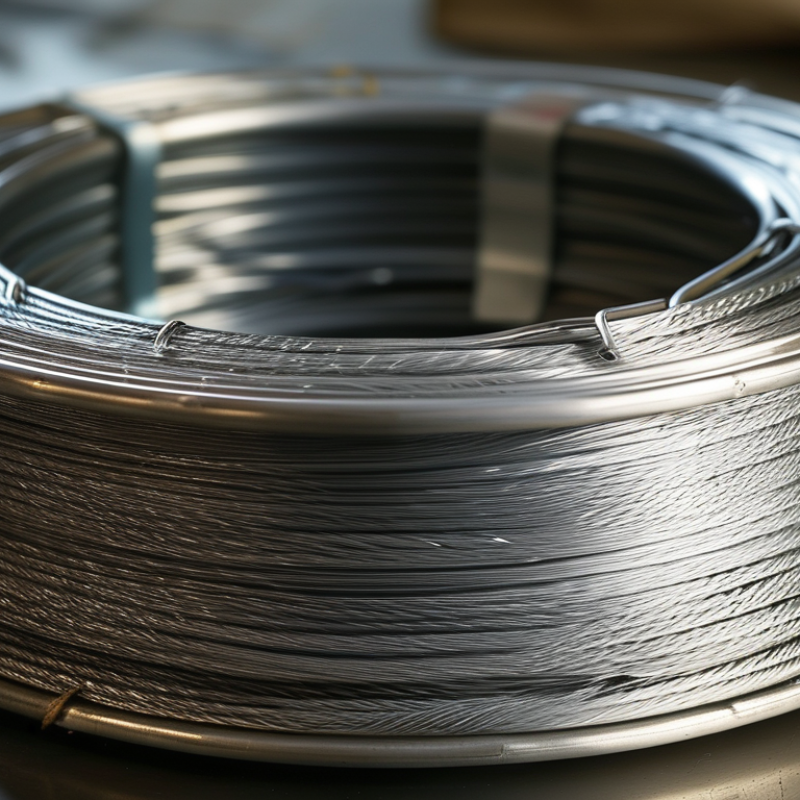
A reliable stainless steel wire supplier proves consistency before making promises. Global buyers should inspect material certificates, heat numbers, and test reports for every shipment. The wire should match the stated grade, diameter, tensile strength, and surface finish. Ask how samples are measured and calibrated. In practical purchasing, clear records often reveal more than polished sales language. A supplier that explains limits honestly is usually safer than one claiming perfection.
Production experience matters when wire must pass through drawing, welding, or weaving equipment. Request photos of coils, packing methods, and inspection points. Confirm lead times, minimum order quantities, and replacement procedures in writing. Communication should remain precise when specifications change. One overlooked detail, such as oil residue or uneven winding, can interrupt a production line. Good-looking samples may fail after scale-up. Small trials are not optional.
Tips: Send a detailed technical checklist before requesting prices. Compare certificates with independent testing when the application is critical. Check whether packaging protects the wire from moisture, scratches, and coil deformation. Ask for recent customer references, but verify them carefully. No checklist is perfect. Supplier reliability becomes clearer through repeated orders, transparent corrections, and stable quality records.
| Reliability Dimension | Relevant Requirement or Reference Data | What a Reliable Supplier Should Provide | Recommended Buyer Verification | Importance |
|---|---|---|---|---|
| Material Grade Control | Common stainless steel wire grades include 304, 304L, 316 and 316L. Typical ASTM chemistry ranges include approximately 18–20% chromium for 304 and 16–18% chromium plus 2–3% molybdenum for 316 grades. | Correct grade identification, controlled heat numbers and clear separation of different alloys during production and storage. | Review the material test certificate and compare the stated chemistry with the applicable material specification and purchase order. | Critical |
| Applicable Product Standard | ASTM A580/A580M covers stainless steel wire. EN 10270-3 applies to stainless spring steel wire. The correct standard depends on the end use and purchasing specification. | The quotation should identify the exact standard, grade, finish, dimensional tolerance and mechanical requirements instead of using only the term “stainless wire.” | Check the purchase specification, certificate and inspection report for the same standard designation. | Critical |
| Diameter Accuracy | Diameter tolerance is not universal; it depends on nominal diameter, product standard, wire condition and customer drawing. | Published tolerance tables or an approved drawing should be available before production. Measurements should be taken with calibrated instruments. | Request dimensional inspection data showing nominal diameter, measured values, tolerance limits and sampling method. | Critical |
| Surface Finish | Stainless steel wire may be supplied in conditions such as bright, matte, coated, polished or spring-tempered finish, depending on the application. | The supplier should define surface condition, allowable scratches, scale, pits, discoloration and coating requirements in measurable terms. | Approve a physical reference sample and inspect production coils against the agreed surface criteria. | High |
| Mechanical Properties | Tensile strength, elongation, hardness and spring properties vary by grade, diameter and cold-working condition. ISO 6892-1 is widely used for metallic tensile testing. | Mechanical values should be stated for the supplied diameter and temper, rather than copied from a generic grade datasheet. | Review tensile-test results, elongation values and test-method references on the inspection certificate. | Critical |
| Chemical Traceability | A heat number links the finished wire to the original melt or production batch and its chemical analysis. | Every coil, spool or bundle should carry an identifiable lot or heat number that matches the accompanying documentation. | Select a shipment label at random and trace it back to the material certificate and production records. | Critical |
| Testing Capability | Relevant tests can include chemical analysis, tensile testing, dimensional inspection, hardness testing, surface inspection and corrosion-related testing where specified. | Testing equipment should be calibrated, and external laboratory testing should be performed by a laboratory operating to ISO/IEC 17025 when independent verification is required. | Request calibration records, sample test reports and the scope of any external laboratory accreditation. | High |
| Quality Management | ISO 9001 is a quality-management-system standard. Certification demonstrates that a management system has been audited against that standard; it does not replace product inspection. | The supplier should maintain documented procedures for incoming material, process control, nonconformance handling, corrective action and final inspection. | Verify the certificate issuer, certificate scope, validity period and manufacturing-site address. | High |
| Order Consistency | Variations can occur between heats, drawing passes, annealing cycles and surface treatments if process controls are weak. | Repeat orders should use the same approved specification, control plan and inspection criteria unless a change is formally approved. | Compare samples from different production lots for diameter, tensile properties, surface condition and coil weight. | High |
| Packaging and Identification | Wire can be damaged by moisture, abrasion, contamination and deformation during storage or transport. | Packaging should protect the surface and maintain coil or spool geometry. Labels should show grade, diameter, quantity, lot number and destination details. | Specify packaging requirements in the purchase order and photograph labels and packaging before shipment. | High |
| Regulatory Documentation | Depending on the destination and application, buyers may need declarations or information related to REACH, RoHS, conflict minerals, product safety or chemical restrictions. | The supplier should identify which regulatory documents apply to the product and provide current declarations when requested. | Check document dates, product scope and consistency with the supplied grade, coating and intended market. | High |
| Lead-Time Reliability | Actual lead time depends on material availability, diameter, temper, surface finish, order quantity and production capacity. | Quotations should separate production time, inspection time, dispatch time and estimated transportation time. | Use a written delivery schedule and track on-time, in-full performance over several purchase orders. | High |
| Export and Logistics Capability | International shipments require accurate commercial invoices, packing lists, transport documents, customs information and suitable packaging. | The supplier should understand the agreed Incoterm, export documentation and destination-country requirements. | Review a sample shipping document set before the first shipment and confirm responsibility under the selected Incoterm. | Medium |
| Technical Communication | Important variables include grade, diameter, tolerance, finish, temper, coil or spool dimensions, minimum order quantity and test requirements. | Technical questions should receive written answers that can be converted into a controlled quotation or specification. | Send the same technical inquiry to shortlisted suppliers and compare the completeness and consistency of their replies. | High |
| Corrective Action | Nonconformities may involve wrong grade, dimensional deviation, surface damage, insufficient documentation or transit damage. | A dependable supplier should provide root-cause analysis, containment, corrective action and replacement or credit arrangements within an agreed timeframe. | Ask for a sample nonconformance report or evaluate how the supplier handles a controlled trial claim. | High |
Related Posts
-
How to Choose the Right Stainless Steel Wire for Your Project?
-
How to Choose the Best Stainless Steel Wire for Your Needs?
-
What Are the Best Suppliers for Steel Wire Rod in China?
-

How to Select the Right Bar Steel for Your Construction Projects
-
Top 10 Hot Rolled Steel Grades You Need to Know?
-
How to Choose the Right Steel Grades for Your Project?