Choosing the best stainless steel wire for 2026 requires more than comparing price per kilogram. Global buyers must match grade, diameter, finish, tensile strength, and end use. Stainless steel wire serves medical devices, springs, welding products, mesh, fasteners, and architectural systems. Each application exposes different weaknesses.
Industry data supports careful selection. The International Stainless Steel Forum reported global stainless crude steel production at approximately 58.4 million tonnes in 2023, showing the scale of this supply chain. Its production statistics also reveal strong regional differences, especially across Asia, Europe, and the Americas. The World Steel Association continues to highlight energy, raw materials, and trade conditions as major cost influences. These factors may affect 2026 quotations, lead times, and sourcing decisions.
Austenitic 304 wire remains a practical general-purpose choice, offering good forming performance and broad availability. Grade 316 is usually safer near seawater, chlorides, and chemical exposure. Ferritic 430 can reduce cost in less aggressive environments, while duplex 2205 offers higher strength and corrosion resistance. However, duplex processing needs experienced suppliers. It is not automatically better.
Buyers should verify ASTM A580, EN 10270, ISO 683-13, or relevant customer specifications. Mill certificates, heat numbers, surface inspection, and independent testing deserve attention. A polished coil can still hide inconsistent tensile results. That mistake is expensive. Supplier audits and sample trials remain useful, even when purchase volumes are large. This guide will compare stainless steel wire types through performance, compliance, availability, and total cost. Some recommendations may require adjustment because climate, freight routes, and local standards change. No grade wins every market.
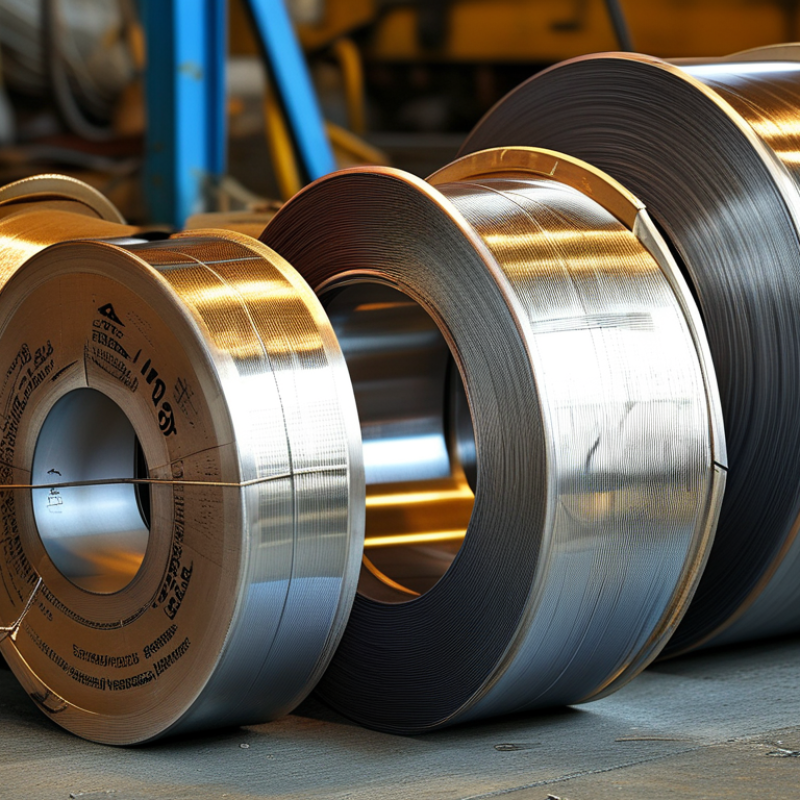
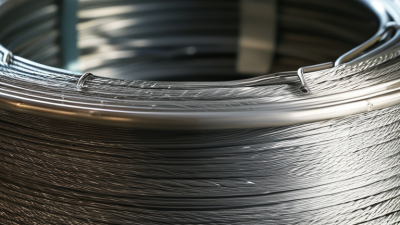
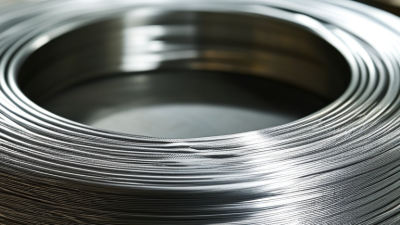
Stainless steel wire is a drawn metal product made from corrosion-resistant steel. Manufacturers pull it through dies to achieve a controlled diameter, smooth surface, and dependable shape. It may look simple, but its performance depends on grade, temper, and production accuracy. A 0.8 mm wire used for springs needs different qualities from a 3 mm wire used for weaving.
Common grades include 304, 316, 201, and 430. Grade 304 offers balanced corrosion resistance, strength, and formability for general applications. Grade 316 contains molybdenum, giving it better resistance in salty or chemical environments. Grade 201 can reduce cost, but its corrosion performance may be less stable in demanding conditions. Grade 430 is magnetic and often suits dry indoor applications. These are practical guidelines, not universal answers.
Core properties include tensile strength, elongation, hardness, ductility, and corrosion resistance. Surface finish also matters. A bright surface may support decorative use, while a rougher finish can suit industrial processing. I have seen buyers focus only on grade and overlook wire tolerance. That mistake can cause feeding problems in automated equipment. Check the material certificate, diameter range, surface condition, and test method before purchasing. “Stainless” does not mean maintenance-free. Salt deposits, poor storage, and contact with dissimilar metals can still create stains. The best wire is the one matching the environment, forming process, and required service life.
For global buyers, the best stainless steel wire in 2026 depends on the application, not the calendar. Choosing correctly starts with the working environment.
In my sourcing experience, 304 stainless steel wire suits general forming, screens, and indoor assemblies. It handles ordinary moisture well. Coastal or chemical conditions often justify 316 wire, which contains molybdenum for improved corrosion resistance. For higher hardness, 410 can work after heat treatment, but it offers less corrosion protection.
Need strong magnetic response? Ferritic grades may be more suitable. This detail is easy to overlook.
Match the wire type with its actual job. Check tensile strength, elongation, diameter tolerance, surface finish, and temper condition.
Soft wire bends easily around a 6 mm mandrel. Spring temper resists bending but needs careful forming plans.
Welding wire requires compatible chemistry and stable feeding performance. Ask for a mill test certificate, chemical analysis, and test results based on recognized standards, such as ASTM, EN, or ISO methods.
Samples should also be tested under real humidity, salt exposure, or temperature conditions.
I once selected a harder grade to reduce deformation. It saved weight but increased forming cracks. That decision needed more testing.
A supplier’s technical team should explain trade-offs clearly, not simply recommend the most expensive grade. Confirm packaging, coil weight, traceability, and inspection records before shipment. Small documentation gaps can become costly delays.
For global buyers, stainless steel wire selection in 2026 should begin with standards, not only grade names. The International Stainless Steel Forum reported 58.4 million tonnes of stainless crude steel production in 2023. That scale makes traceability and specification control increasingly important.
ASTM A580/A580M covers stainless steel wire dimensions, tolerances, mechanical properties, and surface requirements. EN 10088-3 supports European purchasing, especially for long products and technical delivery conditions. ISO 6931-1 is useful for internationally aligned wire requirements, while JIS G4309 remains relevant for Japanese-oriented supply chains. Buyers should state the grade, diameter, tensile range, surface finish, coil weight, and inspection document clearly. Grade 304 suits many general applications. Grade 316L offers stronger resistance in chloride-heavy environments, but it costs more and is not automatically the better choice.
A practical check matters. A 0.8 mm wire can look bright yet fail a diameter tolerance test. Ask for heat numbers, chemical analysis, tensile results, and a certificate matched to the shipped coil. EN 10204 3.1 documentation can improve verification, but paperwork alone cannot replace sampling. Standards may also leave room for interpretation. This is where buyers sometimes make mistakes. Specify test methods and acceptance limits before production begins. Stainless wire from the same grade may still perform differently after drawing, annealing, or surface treatment. The 2024 Stainless Steel in Figures report provides useful market context, but each purchase still needs application-based engineering review.
Key stainless steel wire grades compared by minimum chromium and nickel content. Chromium supports corrosion resistance, while nickel improves ductility and resistance in many forming environments.
Values are representative minimum chemical requirements in weight percent for commonly specified grades under ASTM A580/A580M and comparable international grade designations. Exact limits may vary by standard edition, product condition, and purchasing specification. Global buyers should also verify ASTM A580/A580M, EN 10088-3, JIS G 4309, GB/T 4240, or ASTM A313/A313M requirements before ordering.
For global buyers, wire selection starts with exposure, not the catalog label. World Stainless reported 62.6 million tonnes of crude stainless steel production in 2024, showing this material family’s industrial scale. Yet grade choice still depends on chloride, temperature, forming, and required strength.
Type 304 and 302 wires suit general fabrication, food equipment, screens, and indoor springs. Cold working can raise their tensile strength substantially, but ductility decreases. Type 316L performs better near seawater, de-icing salt, and chemical processing because molybdenum improves pitting resistance. It costs more, and it is not immune to corrosion. That detail matters.
Type 410 wire offers higher hardness and wear resistance for shafts, clips, and mechanical components. Its corrosion resistance is lower than 304 or 316L. Precipitation-hardening wire, such as 17-7PH, supports high-strength springs and aerospace-related components after controlled heat treatment. Processing capability becomes critical here. ASTM A580/A580M covers stainless steel wire requirements, while ISO 6892-1 provides tensile-testing methods for comparing finished wire.
A practical purchasing review should check diameter tolerance, tensile range, surface condition, coil memory, and weldability. The 2024 World Stainless statistics describe production volume, not application suitability. That distinction is easy to miss. A buyer choosing only by price may select 410 for a humid installation, then face premature maintenance. A buyer choosing 316L for every application may overpay without gaining useful performance. Small sample trials and documented test certificates remain valuable, especially when spring temper or tight forming is required.
| Wire Grade / Type | Typical Chemical Characteristics | Typical Tensile Strength Range | Corrosion Resistance | Temperature Capability | Magnetism | Formability and Spring Performance | Common Applications | Main Advantages | Key Limitations |
|---|---|---|---|---|---|---|---|---|---|
| 302 / 304 Austenitic Wire | Chromium-nickel stainless steel; 304 contains approximately 18% chromium and 8% nickel. Grade 302 has slightly higher carbon and is widely used in spring wire. | Approximately 515–1,700 MPa, depending on annealed, drawn, or spring temper condition. | Good general resistance Resists atmospheric corrosion and many food-processing environments. |
Generally suitable for continuous service up to approximately 870°C in oxidizing conditions, subject to load and atmosphere. | Usually non-magnetic when annealed; cold working can produce some magnetism. | Excellent cold formability; 302 is widely selected for springs because cold drawing increases strength. | General-purpose springs, wire forms, mesh, fasteners, kitchen equipment, automotive components, and industrial screens. | Best all-round balance of cost, availability, corrosion resistance, and manufacturability. | Less resistant than 316L to chlorides; may be vulnerable to chloride stress-corrosion cracking in severe conditions. |
| 316 / 316L Austenitic Wire | Chromium-nickel-molybdenum stainless steel; molybdenum content is commonly about 2–3%, improving chloride resistance. 316L has reduced carbon. | Approximately 485–1,600 MPa, depending on wire temper and cold reduction. | Very good in chloride environments Better resistance than 304 to pitting and crevice corrosion in marine and chemical exposure. |
Generally suitable for elevated-temperature service up to approximately 800–870°C, depending on stress, atmosphere, and design requirements. | Usually non-magnetic when annealed; cold work may create measurable magnetism. | Good formability and toughness; 316L is preferred where welding or low-carbon corrosion performance is important. | Marine hardware, coastal structures, chemical-processing equipment, medical components, food equipment, and filtration mesh. | Strong choice for marine, humid, and mildly chemical environments; good low-temperature toughness. | Higher material cost than 304; not immune to corrosion in warm, concentrated, or stagnant chloride solutions. |
| 321 Stabilized Austenitic Wire | Chromium-nickel stainless steel stabilized with titanium to reduce carbide precipitation after heating. | Approximately 515–1,500 MPa, depending on temper and wire size. | Good high-temperature corrosion resistance Useful where intermittent heating and cooling could affect non-stabilized grades. |
Commonly selected for continuous service around 800–900°C; actual limit depends on stress and oxidation conditions. | Generally non-magnetic when annealed; cold working can induce magnetism. | Good formability, though titanium stabilization can make some processing conditions more demanding than 304. | Aircraft exhaust components, furnace parts, expansion joints, heat exchangers, and high-temperature wire forms. | Resists sensitization during repeated heating better than standard 304 in many conditions. | Usually more expensive and less widely stocked than 304; not the first choice for strong chloride exposure. |
| 309 / 309S Heat-Resistant Wire | Higher chromium and nickel than 304, typically around 23% chromium and 13% nickel; 309S is the lower-carbon version. | Approximately 515–1,400 MPa, depending on condition. | Good oxidation resistance Performs well in hot air and many furnace atmospheres. |
Often used for oxidation service around 980–1,100°C, with the exact limit governed by atmosphere, load, and thermal cycling. | Generally non-magnetic when annealed; cold work may increase magnetic response. | Moderate-to-good formability; selected more for heat resistance than maximum spring efficiency. | Furnace fixtures, burner parts, heat-treatment baskets, refractory anchors, and high-temperature wire mesh. | Better high-temperature oxidation resistance than 304 and useful for thermal cycling. | Higher price; strength and corrosion performance can decline at temperatures beyond the design range. |
| 310 / 310S Heat-Resistant Wire | High-chromium, high-nickel austenitic stainless steel; typically about 25% chromium and 20% nickel. 310S has lower carbon. | Approximately 515–1,300 MPa, depending on wire condition. | Excellent high-temperature oxidation resistance Strong performance in hot oxidizing atmospheres. |
Commonly used for continuous oxidation service around 1,050–1,100°C; design limits depend on stress and atmosphere. | Generally non-magnetic when annealed; cold work can induce magnetism. | Good thermal stability; less commonly chosen for tight, high-cycle springs than 302 or 304 spring wire. | Furnace components, radiant tubes, burners, heat-treatment baskets, kiln hardware, and high-temperature mesh. | One of the strongest common austenitic options for hot oxidizing service. | High nickel content increases cost; can be unsuitable in strongly carburizing, reducing, or sulfur-rich atmospheres without specific engineering review. |
| 430 Ferritic Wire | Chromium stainless steel with approximately 16–18% chromium and very low nickel content. | Approximately 450–900 MPa, depending on annealing and cold-work condition. | Moderate general resistance Suitable for indoor and mildly corrosive environments. |
Generally used for moderate-temperature applications, often below approximately 800°C depending on thermal cycling and oxidation requirements. | Magnetic Magnetism is present in annealed and cold-worked conditions. |
Moderate formability; lower work-hardening than austenitic grades but limited suitability for demanding spring applications. | Appliance components, automotive trim, decorative wire, racks, clips, and indoor mesh. | Lower nickel exposure and often lower cost; good thermal conductivity and magnetic response. | Lower ductility and toughness than austenitic grades; weaker chloride resistance and limited weldability. |
| 410 Martensitic Wire | Approximately 11.5–13.5% chromium; can be heat treated to obtain higher hardness and strength. | Approximately 550–1,700 MPa, depending strongly on heat treatment and temper. | Moderate resistance Suitable for mildly corrosive, wear-prone environments rather than marine exposure. |
Useful for moderate-temperature service; prolonged heating can reduce hardness and mechanical performance. | Magnetic Magnetic in annealed and hardened conditions. |
Good strength and wear resistance after heat treatment; lower ductility and corrosion resistance than 304 or 316L. | Clips, pins, shafts, screens, cutlery components, valve parts, and wear-resistant wire forms. | Heat-treatable, strong, and wear resistant; suitable where hardness is more important than maximum corrosion resistance. | Can become brittle if improperly heat treated; not recommended for severe chloride or highly acidic environments. |
| 17-7 PH Precipitation-Hardening Wire | Chromium-nickel-aluminum precipitation-hardening stainless steel; strength is developed through controlled heat treatment. | Approximately 1,000–1,700 MPa, depending on aging condition and wire processing. | Good Comparable to some austenitic grades in many general environments, but not a substitute for 316L in severe chloride service. |
Commonly used for elevated-temperature springs and components up to approximately 315–480°C, depending on aging condition and required properties. | Usually magnetic after precipitation-hardening treatment. | Very high spring strength and good resistance to permanent set; forming is normally performed before final aging. | High-performance springs, aerospace components, diaphragms, sensors, retaining rings, and precision wire forms. | High strength-to-weight ratio and excellent resistance to relaxation in demanding spring applications. | Higher cost and more complex processing; heat-treatment control is essential. |
Performance values are representative ranges for internationally traded stainless steel wire and can vary with standard, diameter, surface finish, drawing reduction, heat treatment, and delivery condition. Temperature figures are engineering guidance for oxidation service, not universal design limits; buyers should confirm the applicable ASTM, EN, JIS, or other specification and request mill test documentation for the final application.
For global buyers, 304 stainless steel wire suits general forming, springs, weaving, and outdoor hardware. Choose 316L when chloride exposure, coastal air, or chemical contact creates higher corrosion risk. The International Stainless Steel Forum reported about 62.6 million tonnes of stainless crude steel production in 2024, showing a broad but complex supply base. Volume does not guarantee consistent wire quality.
Request the material grade, diameter tolerance, tensile strength, elongation, surface condition, and heat number before purchase. A practical inspection should compare caliper readings at several coil points, not one convenient location. Review chemical results for chromium, nickel, molybdenum, carbon, and nitrogen. Ask for mill certificates and independent testing when the application is safety-critical. ASTM A580 provides recognized requirements for stainless steel wire, but buyers must still confirm the exact product condition. Small surface scratches can become serious during drawing. This is easy to underestimate.
Global trade also needs careful document control. UNCTAD’s Review of Maritime Transport reports that ships carry over 80% of world merchandise trade by volume. Confirm packing protection, coil weight, net and gross weight, origin documents, tariff classification, and delivery terms. Include moisture-resistant wrapping and edge protection for long voyages. The World Bank’s logistics research continues to show that delays often involve coordination, not only transportation. My own purchasing lesson is uncomfortable: the cheapest quotation can hide inspection, repacking, or rejection costs. A perfect specification is still weak if the supplier cannot trace every coil.