What Are the Key Properties of 1045 Steel for Global Buyers?
1045 steel is a medium carbon steel known for its versatility and strength. According to Dr. James Thompson, a well-respected metallurgical engineer, "1045 steel is the backbone of many industrial applications." This statement highlights its significance in various sectors, from manufacturing to automotive.
Understanding the key properties of 1045 steel is crucial for global buyers. Its balanced composition ensures good mechanical properties, which makes it suitable for numerous applications. This steel features a carbon content of approximately 0.45%, contributing to its hardness and wear resistance. However, it also necessitates careful handling during heat treatment.
Although 1045 steel offers many advantages, it is not without challenges. Buyers must be aware of its limitations, such as susceptibility to stress corrosion cracking. Evaluating the specific requirements of projects is essential. Choosing the right grade can significantly affect performance and longevity. In short, 1045 steel stands as a reliable choice, yet demands informed decision-making.
Overview of 1045 Steel and Its Composition
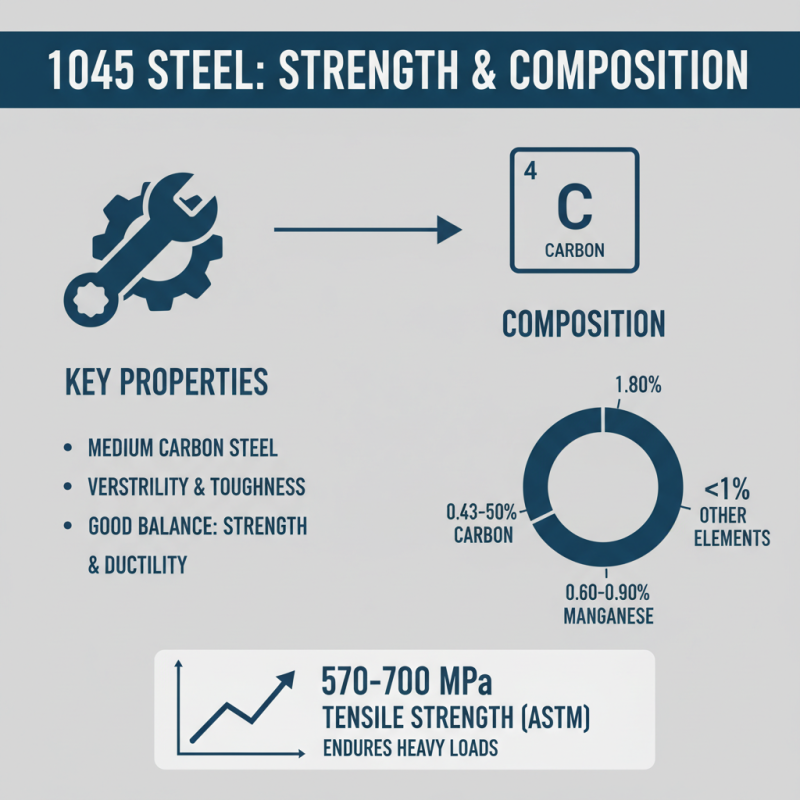
1045 steel is a medium carbon steel known for its versatility and toughness. Its composition primarily consists of 0.43% to 0.50% carbon, 0.60% to 0.90% manganese, and traces of other elements. This combination provides a good balance between strength and ductility, making it suitable for various applications. According to the American Society for Testing and Materials (ASTM), 1045 steel exhibits a tensile strength range of 570 to 700 megapascals. This strength allows it to endure heavy loads without deformation.
Due to its properties, 1045 steel is often used in manufacturing components like shafts, gears, and axles. It is well-regarded in industries such as automotive, machinery, and agricultural equipment. However, controlling the composition is essential. The carbon content largely affects hardness. A higher carbon concentration can lead to brittleness. Thus, there is a delicate balance between achieving desired mechanical properties and maintaining ductility.
Heat treatment can improve wear resistance significantly. Research indicates that tempering can enhance the toughness of 1045 steel while retaining its hardness. However, improper heat treatment can result in inconsistencies. Buyers must ensure that suppliers adhere to proper processing methods to avoid potential weaknesses in their products. The complexity of these characteristics makes understanding 1045 steel crucial for global buyers.
Mechanical Properties of 1045 Steel Explained
When discussing 1045 steel, its mechanical properties stand out. This medium carbon steel contains approximately 0.45% carbon content. This composition grants it a good balance of strength, ductility, and hardness. It is often utilized in manufacturing components that require excellent wear resistance. Its tensile strength typically ranges from 570 to 700 MPa, making it a reliable choice for various applications.
Another notable property is its ability to be heat-treated. This process enhances its hardness, especially when quenching and tempering are employed. However, achieving optimal hardness can be challenging. The specifics of the heat treatment must be carefully managed. Miscalculations can lead to issues like brittleness or inadequate hardness. Observing these nuances can significantly impact the material's performance.
Additionally, the weldability of 1045 steel is moderately high but requires awareness. Preheating is usually advised to avoid cracking during welding. Inadequate preparation can result in weak joints. Potential buyers must weigh the benefits and drawbacks based on their specific applications. The interplay of properties within 1045 steel makes it a versatile choice, yet careful consideration is essential for successful usage.
What Are the Key Properties of 1045 Steel for Global Buyers?
| Property |
Value |
Unit |
| Tensile Strength |
570 - 700 |
MPa |
| Yield Strength |
325 - 500 |
MPa |
| Elongation at Break |
20 |
% |
| Hardness (Brinell) |
160 - 217 |
HB |
| Modulus of Elasticity |
200 |
GPa |
| Thermal Conductivity |
46 |
W/(m·K) |
| Density |
7.85 |
g/cm³ |
Applications of 1045 Steel Across Industries
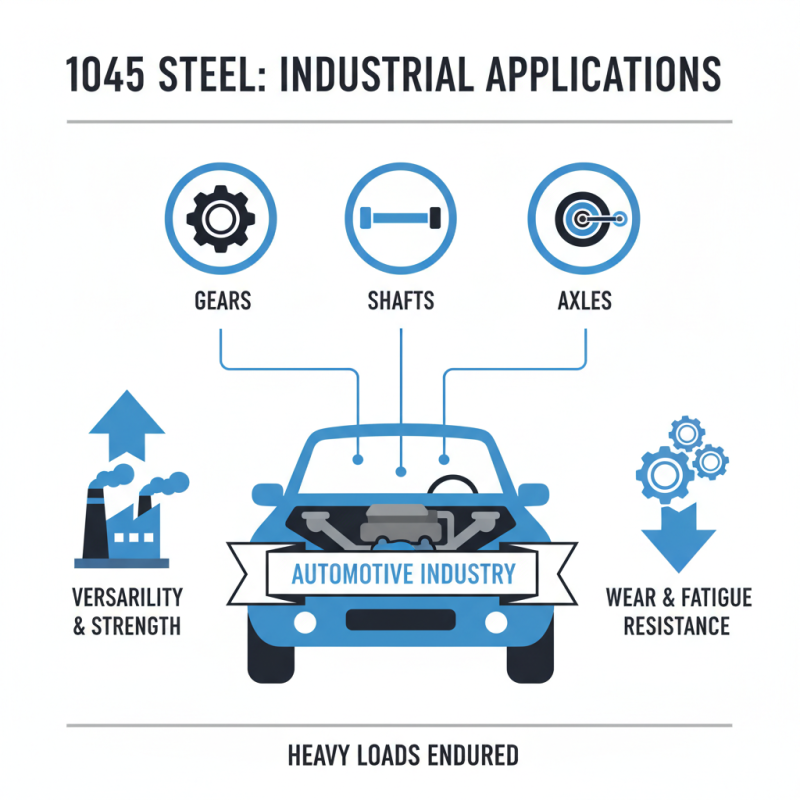
1045 steel is widely recognized for its versatility and strength in various industrial applications. One notable area is the automotive industry, where it is used in gears, shafts, and axles due to its tough nature. The ability of 1045 steel to withstand wear and fatigue makes it ideal for components that endure heavy loads.
In the manufacturing sector, 1045 steel proves valuable in creating machine components like spindles and couplings. Its high machinability ensures precise fabrication, crucial for achieving dimensional accuracy. However, improper heat treatment can lead to unexpected brittleness. Thus, it’s essential to follow established guidelines for optimal results.
**Tip:** Always conduct thorough material tests before production. Knowing the specific properties of 1045 steel aids in proper application.
Construction applications also benefit from 1045 steel, particularly in structural components. Its reliability in handling stress makes it a frequent choice for beams and columns. Nevertheless, certain environments can cause corrosion. Employing protective coatings can mitigate this risk, enhancing longevity.
**Tip:** Regular inspections can identify early signs of wear or corrosion. This proactive approach ensures safety and efficiency in your projects.
Comparison of 1045 Steel with Other Carbon Steels
1045 steel is a medium carbon steel known for its balance of strength and toughness. It typically contains 0.45% carbon, which makes it harder and stronger than lower carbon steels. When compared to 1018 steel, which has about 0.18% carbon, 1045 offers significantly higher hardness. This is crucial for applications requiring durability, such as in manufacturing gears and shafts.
In contrast to higher carbon steels, like 1080, 1045 steel presents a more manageable balance of workability and strength. While 1080 can achieve greater hardness due to its 0.80% carbon content, it becomes less ductile. This trade-off means that 1045 is often favored in scenarios where some flexibility is beneficial. According to industry reports, 1045's tensile strength typically ranges from 95 to 125 ksi, providing reliable performance in various structural applications.
Moreover, the heat treatment processes applied to 1045 can enhance its properties further. Quenching and tempering can improve toughness, making this steel suitable for heavy-duty applications. However, improper heat treatment can lead to brittleness. This aspect requires careful consideration, emphasizing the need for skilled professionals during processing.
Considerations for Global Buyers When Purchasing 1045 Steel
When considering the purchase of 1045 steel, global buyers should pay close attention to several key factors. The 1045 steel grade is known for its medium carbon content, typically ranging from 0.40% to 0.50% carbon. This composition enhances its strength and toughness, making it suitable for a variety of industrial applications, such as automotive and machinery parts.
Buyers need to be aware of the steel's mechanical properties. Its yield strength usually falls between 355-580 MPa, while tensile strength may reach up to 620 MPa. Such strength allows 1045 steel to withstand significant stresses. However, it's essential to consider heat treatment options for further enhancement. While many buyers opt for standard grades, applying quenching and tempering techniques can elevate performance under demanding conditions.
Tips: Always request detailed material certificates. Understanding the heat treatment history can provide insights into the steel's potential performance. Investigate the sourcing of your steel. Reliable suppliers ensure quality and consistency. Consider that pricing can vary significantly based on regional steel mills. Maintain a flexible approach towards suppliers for optimal negotiation outcomes.