Choosing a reliable China supplier requires more than comparing quoted prices. This guide examines how manufacturers produce, inspect, and export cold rolled steel bar for demanding applications.
A capable supplier should explain the steel grade, diameter range, surface condition, and dimensional tolerances clearly. Buyers should request mill certificates, inspection records, and samples before placing large orders. These documents help confirm chemical composition, tensile strength, hardness, and production consistency. Look for suppliers familiar with standards such as ASTM, EN, DIN, and JIS. However, a certificate alone does not prove dependable performance. Independent inspection may still be necessary.
Factory experience matters. A supplier with modern cold drawing lines, calibrated measuring tools, and controlled packaging usually offers stronger process discipline. Ask how workers protect bright surfaces during bundling and transportation. A scratched bar can create problems during machining, even when its test results appear acceptable. Confirm production capacity, minimum order quantities, lead times, and communication procedures. Small details often reveal actual service quality.
No supplier is perfect.
Some websites present impressive equipment but provide limited technical evidence. Others offer low prices while overlooking tolerance control or after-sales support. A careful buyer should compare several factories, verify business credentials, and discuss possible risks openly. This guide aims to support practical decisions through technical questions, supplier checks, and realistic purchasing advice. The best choice is not always the cheapest quotation. It is the supplier that combines traceable quality, honest communication, stable delivery, and suitable technical capability.
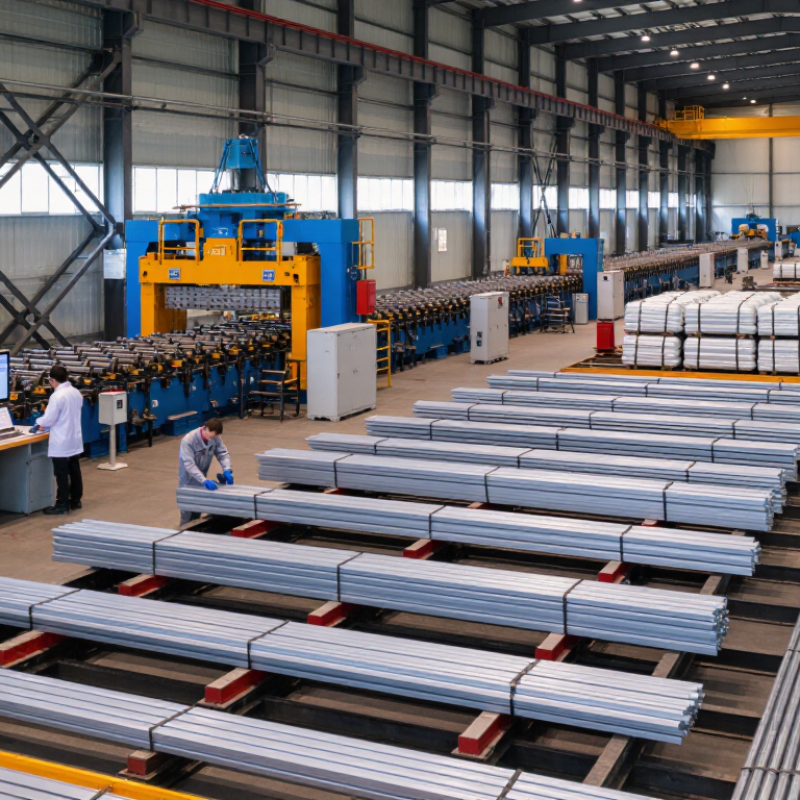
Cold rolled steel bars are shaped at room temperature after hot rolling. This process improves surface finish, dimensional accuracy, and straightness. The bars often feel smooth and clean, with fewer visible surface marks. These qualities matter when parts require accurate machining, stable fitting, or a polished appearance.
In practical sourcing, buyers should check diameter tolerance, hardness, tensile strength, and bar straightness. A reliable supplier should provide mill certificates, inspection reports, and clear batch identification. Ask for sample measurements, not only catalogue values. A smooth surface does not guarantee strong performance. Internal stress may still affect machining, bending, or final assembly. This is an easy detail to overlook.
Tips: Compare several samples under the same measuring conditions. Check packaging, rust protection, and traceability before shipment. Ask how defects are handled. Supplier claims can sound precise, yet small differences in measurement methods create confusion. An experienced buyer should review test standards and confirm them in writing. Even then, inspection is not perfect. Rechecking critical dimensions after delivery remains a sensible habit.
China’s cold rolled steel bar suppliers commonly offer carbon, alloy, and stainless steel grades. Typical choices include 1018, 1045, 4140, 304, and 316, although local grade names may differ. Always compare the chemical range with GB, ASTM, or EN requirements. A familiar grade number is not enough.
Available shapes include round, square, hexagonal, and flat bars. Diameters may suit small precision parts or larger machining components. Lengths are often fixed, cut-to-size, or supplied in bundles.
Tolerances matter greatly. A bar measuring correctly at one point may vary elsewhere. Request inspection records, dimensional reports, and mill certificates before approval. Check the testing method too.
Surface finish can change performance and appearance. Bright drawn bars offer a clean surface and accurate dimensions. Ground bars provide tighter tolerances and reduced roughness.
Polished finishes look attractive but may still show fine lines under strong light. Turned surfaces can be practical for machining, yet they may need additional finishing. Supplier descriptions are sometimes unclear. Confirm roughness values, straightness, edge condition, and corrosion expectations in writing. Samples help, but one sample cannot represent every production batch.
Chinese cold rolled steel bar suppliers often begin with hot rolled round steel, verified by heat number and chemical analysis. The World Steel Association reported that China produced about 1,019 million tonnes of crude steel in 2023. This scale supports mature processing networks, but capacity does not automatically guarantee consistency.
Manufacturing usually includes surface descaling, cold rolling or drawing, intermediate annealing, straightening, and precision cutting. Operators monitor roll pressure, reduction rate, temperature, and bar diameter during production. Small deviations can create ovality, residual stress, or shallow surface cracks. Quality teams commonly test chemistry, tensile strength, hardness, dimensional tolerance, and surface condition against requirements such as ASTM A108 or EN 10277. Eddy-current inspection may help detect discontinuities that visual checks miss.
Traceability matters. A reliable supplier records the heat number, equipment settings, inspection results, and packing details for every batch. The World Steel Association’s World Steel in Figures 2024 shows China remains the largest steel-producing country, yet large output can also increase the risk of uneven process control. In practice, no mill should promise zero variation. A stronger approach is to define acceptance limits, retain samples, and investigate abnormal results before shipment. Some suppliers still rely too heavily on final inspection. That weakness deserves honest review. Preventing defects during rolling is more dependable than sorting them afterward.
| Quality and Manufacturing Dimension | Typical Industrial Data or Control Point | Manufacturing or Inspection Method | Common Reference |
|---|---|---|---|
| Product form | Cold-drawn, cold-rolled, peeled, or ground round bars; hexagonal, square, and flat sections may also be produced. | Hot-rolled steel is descaled and reduced at room temperature by drawing, rolling, peeling, or centerless grinding. | ASTM A108; EN 10277 |
| Common carbon-steel grades | Low-carbon, medium-carbon, and free-machining grades are commonly selected according to strength, machinability, and forming requirements. | Chemical composition is verified before production and checked against the ordered grade and applicable standard. | ASTM A108; EN 10277; JIS G3123 |
| Typical size range | Round bars are often supplied from approximately 3 mm to 100 mm in diameter; larger sizes depend on equipment and order requirements. | Diameter or across-flats dimensions are measured at multiple positions along each bar or bundle sample. | Size availability is supplier- and standard-dependent. |
| Dimensional tolerance | Typical tolerance classes range from standard commercial tolerance to tighter h8, h9, h10, or equivalent classes, depending on size and process. | Calibrated micrometers, vernier calipers, air gauges, and coordinate measuring equipment may be used. | ISO 286-2; EN 10278 |
| Surface finish | Cold-drawn and peeled bars generally provide a smoother surface than hot-rolled bars; roughness values must be agreed in the purchase specification. | Visual inspection is combined with roughness measurement using a calibrated surface profilometer when required. | ISO 4287; ISO 4288 |
| Straightness | Common purchase requirements may specify straightness limits such as 1 mm per metre or another value agreed for the product size and application. | Bars are checked on a flat inspection table or with a straightness measuring device over a defined measuring length. | EN 10278 or customer specification |
| Chemical composition | Carbon, manganese, silicon, sulfur, phosphorus, and any alloying elements are controlled within the limits of the ordered grade. | Optical emission spectroscopy or equivalent laboratory analysis is performed on heat samples and, when required, finished products. | ASTM E415; ISO 14284 |
| Tensile strength | The required tensile-strength range depends on grade, reduction ratio, heat treatment, and delivery condition; cold working normally increases strength. | Machined or proportional test pieces are tested using a calibrated universal testing machine. | ISO 6892-1; ASTM A370 |
| Yield strength and elongation | Yield strength and elongation are reported together because higher cold reduction can raise yield strength while reducing ductility. | Tensile testing records yield point or proof stress, ultimate tensile strength, and percentage elongation. | ISO 6892-1; ASTM E8/E8M |
| Hardness | Brinell, Rockwell, or Vickers hardness is specified according to the grade and delivery condition; no universal value applies to all cold rolled bars. | Hardness is measured on prepared surfaces with calibrated equipment and an approved test load. | ISO 6506; ISO 6507; ISO 6508 |
| Residual stress and deformation | Stress-relieved or annealed conditions may be requested where machining stability, bending, or dimensional stability is important. | Controlled annealing, stress relieving, straightening, and final dimensional inspection are used to reduce production variation. | Agreed technical specification |
| Heat treatment | Common delivery conditions include cold-finished, annealed, normalized, spheroidize-annealed, or stress-relieved material. | Furnace temperature, soaking time, cooling method, and batch traceability are recorded for controlled heat-treatment cycles. | EN 10277; purchaser specification |
| Internal discontinuities | Inclusions, cracks, seams, laps, and centerline defects are controlled according to the required quality level and end-use risk. | Visual inspection, magnetic-particle testing, ultrasonic testing, or eddy-current testing may be applied where specified. | ISO 9934; ISO 16810; customer specification |
| Surface defect control | Bars should be free from harmful cracks, seams, laps, excessive scale, and deep scratches that could affect machining or service performance. | Peeling, grinding, shot blasting, visual inspection, and non-destructive testing are selected according to defect risk. | ASTM A108; EN 10277 |
| Cut length | Fixed lengths are supplied with a specified cutting tolerance; random or mill lengths may also be available for selected products. | Automatic saws or shears are checked using calibrated length gauges and sample measurements. | Purchase order and applicable product standard |
| Traceability | Each production lot should be traceable to the steel heat, material grade, processing route, inspection results, and packing records. | Heat numbers, batch labels, inspection reports, and barcode or tag records are maintained through production and dispatch. | ISO 9001 quality-management practice |
| Inspection documentation | A material certificate commonly includes heat number, chemical composition, mechanical results, dimensions, delivery condition, and applicable standard. | Inspection data is reviewed against the purchase order before release; third-party inspection can be added by agreement. | EN 10204, commonly Type 3.1 when specified |
| Packaging and corrosion protection | Bundles are commonly secured with steel or polymer straps and protected with oil, moisture-resistant paper, plastic film, or export-grade wrapping. | Bundle weight, label information, lifting points, surface protection, and container loading stability are checked before shipment. | Purchaser packaging specification |
| Final release criteria | Product is released only when grade, dimensions, surface condition, mechanical properties, quantity, marking, and documents conform to the order. | Quality personnel complete a documented final inspection and segregate nonconforming material for review or rework. | ISO 9001-based inspection procedure |
Note: Exact chemical limits, mechanical properties, dimensional tolerances, surface requirements, testing frequency, and delivery conditions must be confirmed against the selected grade, product standard, and purchase specification.
China Top Cold Rolled Steel Bar Supplier Guide: Certifications, Testing Methods, and Compliance Requirements
A reliable cold rolled steel bar supplier should provide certificates before shipment. ISO 9001 supports controlled production, but it does not prove every bar meets your specification. Product compliance needs a clear standard, heat number, chemical analysis, and inspection record. EN 10204 Type 3.1 certificates can link test results to a specific production batch. ASTM A29/A29M is also widely used for steel bar dimensions, materials, and general requirements.
Testing should match the application. Tensile testing under ISO 6892-1 verifies yield strength, tensile strength, and elongation. Hardness testing under ISO 6508-1 helps detect inconsistent processing. Dimensional checks should record diameter, ovality, straightness, and surface defects. For critical applications, ultrasonic inspection can identify internal discontinuities. The 2024 World Steel in Figures report recorded global crude steel production at approximately 1,888 million tonnes in 2023. That enormous scale makes heat-level traceability essential, not optional.
Tips: Request a sample inspection report, then compare it with the final certificate. Check whether test temperatures, specimen locations, and calibration dates are stated. Ask for third-party verification when risk is high. Paperwork can look complete. It may still miss a practical detail. A supplier should explain deviations openly, rather than hide behind general certification. My view is simple: certification starts trust, but repeatable test evidence earns it.
Typical chemical composition limits used for AISI 1018 cold-finished carbon steel bars under ASTM A108-related purchasing specifications.
Carbon and manganese are shown as specification ranges, while phosphorus and sulfur are shown from zero to their maximum permitted values. Supplier qualification should also verify dimensional inspection, tensile testing, hardness testing, surface quality, heat or lot traceability, and conformity documentation. Exact limits must be confirmed against the purchase order and the applicable ASTM, EN, or equivalent standard.
Reference basis: ASTM A108 cold-finished carbon and alloy steel bars; AISI/SAE 1018 chemistry commonly specified as C 0.15–0.20%, Mn 0.60–0.90%, P ≤0.040%, and S ≤0.050%.
China Top Cold Rolled Steel Bar Supplier Guide
Pricing for cold rolled steel bars depends on grade, diameter, tolerance, surface finish, and order volume. Request a detailed quotation, not only a price per ton. A reliable offer should state the steel grade, size range, tolerance, packing method, and delivery term. Material certificates should match the heat number on the bars. Small details matter.
Custom orders need clear drawings and measurable acceptance standards. Confirm straightness, hardness, surface condition, cutting length, and permissible variation before production. Samples can reveal issues that specifications miss. A polished surface may still show shallow marks under strong light. That happened in a trial order I reviewed. The supplier corrected the process, but the inspection plan should have been stronger.
Export logistics require practical planning. Bars should use firm bundles, rust protection, corner guards, and weather-resistant wrapping. Ask whether the cargo will move by container or breakbulk service. Check port schedules, loading limits, insurance terms, and required export documents. Incoterms must be written clearly in the contract. A low factory price can become expensive after inland transport, handling, and storage charges. Compare landed cost instead. Supplier selection should include production capacity, quality records, response speed, audit access, and experience with similar destinations. Verify certificates through traceable documents, and keep communication in writing. Be careful with promises. Vague delivery dates often create avoidable pressure.