Why Choose a Twin Shaft Concrete Mixer?
Why Choose a Twin Shaft Concrete Mixer?
Choosing a mixer affects concrete uniformity, production speed, maintenance, and daily operating costs. A Twin Shaft Mixer Concrete system uses two synchronized shafts and overlapping mixing tools. These shafts create strong, three-dimensional movement inside the mixing chamber. Dry cement, aggregates, water, and admixtures meet more consistently. The result can be a cohesive batch with fewer dry pockets and uneven zones.
Concrete technology author Dr. Richard G. Zollo emphasizes the importance of uniform mixing: “Reliable concrete begins with consistent distribution of every component throughout the batch.” This principle explains why twin shaft designs suit demanding precast, infrastructure, and ready-mix applications. Their intensive action can shorten mixing cycles while handling stiff, low-slump, or fiber-reinforced mixtures. Operators may also notice steadier discharge and reduced residue around the chamber walls.
However, no mixer is perfect. Twin shaft machines require correct calibration, suitable wear protection, and disciplined cleaning. Overloading the chamber can reduce performance. Poorly selected paddles may increase maintenance instead of lowering it. These details matter. A practical evaluation should examine batch size, aggregate grading, moisture variation, energy use, access for servicing, and spare-part availability. Site experience often reveals problems that brochures hide. Therefore, this article will examine the working principle, measurable advantages, operating limitations, and selection factors behind a Twin Shaft Mixer Concrete solution. The goal is not to promote one machine blindly. It is to help buyers compare performance with real production conditions.
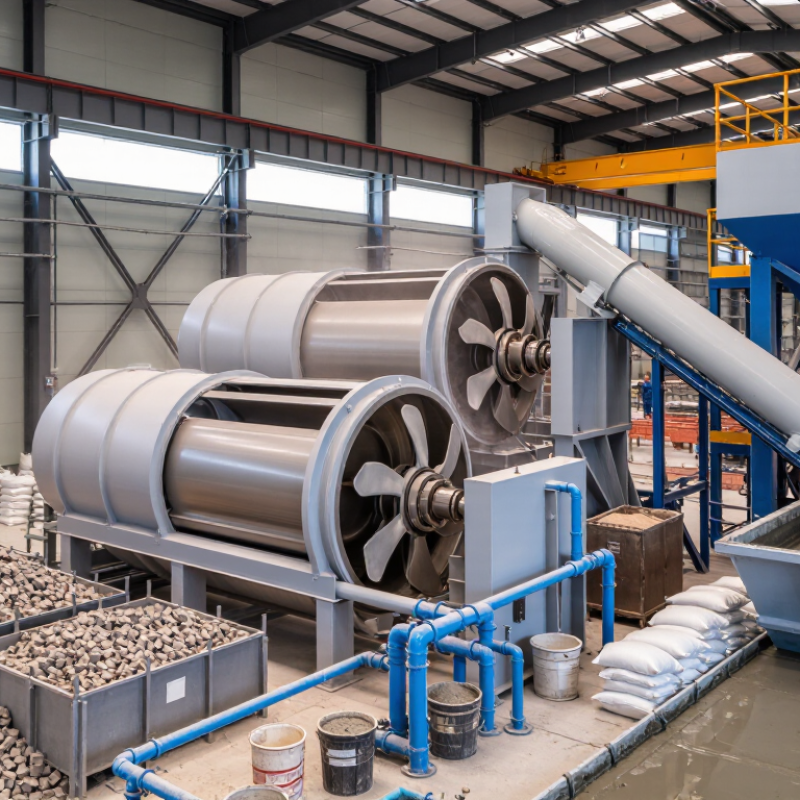
Twin Shaft Concrete Mixer: Structure and Operating Principle
Why Choose a Twin Shaft Concrete Mixer?
Twin Shaft Concrete Mixer: Structure and Operating Principle
A twin shaft concrete mixer uses two parallel shafts inside a horizontal mixing chamber. Each shaft carries several heavy-duty mixing arms and blades. The shafts rotate toward each other, creating an overlapping mixing zone. This design moves concrete upward, inward, and across the chamber. The material does not simply circle the walls.
The mixing chamber usually includes a reinforced shell, replaceable wear liners, drive units, seals, and discharge gates. Wear liners protect the chamber from abrasive sand and aggregate. Seals help prevent cement paste from entering the bearing areas. In a well-maintained machine, these parts support stable operation under demanding loads. Small alignment errors can still cause vibration. That point is easy to underestimate.
During operation, aggregate enters with cement, water, and selected additives. The counter-rotating shafts split and recombine the mixture repeatedly. This action spreads moisture across dry particles and reduces local cement pockets. The mixing effect becomes stronger as the blades pass through the center zone. Short cycles are possible, but material condition matters.
Moisture changes the result.
Too much water may create paste buildup around the blades. Too little water can leave dry corners and uneven slump. Operators should inspect blade wear, shaft seals, discharge movement, and actual mixing time. A timer alone cannot confirm uniform concrete. Listening for unusual impact sounds can reveal a problem early, although this method requires experience. Clean operation remains practical, not perfect, especially when recipes or aggregate sizes change frequently.
How Twin Shaft Mixing Produces Consistent Concrete Quality
Twin shaft mixing produces consistent concrete quality through controlled movement, not simply faster rotation. Two horizontal shafts turn in opposite directions, while overlapping paddles lift, fold, and press the materials together. This action reaches the corners of the mixing chamber and reduces dead zones where cement paste or water may collect.
The result is a more uniform coating around sand, gravel, and cement particles. Each batch can show steadier color, texture, slump, and strength potential. In practical work, operators often notice fewer dry pockets when adding water and aggregates in a measured sequence. The mixing cycle also stays relatively short, which helps maintain production efficiency without sacrificing contact between ingredients.
Still, the mixer is not magic. Poor moisture readings, worn paddles, or overloading can create uneven concrete. I have found that small maintenance issues become visible in test results before they appear in the finished surface. Regularly checking paddle clearance, weighing materials, and testing slump gives the process real control. Sampling from different parts of one batch is also useful. One sample may look perfect. That does not prove the whole batch is consistent. Twin shaft technology improves repeatability, but reliable quality still depends on disciplined operation and honest inspection.
Applications and Material Types for Twin Shaft Mixers
Twin shaft concrete mixers suit projects requiring fast, consistent blending of difficult materials. Their two synchronized shafts create strong, overlapping mixing action. This helps distribute cement, water, aggregates, and additives evenly. Contractors often use them for precast components, ready-mix production, road foundations, and large construction pours. The mixer performs especially well when production schedules are tight.
Material selection affects performance. Standard concrete usually contains sand, gravel, cement, and water. Lightweight concrete may use expanded clay, pumice, or other porous aggregates. These materials absorb water differently, so moisture control needs attention. Fiber-reinforced mixes can also run through twin shaft mixers, but fibers may clump if added too quickly. Dry stiff mixes, roller-compacted concrete, and semi-dry paving materials are common applications. Very sticky mixtures can still challenge the equipment. Real sites are rarely perfect.
Tips: Check aggregate moisture before batching. Add fibers gradually. Avoid overfilling the mixing chamber. Inspect paddles and liners regularly, especially after abrasive aggregate use. Keep a record of mixing time, water adjustments, and discharge consistency. Small changes matter. Operators should test trial batches before full production. A mix that looks uniform may still contain dry pockets. That mistake is easy to miss. Proper calibration, experienced supervision, and routine cleaning support reliable results across changing material types.
Why Choose a Twin Shaft Concrete Mixer?
Typical mixing-time ranges for common materials and applications
Twin shaft mixers are suitable for materials that require fast, intensive blending, including ready-mix concrete, roller-compacted concrete, dry mortar, soil-cement, and glass batch materials. The ranges shown are typical industrial operating values; actual mixing time depends on moisture, aggregate size, recipe, loading sequence, and required uniformity.
Factors to Consider When Choosing a Twin Shaft Mixer
Why Choose a Twin Shaft Concrete Mixer?
Factors to Consider When Choosing a Twin Shaft Mixer
A twin shaft concrete mixer suits projects needing fast, consistent blending. Its two horizontal shafts create strong counter-moving currents. This action helps coat coarse aggregate, sand, cement, and water evenly. However, output should not be the only selection factor. A larger mixer may waste energy if daily demand remains low.
Check the required batch size, mixing cycle, and installation space. Confirm that the shafts can handle your aggregate size and moisture variation. Wet, sticky materials may require different paddles or stronger cleaning routines. Motor power also matters, especially when the mix contains heavy aggregate. Ask for verified test data, not only catalog figures. I would also inspect discharge speed, access panels, and replacement-part availability. Small maintenance delays can stop an entire production line.
Tips: Compare at least three operating scenarios before choosing. Test your actual recipe when possible. Watch the discharge for dead zones and dry pockets. Review safety interlocks and emergency access carefully. Do not ignore cleaning time. It can quietly reduce daily capacity. A practical choice balances mixing quality, maintenance effort, energy use, and local service support. Some specifications look impressive, yet they may not match your site conditions.