Choosing an Exhaust End Pipe supplier involves more than comparing prices or polished product photographs. The part must fit the vehicle, resist heat and road moisture, and maintain a consistent finish. Small differences in inlet diameter, wall thickness, or outlet angle can complicate installation. Details matter.
The market backdrop is substantial, but changing. OICA reported approximately 93.5 million motor vehicles produced worldwide in 2023, while the IEA’s Global EV Outlook 2024 estimated nearly 14 million electric-car sales that year. These figures describe vehicle production and electrification—not direct exhaust-end-pipe demand. Still, they help explain why global buyers assess both established combustion-vehicle applications and shifting vehicle portfolios. The comparison is imperfect.
For this Top 10 supplier overview, buyers should examine manufacturing capability, material options, quality controls, customization, lead times, and export experience. Ask for clear drawings, dimensional tolerances, and sample parts before approving a large order. A bright chrome finish can look convincing under showroom lights; corrosion resistance and repeatable fitment matter more after months on wet roads. Supplier claims deserve verification. Request test records and traceable specifications, and confirm that products suit the intended vehicle and destination market. No single ranking can replace that work. The right supplier is the one whose documented capabilities match your application, volume, and service expectations.
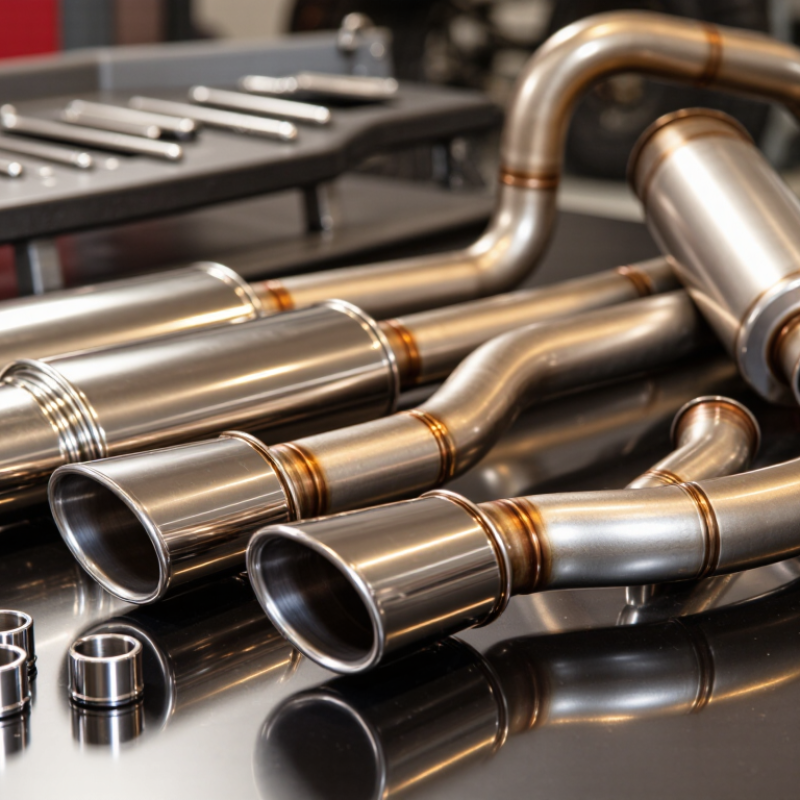
An exhaust end pipe is the final section of a vehicle’s exhaust system, directing discharged gases away from the underside and body. It is visible at the rear, but its role is functional as well as cosmetic. The pipe must tolerate heat, road spray, vibration, and repeated temperature changes. Stainless steel often offers strong corrosion resistance, while coated steel may suit applications where cost is a priority. Neither material is immune to wear. Fit matters.
End pipes are used on passenger cars, vans, trucks, motorcycles, and stationary engines such as generators. Their dimensions should match the existing system, with enough clearance from bumpers and nearby components. A poor fit can cause rattling, contact damage, or unwanted heat near body panels. Some outlets use angled or flared shapes to direct gases and manage appearance, but the end pipe alone does not control engine emissions. That work depends on the wider exhaust system. Small details count.
For buyers comparing suppliers, check material thickness, weld quality, surface finish, and compatibility with the intended vehicle or equipment. A clean finish can hide uneven joints, so inspect the connection area too. Condensation may collect inside during short trips, making drainage and corrosion resistance worth considering. There is no single best design for every use; operating conditions matter. Even careful specifications can miss real-world fit issues, so sample checks are sensible before larger orders.

Global vehicle production reached about 93.5 million units in 2023, according to OICA’s 2023 production statistics. For exhaust end pipes, that scale makes accurate fitment records essential. Ask suppliers for drawings that specify inlet diameter, overall length, wall thickness, bend angle, and mounting position. A sample should align with the vehicle’s existing exhaust without force or rattling. Check material certificates, weld consistency, corrosion-test methods, and batch traceability. Small details matter.
Material claims need evidence. World Steel Association reported 1.892 billion tonnes of crude steel production worldwide in 2023 in World Steel in Figures 2024. This is broad market context, not proof that a supplier’s pipe uses a particular grade. Request the stated alloy grade and supporting test documents. Compare production capacity, minimum order quantities, lead times, packaging, and responses to quality complaints. Ask for inspection records and relevant quality-system certifications, such as IATF 16949, where applicable. A polished sample is not enough. Suppliers may still have uneven production between batches, so trial orders and incoming checks are sensible. The paperwork can look convincing; verify it.
The ten supplier profiles represent distinct capabilities: stainless-steel tube fabrication, aluminized-steel production, mandrel bending, decorative finishing, original-equipment supply, aftermarket export, custom welding, corrosion testing, high-volume stamping, and integrated assembly. These are useful comparison categories, not a ranking. OICA reported global motor-vehicle production of about 93.5 million units in 2023, indicating the scale of the vehicle supply chain. Yet production volume alone does not reveal whether a supplier can hold consistent pipe diameter, wall thickness, and outlet angle.
Look for profile details that connect claims to production evidence. A capable supplier should share material specifications, dimensional inspection records, surface-finish options, and clear packaging requirements. Ask for a sample with a measured outlet diameter and inspect its welds and cut edge. For corrosion resistance, request the test method and result, not just a “weatherproof” claim. Small details matter. Data may vary by factory and product line, so verify the actual production site before placing a large order.
Tips: Compare at least three suppliers using the same drawing and material grade. Confirm minimum order quantity, sample lead time, and inspection fees in writing. The IEA’s Global EV Outlook 2024 reports nearly 14 million electric-car sales in 2023; this changing vehicle mix makes it sensible to check both current combustion-vehicle demand and a supplier’s plans for evolving product needs. A polished catalog is helpful, but factory evidence is better.
Comparing suppliers means looking beyond polished catalogs. OICA recorded 93.5 million motor vehicles produced worldwide in 2023, while the IEA reported nearly 14 million electric car sales that year. These figures show a large, shifting vehicle base—not a guarantee of tailpipe demand. Buyers should check whether a supplier can serve combustion, hybrid, and replacement-part needs without treating every market as identical.
Compare 409 stainless steel, 304 stainless steel, and aluminized steel against the vehicle’s climate, price target, and expected service life. Ask for material certificates, weld inspection records, dimensional tolerances, and salt-spray or vibration test methods. A reliable supplier should also explain how it controls outlet diameter, wall thickness, bend radius, and finish across repeat orders. Customization matters. Request production samples, drawing approval, minimum order quantities, and packaging details before committing. One imperfect reality: a strong sample does not prove consistent mass production.
For global buyers, comparing exhaust end pipe suppliers means looking beyond unit price. Send each candidate the same drawing, including inlet diameter, overall length, wall thickness, and finish requirements. Ask how they verify these dimensions and whether material certificates and inspection records are available. Request a production sample when possible. A clean-looking sample is useful, but it cannot prove every batch will match. Small details matter.
Before placing an order, agree on packaging, lead time, shipping responsibilities, and what happens if goods arrive damaged. Thin metal edges can scratch polished surfaces, so ask about individual sleeves, separators, and moisture protection. Confirm carton markings and document requirements with your freight partner before dispatch; small paperwork gaps can hold up a shipment. Delays happen. A polished quote can be reassuring, but I would still check capacity during peak periods and build realistic time into the schedule. One inspection may miss variation, so define an acceptable quality range and keep dated photos of approved samples. Shipping is not an afterthought. It is part of supplier selection.
| No. | Supplier Type | Common Sourcing Markets | Typical Products and Capabilities | Key Quality Checks | Shipping and Sourcing Considerations | Best Fit for Buyers |
|---|---|---|---|---|---|---|
| 1 | Automotive exhaust system manufacturers | Established automotive manufacturing regions in Asia, Europe, and North America | Production exhaust tips and end pipes; may offer formed, cut, welded, or polished parts and repeat production runs. | Confirm material grade and thickness against the order; check dimensions, fitment samples, weld consistency, and surface finish. | Request packaging dimensions early. Long or wide parts can use container space inefficiently; compare packed volume as well as unit price. | Buyers needing recurring orders, controlled specifications, and production-process documentation. |
| 2 | Stainless-steel fabrication specialists | Metalworking clusters across Asia, Europe, and North America | Custom stainless end pipes, rolled or formed sections, cut-to-length components, and welded assemblies. | Request material traceability where required; verify grade, wall thickness, cut edges, weld quality, and dimensional tolerances. | Specify whether protective film, individual sleeves, or corrosion-resistant packing is needed to prevent transit scratches. | Projects requiring custom diameters, shapes, finishes, or smaller production batches. |
| 3 | Aftermarket exhaust component suppliers | Automotive aftermarket hubs in Asia, Europe, and North America | Replacement and appearance-focused exhaust tips in common inlet sizes, shapes, and finishes. | Check inlet and outlet dimensions, attachment method, vehicle application claims, finish uniformity, and sample-to-batch consistency. | Confirm carton strength and retail packaging requirements. For vehicle-specific items, validate fitment information before ordering. | Distributors and retailers building a broad aftermarket assortment. |
| 4 | Tube and pipe processing companies | Industrial tube-processing regions worldwide | Cutting, bending, expanding, reducing, and end-forming of metal tube for exhaust applications. | Measure outside diameter, wall thickness, roundness, cut length, and end-form dimensions; inspect for burrs and deformation. | Agree on bundle size and protective caps. Bundled tube may require careful loading to avoid denting or movement in transit. | Buyers sourcing technically specified tube-based end pipes or semi-finished components. |
| 5 | Metal stamping and forming suppliers | High-volume manufacturing areas in Asia, Europe, and North America | Formed or stamped exhaust-end components, including parts produced with dedicated tooling. | Review first-article samples, critical dimensions, edge condition, forming marks, and tooling change-control procedures. | Clarify tooling ownership, storage, maintenance, and amortization in the commercial agreement before production starts. | High-volume programs with stable designs and repeat demand. |
| 6 | Welding and custom fabrication workshops | Regional fabrication centers serving domestic and export markets | Low-volume custom assemblies, welded tips, brackets, adapters, and prototype parts. | Set clear acceptance criteria for weld appearance, alignment, penetration where specified, and post-weld finishing. | Inspect a pre-shipment sample or production batch when consistency is critical; small orders may have higher per-unit freight costs. | Prototype development, special applications, and low-volume requirements. |
| 7 | Surface-finishing and polishing suppliers | Finishing and metal-processing clusters in major manufacturing regions | Polishing, brushing, passivation, and other specified surface treatments, often in partnership with a fabricator. | Define the finish by sample or written criteria; inspect for scratches, stains, uneven sheen, and handling marks. | Identify which party is responsible for finished-goods packing and damage claims when finishing and fabrication are split between suppliers. | Buyers for whom appearance and consistent surface finish are primary requirements. |
| 8 | Aluminized-steel exhaust component suppliers | Automotive and metalworking supply chains in multiple regions | Components made from aluminized steel, a coated steel option used in some exhaust applications. | Verify the specified base material and coating documentation; inspect coating damage, cut edges, forming areas, and weld zones. | Prevent moisture exposure and abrasion in packing. Confirm storage and handling requirements for the selected coating and finish. | Buyers whose application specifications permit coated steel rather than stainless steel. |
| 9 | Stainless exhaust component suppliers | Stainless-processing and automotive supply chains in Asia, Europe, and North America | End pipes made from specified stainless grades, with options such as polished, brushed, or unpolished finishes. | Do not rely on appearance alone to identify a stainless grade; request material records when needed and verify dimensions and finish. | Specify grade and finish in the purchase documents. Protect polished surfaces from contact, moisture, and packaging debris. | Applications with defined corrosion-resistance, material, or appearance requirements. |
| 10 | Export-oriented sourcing and consolidation suppliers | Major export and logistics hubs worldwide | May coordinate sourcing, supplier consolidation, inspection, export documentation, and shipment booking across multiple factories. | Establish who performs inspections and who is accountable for product specifications, nonconformities, and corrective actions. | Compare Incoterms® 2020 responsibilities, cargo dimensions, insurance arrangements, customs documents, and destination handling charges. | Buyers coordinating mixed orders, multiple factories, or international shipments without a local sourcing team. |
| Buyer note: This table compares supplier types rather than ranking or identifying individual companies. Material options, manufacturing capabilities, certifications, lead times, and export experience vary by supplier and must be verified for each quotation. Define the drawing, material grade, dimensions, finish, inspection criteria, packaging, and delivery terms in writing. Incoterms® is a registered trademark of the International Chamber of Commerce. | ||||||
