Buying steel bar stock across borders is not simply a price comparison. It is a verification exercise involving grades, dimensions, certifications, freight, customs, and delivery risk. The World Steel Association reported approximately 1.89 billion tonnes of crude steel production in 2023. That scale suggests deep supply, but it also creates inconsistent specifications and uneven supplier quality.
“Steel is essential for modern life,” says Edwin Basson, Director General of the World Steel Association. His observation explains why purchasing decisions deserve technical discipline. Steel bars may look identical on a warehouse floor, yet their chemistry, heat treatment, tolerance, and traceability can differ significantly. A small mismatch can delay machining or compromise a finished structure.
This guide presents seven practical tips for buying steel bar stock worldwide. It focuses on confirming standards, checking mill test certificates, comparing landed costs, and examining supplier experience. Reports from the World Steel Association and the OECD Steel Committee show how production scale, trade flows, and capacity pressures influence steel markets. These reports provide useful context, but they cannot replace direct documentation.
Ask for the heat number. Check the country of origin. Confirm the actual bar diameter.
No checklist removes every uncertainty. A buyer may still overlook currency exposure, port congestion, or a certificate translation error. That weakness matters. Good sourcing requires a second review, especially when purchasing alloy steel, stainless steel, or large-volume stock. The following tips are designed to make that review more consistent, measurable, and commercially realistic.
Before requesting a worldwide quotation, define the steel bar in engineering terms, not marketing language. State the grade, chemical limits, diameter or thickness, length tolerance, surface condition, and applicable standard. The World Steel Association’s 2024 World Steel in Figures reports approximately 1.89 billion tonnes of crude steel production in 2023. That volume does not make every bar interchangeable. A 20 mm reinforcing bar needs different ductility and rib geometry than a 20 mm alloy bar for a machined shaft. Write the application beside the specification. Indoor loading? Salt spray? Repeated impact? Small details matter. Do not guess.
Connect the grade to actual service conditions. For welding, verify carbon equivalent and heat-treatment requirements. For shafts, check tensile strength, hardness, fatigue resistance, and machinability. For outdoor structures, confirm corrosion exposure and coating compatibility. The International Energy Agency estimates that steelmaking produces roughly 7% of global energy-related emissions, so recycled content and production route may also affect responsible purchasing decisions. Request a mill test certificate showing heat number, chemistry, mechanical results, dimensions, and inspection standard. Compare units carefully; millimetres and inches create costly mistakes. I have seen buyers focus on price and overlook tolerance. That is an imperfect habit worth challenging. For critical components, use independent testing before shipment and verify whether the certificate matches the delivered heat.
Minimum tensile-strength values vary by standard, product form, and heat treatment. ASTM A36 and ASTM A572 Grade 50 are commonly used for structural applications, while AISI 4140 is selected for higher-strength mechanical parts. AISI 304 and 316 stainless steels are commonly specified where corrosion resistance is important. Before ordering, confirm the exact grade standard, bar diameter or thickness, length tolerance, surface condition, heat-treatment requirement, certification, and end-use environment.
When buying steel bar stock across borders, supplier qualification should begin before price comparison. ISO’s Survey 2023 recorded 1,265,216 ISO 9001 certificates worldwide. That figure shows quality systems are common, not automatically effective. Request the certificate number, issuing body, scope, and expiry date. Confirm that the scope covers steel-bar production, testing, or both. A vague certificate is a warning sign. Ask for recent audit findings, not polished brochures.
Production standards must match the bar’s service conditions. Check the exact grade, diameter tolerance, heat-treatment route, and applicable standard. Require a mill test certificate showing chemistry, tensile results, yield strength, elongation, heat number, and batch quantity. Match that heat number to the bundle tag and packing list. For higher-risk applications, request independent inspection and review sampling methods. EN 10204 3.1 documentation can support traceability, but it does not replace competent verification. Paperwork can still be wrong.
The World Steel Association reported 1.88 billion tonnes of crude steel production in 2023. Such scale increases sourcing options, but also makes consistency harder to judge. Compare two or three production lots, not one attractive sample. Check whether tests use current standard editions and calibrated equipment. Ask how nonconforming bars are isolated and recorded. Suppliers that answer precisely usually understand control. I would still verify one shipment independently; confidence should be earned, not assumed.
| Tip | Verification Dimension | What to Request | Relevant Standard or Reference | Minimum Acceptance Criteria | Practical Check | Warning Sign |
|---|---|---|---|---|---|---|
| 1 | Supplier Quality Management | Current quality-management certificate, certificate scope, issuing body, validity dates, and covered production locations. | ISO 9001:2015, where certification is required by the buyer or contract. | The certificate is valid, the scope covers steel-bar manufacturing or processing, and the listed site matches the actual production location. | Verify the certificate number and validity through the issuing certification body or its public registry. | Unverifiable certificate |
| 2 | Product Specification and Grade | Written specification identifying steel grade, product type, diameter or section size, length, dimensional tolerances, surface condition, and delivery condition. | Applicable product standard, such as ASTM A29/A29M for certain carbon and alloy steel bars, EN 10060 for hot-rolled round bars, or the purchaser's specified national standard. | The quotation and purchase order state one unambiguous standard, grade, revision, size range, and tolerance class. | Compare the supplier quotation, purchase order, drawings, and material test certificate line by line before production. | “Equivalent grade” without written comparison |
| 3 | Heat Traceability | Heat number, cast number, bundle identification, production date, quantity, and traceability procedure from raw material through shipment. | EN 10204:2004 for inspection documents; purchaser-defined traceability requirements; relevant product standard. | Every bundle or bar lot can be linked to a heat number and to the corresponding chemical and mechanical test results. | Select sample bundle numbers during pre-shipment inspection and reconcile them with the test certificate and packing list. | Mixed heats with no segregation record |
| 4 | Material Test Certificates | Mill test certificate stating heat number, chemical composition, tensile properties, yield strength, elongation, test temperature where applicable, and test results. | EN 10204 Type 3.1 for inspection certificates issued under the manufacturer's responsibility; ASTM A370 for mechanical testing methods where applicable. | Results meet the ordered grade and standard, units are clearly stated, and the certificate identifies the tested heat and product dimensions. | Check that carbon equivalent or alloy limits are evaluated when welding, forming, or service requirements make them relevant. | Certificate shows only “compliant” without numerical results |
| 5 | Testing Laboratory Competence | Laboratory accreditation details, test-method list, equipment calibration records, and laboratory reports for chemical and mechanical testing. | ISO/IEC 17025:2017 for testing-laboratory competence; ISO 6892-1 for tensile testing of metallic materials; ISO 148-1 for Charpy impact testing where required. | Testing is performed by a competent internal or external laboratory using methods required by the purchase specification. | Confirm that the accreditation scope includes the relevant test method, material range, and laboratory location. | Accreditation scope does not cover the test |
| 6 | Production and Inspection Controls | Process flow, furnace or heat-treatment records where applicable, dimensional inspection plan, surface inspection procedure, nonconformance procedure, and calibration register. | Applicable product standard and agreed inspection plan; ISO 9001 process-control principles; ISO 2859-1 may be used for lot-by-lot sampling when contractually specified. | Critical dimensions, surface condition, straightness, length, quantity, and heat treatment are inspected against documented requirements. | Use an independent pre-shipment inspection for the first order or for high-value, safety-critical, or tight-tolerance products. | No documented inspection records |
| 7 | Export, Packaging, and Delivery Compliance | Commercial invoice, packing list, country-of-origin information, transport documents, packaging specification, corrosion-protection method, and agreed Incoterms® rule. | Incoterms® 2020 for allocation of delivery responsibilities; destination-country import, customs, marking, and packaging requirements. | Documents, quantities, bundle marks, weights, and shipping terms are consistent, and packaging protects the bars against handling damage and corrosion during transit. | Confirm gross and net weights, bundle labels, moisture protection, loading photographs, and document consistency before release of payment. | Unclear responsibility for customs or damage in transit |
Global steel pricing is rarely a simple cost-per-ton figure. Compare identical grades, dimensions, tolerances, and surface finishes before requesting quotations. A 2024 World Steel Association report recorded global crude steel production at about 1.89 billion tonnes in 2023, showing the market’s enormous scale and regional variation. Prices can change with energy costs, scrap values, freight, currency movements, and import duties. Request both EXW and CIF prices. The difference may expose hidden logistics costs.
Minimum order quantities deserve equal attention. A mill may quote a lower price for a full container or several tonnes, while a service center may accept a smaller order at a premium. Ask whether the supplier can combine sizes in one shipment. Small orders cost more. Confirm bundle weight, cutting charges, packing fees, and delivery lead time in writing. Industry capacity remains uneven; the OECD Steel Committee has repeatedly highlighted global overcapacity concerns, which can create attractive offers but also unstable production schedules.
Payment terms affect the real purchase price. Compare advance payment, documentary credit, and payment after inspection, not just the percentage quoted. A lower-priced offer requiring full payment before production may create greater cash-flow exposure. Request inspection records, material certificates, and a clear claim procedure. For unfamiliar suppliers, staged payments can reduce risk, although they may increase administration. I would not treat “best price” as the best deal. My own comparison sheets sometimes miss bank charges and port storage, and those small omissions can erase the expected saving.
Map the full shipping route before comparing steel prices. Check the export port, transshipment points, destination port, and inland truck distance. UNCTAD’s Review of Maritime Transport 2024 reported 2.4% growth in maritime trade during 2023. More cargo can also mean tighter vessel space. Ask for two route options. Compare transit time, port congestion, and sailing frequency. A cheaper route may create expensive delays.
Confirm the delivery term and responsibility for each charge. Request the correct HS classification for the steel bar stock, then verify import duty, value-added tax, inspection fees, and port storage costs with a licensed customs professional. Never estimate duties from the material price alone. Include packaging, insurance, documentation, and inland delivery. The World Bank’s 2023 Logistics Performance Index used assessments from 4,090 trade professionals across 139 economies. Its focus on customs, tracking, infrastructure, and timeliness shows why price alone is a weak purchasing measure.
Build a delivery schedule with milestones: production release, vessel booking, loading, departure, arrival, customs clearance, and final delivery. Add a realistic buffer for inspections and weather. Get written updates when a milestone changes. Use tracking data, not optimistic promises. A spreadsheet can still lie. One overlooked transshipment can erase a week. Review the landed cost again before payment, and keep a backup route for urgent stock.
Global sourcing creates choice, but it also creates quality risks. The World Steel Association reported about 1.9 billion tonnes of crude steel production in 2023. That scale makes traceability essential. Before payment, request the mill test certificate, heat number, chemical composition, tensile results, and actual dimensions. Match every value against the required material standard.
A certificate alone is not proof. Ask for independent inspection when the order is critical.
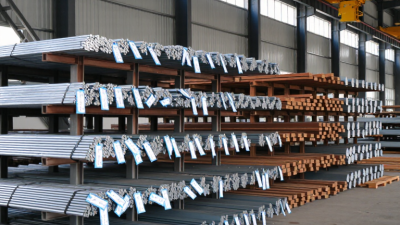
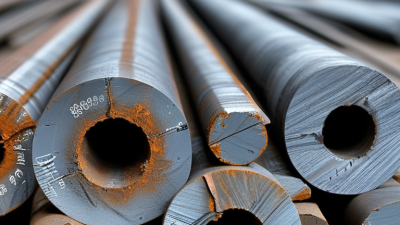
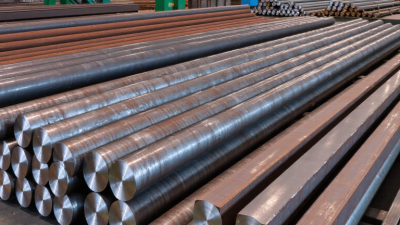
Check the bar physically, not only on paper. Measure diameter at several points with a calibrated micrometer. Look for seams, deep rust, cracks, peeling scale, and uneven ends. Confirm straightness and bundle markings. Keep photographs showing labels, measuring tools, and packing conditions.
Sampling matters. A few clean bars may hide problems in the middle of a bundle.
I once trusted a neat surface too quickly; later, the tolerance required extra machining.
Write the contract as if a dispute is likely. State grade, size, length, tolerance, surface condition, test method, quantity tolerance, packaging, delivery date, and inspection rights. Define who pays for re-testing and how rejected material is handled.
Confirm Incoterms, insurance, documents, and payment milestones in writing. The OECD Steel Committee’s 2024 analysis highlighted continuing global steel overcapacity, which can intensify price competition and inconsistent supply practices.
A low quotation deserves more questions, not immediate approval.
Recheck currency, transport charges, and import requirements before signing.