What Is Stainless Steel Wire Used For?
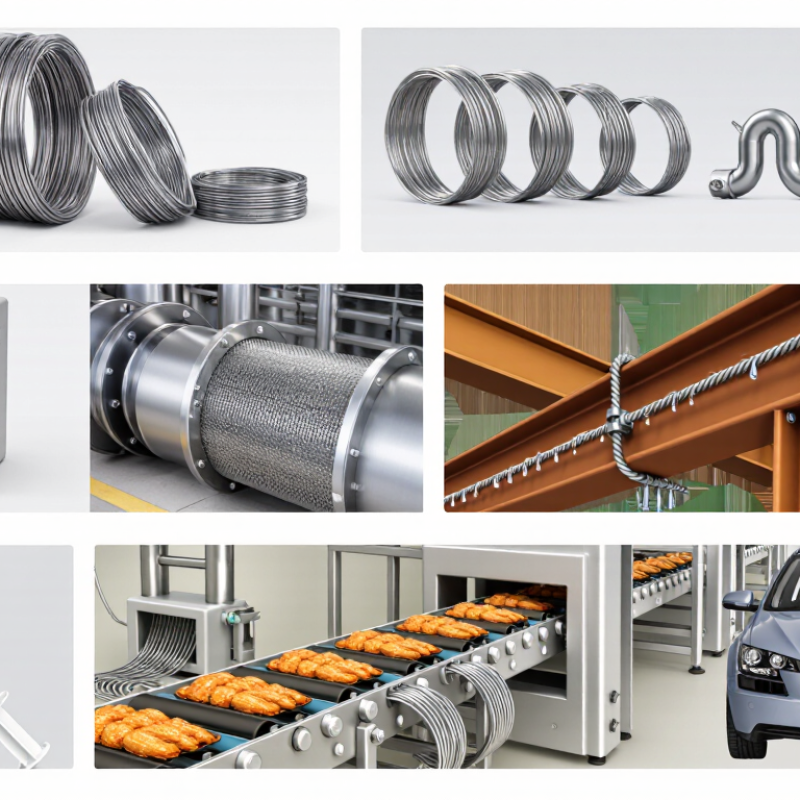
Stainless steel wire is easy to overlook, yet it supports products people handle and systems they rarely see. It can become a spring in a small appliance, a woven filter in a processing plant, or a fastener exposed to rain and road salt. Its appeal comes from a useful combination: strength, formability, and resistance to corrosion. The exact performance depends on the alloy, wire diameter, surface finish, and manufacturing process. A thin, flexible wire and a heavy reinforcing wire do very different jobs.
The wider material industry offers useful context, though not a direct measure of wire demand. worldstainless reported 58.4 million tonnes of global stainless steel melt-shop production in 2023 in its Stainless Steel in Figures 2024 report. That figure describes stainless steel overall, not wire alone. Still, it shows the scale of the material supply behind wire products used in construction, transport, medical equipment, food processing, and consumer goods. The details matter. A wire suited to a wet food-production line may not be the right choice for a high-temperature component. Buyers and engineers therefore compare grade, strength, finish, and operating conditions—not just price. Not every grade fits. This guide examines what stainless steel wire is used for, where its properties matter, and why selecting the wrong specification can lead to premature wear. It also leaves room for a practical caution: corrosion resistance is not immunity to corrosion.
What Stainless Steel Wire Is and How It Is Made
Stainless steel wire begins with an alloy containing at least 10.5% chromium by mass, according to the World Stainless Association. Chromium forms a thin protective surface layer when exposed to oxygen. Nickel and other alloying elements may be added to adjust strength, flexibility, or corrosion resistance. “Stainless” does not mean stain-proof. Salt, harsh chemicals, and neglected surfaces can still cause damage.
Making the wire involves several controlled steps. Producers melt and refine the alloy, cast it into solid shapes, then hot-roll it into wire rod. The rod is cleaned, often heat-treated, and pulled through progressively smaller dies. This drawing stage reduces its diameter and can increase strength. The finished wire may be annealed to restore flexibility or given a surface finish suited to its application. It can then be used in springs, mesh, fasteners, medical instruments, and marine fittings. The World Stainless Association reported 58.4 million tonnes of global stainless-steel crude production in 2023, reflecting the scale of the material’s industrial use.
Tip: Match wire grade and finish to the environment. For coastal use, check corrosion-resistance specifications rather than relying on the word “stainless.” Wire diameter and temper also matter: a thin, hard wire behaves very differently from a thicker, annealed one. Do not guess. Verify the supplier’s technical data sheet.
What Is Stainless Steel Wire Used For? — What Stainless Steel Wire Is and How It Is Made
| Application | Common Wire Type or Grade | Why Stainless Steel Wire Is Used | Typical Manufacturing Considerations |
|---|---|---|---|
| Wire rope, lifting slings, and rigging | Often austenitic grades such as 304 or 316; grade and construction depend on the environment and load requirements. | Offers corrosion resistance and can be formed into flexible strands. The finished rope’s capacity depends on its construction, diameter, and condition. | Wire is drawn to specified diameters, then laid into strands and rope. Finished assemblies require appropriate inspection and load ratings. |
| Welding filler wire | Filler alloys are selected to suit the stainless steel being joined; 308L- and 316L-type filler metals are common examples. | Provides a controlled filler metal for joining stainless components. The correct composition helps match the base material and service conditions. | Wire chemistry, diameter, surface cleanliness, and packaging are controlled for the welding process. Filler selection should follow the joint specification. |
| Springs and formed components | Spring-temper stainless wire may use 302, 304, or precipitation-hardening grades such as 17-7 PH, depending on design needs. | Can provide useful strength, spring response, and resistance to corrosion. Performance varies with alloy, temper, and heat treatment. | Cold drawing and tempering establish the required wire properties; forming and any subsequent heat treatment are specified for the application. |
| Wire mesh, screens, and filtration media | 304 is widely used for general environments; 316 is often considered where greater resistance to chlorides is needed. | Wire can be woven or welded into open structures that are durable and resistant to corrosion in suitable service conditions. | Wire diameter, weave, opening size, and surface condition are selected to meet the required screening or filtration function. |
| Fasteners, ties, and general-purpose wire forms | Grades such as 304 and 316 are selected according to exposure, strength, and forming requirements. | Combines formability with corrosion resistance for items such as ties, clips, and formed wire parts. | Drawing and forming processes are chosen to achieve the specified diameter, finish, and mechanical properties. |
| Medical and precision components | Specified stainless grades and finishes vary by device and intended use; material selection must meet applicable requirements. | May be used in precision wire forms where strength, dimensional consistency, and corrosion resistance are important. | Manufacturing controls can include tight dimensional tolerances, cleaning, traceability, and verification against the relevant specification. |
| Decorative and architectural applications | 304 is common for many indoor and mild outdoor uses; 316 may be selected for more demanding coastal or chloride exposure. | Provides a metallic finish and corrosion resistance, though appearance and service life depend on the environment and maintenance. | Surface finish, wire form, and grade are chosen for the design. Cleaning and appropriate maintenance help limit surface contamination. |
How it is made: Stainless steel wire is commonly produced by drawing stainless steel rod through progressively smaller dies. Depending on the product, production may also include heat treatment, descaling or pickling, lubrication, further drawing, cleaning, and inspection. The exact sequence varies by grade, wire size, and intended use. Grade examples are general guidance, not a substitute for an application-specific material specification.
Related Posts
-
How to Choose the Best Stainless Steel Wire for Your Needs?
-
10 Essential Tips for Choosing the Right Stainless Steel Wire Rod
-
How to Select the Best Stainless Steel Wire Rod for Your Project?
-
Exploring the Unique Properties and Applications of Stainless Steel Wire in Modern Manufacturing
-

2025 Top Trends in Stainless Steel Wire for Industrial Applications and Innovations
-
How to Choose the Right Stainless Steel Wire for Your Project?