Cold rolled steel is a vital material in modern manufacturing. Its strength and durability make it a top choice for various applications. Many industries, from automotive to construction, rely on cold rolled steel for its unique properties. This type of steel undergoes a specific process that enhances its hardness and finish. The result is a material that not only looks sleek but also performs exceptionally well under pressure.
However, not all manufacturers understand its full potential. Often, cold rolled steel is overlooked in favor of alternatives. There are a few drawbacks to consider. For instance, it can be more expensive compared to hot rolled steel. Sometimes, manufacturers must weigh cost against quality. Still, the benefits often outweigh the challenges. Cold rolled steel provides precision, which is critical in tight-tolerance applications.
In conclusion, cold rolled steel deserves attention. By recognizing its advantages, manufacturers can improve their products. It's essential to reflect on how this material can fit into production processes and enhance overall quality.
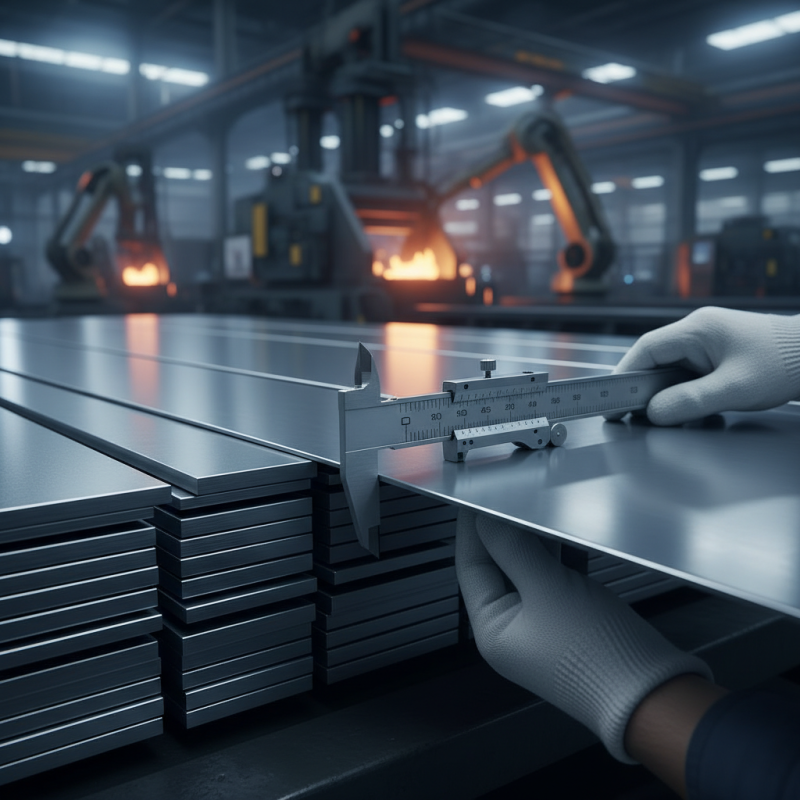
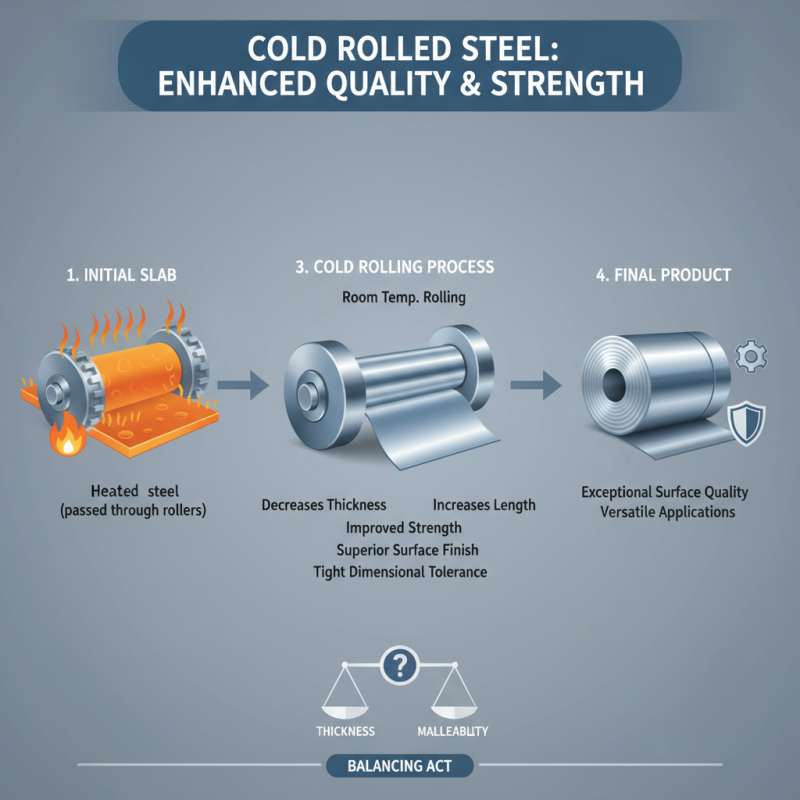
Cold rolled steel is known for its exceptional surface quality and dimensional accuracy. This steel undergoes a specialized manufacturing process that adds to its strength and durability. Initially, large steel slabs are heated and then passed through rollers at room temperature. This process decreases the thickness while increasing the length of the steel. However, achieving the right balance between thickness and malleability can be tricky.
The cold rolling process also introduces internal stresses within the material. These stresses can affect performance in various applications. While cold rolled steel often has better mechanical properties than hot rolled steel, it's essential to recognize that these internal stresses require careful handling. Engineers need to take these factors into account during design and manufacturing. The end result, when done correctly, yields a product with impressive finish and usability in products such as automotive parts and appliances.
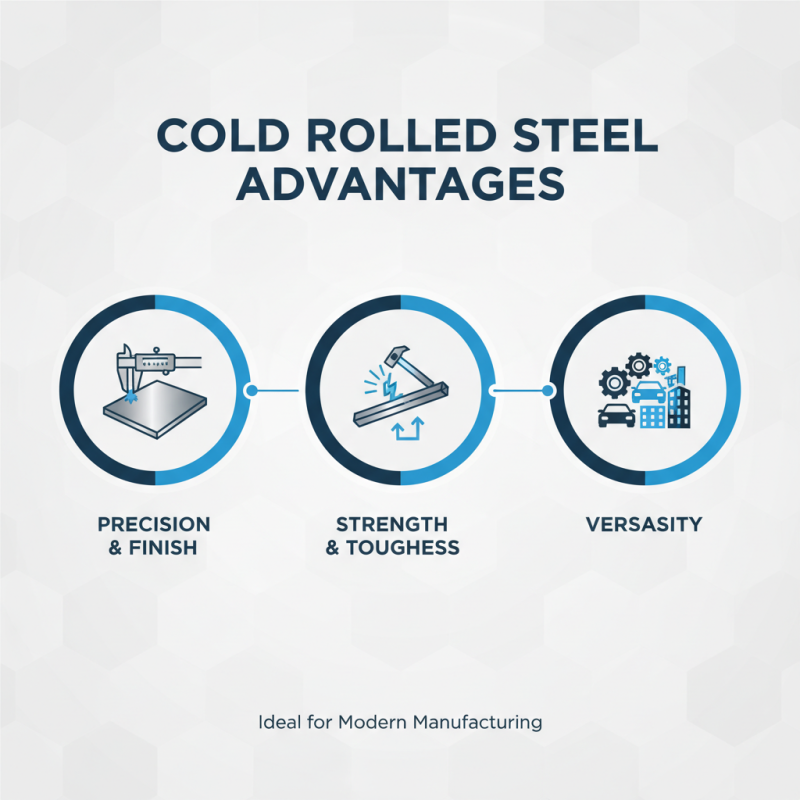
Cold rolled steel is favored in manufacturing for several reasons. Its precise dimensions and superior surface finish set it apart. The process enhances yield strength and toughness, making it robust for various applications. Manufacturers appreciate its versatility in different projects.
One key property of cold rolled steel is its excellent formability. It can be easily shaped into complex geometries without compromising strength. This flexibility reduces waste during production, but it requires skilled labor to realize its full potential. Not every factory has the resources or expertise to work with it.
Tips: Always conduct a thorough analysis of your production needs. Understand the capabilities and limitations of cold rolled steel. Also, consider factors like cost efficiency. Investing in quality can yield long-term benefits, but it may strain budgets. Balance is crucial.
Cold rolled steel is a popular choice in manufacturing due to several advantages. It undergoes processing at room temperature, which increases strength and hardness. According to industry reports, cold rolled steel can have a yield strength that is up to 20% higher than hot rolled alternatives. This makes it ideal for applications where strength is crucial.
One major advantage is its smooth surface finish. Cold rolled steel features a low roughness coefficient, which allows for better aesthetics and additional coating adherence. In contrast, hot rolled steel can present a rough texture, making it less suitable for visible applications. The tensile strength of cold rolled steel can also reach around 800 MPa, far surpassing that of hot rolled counterparts.
Tips: When selecting steel, consider the specific application needs. Cold rolled steel is great for precision work. It offers reduced product tolerances compared to hot rolled steel. Consider the trade-off: while it may be pricier, the benefit of durability may outweigh the cost.
Another aspect is manufacturability. Cold rolled steel can be easily formed into complex shapes, which saves time and resources during production. However, it can be more challenging to weld due to its increased hardness. It’s important to evaluate whether the benefits justify the need for specialized welding techniques.
Cold rolled steel is increasingly popular across many manufacturing sectors. It offers superior surface finish and tighter tolerances. This type of steel is essential in automotive, electronics, and construction industries. A study from the Steel Manufacturers Association indicates that cold rolled steel accounts for nearly 15% of total steel production in the U.S. alone.
In automotive manufacturing, cold rolled steel is often used for body panels and structural components. These parts require high strength and durability. The American Iron and Steel Institute reports that cold rolled steel enhances safety and performance in vehicles. The appliance industry also relies on its formability and aesthetic appeal. Smoother surfaces make it ideal for washing machines and refrigerators.
Challenges do exist in using cold rolled steel. It can be more expensive than hot rolled steel. This cost aspect is critical for manufacturers aiming to keep expenses down. Additionally, cold rolled steel can be susceptible to corrosion. Manufacturers must consider protective coatings to mitigate this issue. Ultimately, while cold rolled steel provides many benefits, attention to these details is crucial in production processes.
| Application Sector | Key Properties | Advantages of Cold Rolled Steel | Typical Uses |
|---|---|---|---|
| Automotive Industry | High tensile strength, smooth finish | Improved fuel efficiency, reduced weight | Body panels, frames, and components |
| Construction | Corrosion resistance, ductility | Longer lifespan, lower maintenance | Structural beams, roofing, and siding |
| Home Appliances | Excellent surface finish, formability | Aesthetic appeal, ease of manufacturing | Refrigerators, washing machines, and ovens |
| Electrical Equipment | Magnetic properties, conductivity | Improved efficiency and performance | Transformers, motors, and generators |
| Furniture Manufacturing | Aesthetic flexibility, durability | Stylish designs, long-lasting products | Tables, chairs, and shelving units |
Cold rolled steel has gained traction in various manufacturing sectors. One key reason is its cost-effectiveness. Reports have shown that cold rolled steel can reduce production costs by up to 15% compared to other steel variants. This savings stems from its improved material efficiency and less waste during processing. For manufacturers, especially those on tight budgets, this is a significant advantage.
In addition to cost savings, cold rolled steel offers versatility. It can be formed into complex shapes without sacrificing tensile strength. Data indicates that companies using cold rolled steel have reported a 20% increase in production speed. However, there are limitations to its applications. Cold rolled steel may not be suitable for all environments. For industries requiring higher corrosion resistance, alternatives might be necessary.
Another factor influencing preference is the availability of skilled labor. Cold rolled steel processing requires specific techniques. Companies often find it challenging to maintain a skilled workforce. Some might struggle with training new employees, leading to inconsistencies in product quality. This could impact overall production efficiency. Overcoming these hurdles is essential for continued success in manufacturing.