How to Choose the Right Vibratory Dryer?

Choosing the right Vibratory Dryer is a process decision, not merely an equipment purchase. Drying performance affects product quality, energy use, labor, and production continuity. Grand View Research identifies food, chemicals, and pharmaceuticals as major industrial dryer application sectors. Its market analysis also highlights growing demand for energy-efficient and automated drying systems. These trends make equipment selection more technical than it first appears.

A suitable Vibratory Dryer must match the material’s moisture level, particle size, bulk density, and heat sensitivity. Consider a wet granule stream leaving a centrifuge at 500 kilograms per hour. A dryer operating at 60°C may protect the product, while excessive heat can cause discoloration, sticking, or active-ingredient loss. Residence time, vibration amplitude, airflow, and discharge design must work together. Small details matter. A poorly sealed outlet can reintroduce moisture. A narrow inspection door can increase cleaning time.

Industry reports from MarketsandMarkets and Research and Markets consistently emphasize automation, hygienic design, and lower operating costs across industrial drying equipment. However, published market data cannot replace a controlled product trial. This is where practical experience becomes valuable. Test representative material, record inlet and outlet moisture, and measure power consumption under realistic loads. Results may challenge the initial specification. That is useful. Buyers should also review stainless-steel grades, cleanability, dust control, noise levels, maintenance access, and applicable safety requirements, including ATEX or GMP expectations where relevant. The best Vibratory Dryer is not always the fastest machine. It is the system that delivers stable moisture, gentle handling, safe operation, and measurable value over years of production.

How to Choose the Right Vibratory Dryer?

What a Vibratory Dryer Is and How It Works

How to Choose the Right Vibratory Dryer?

What a Vibratory Dryer Is and How It Works

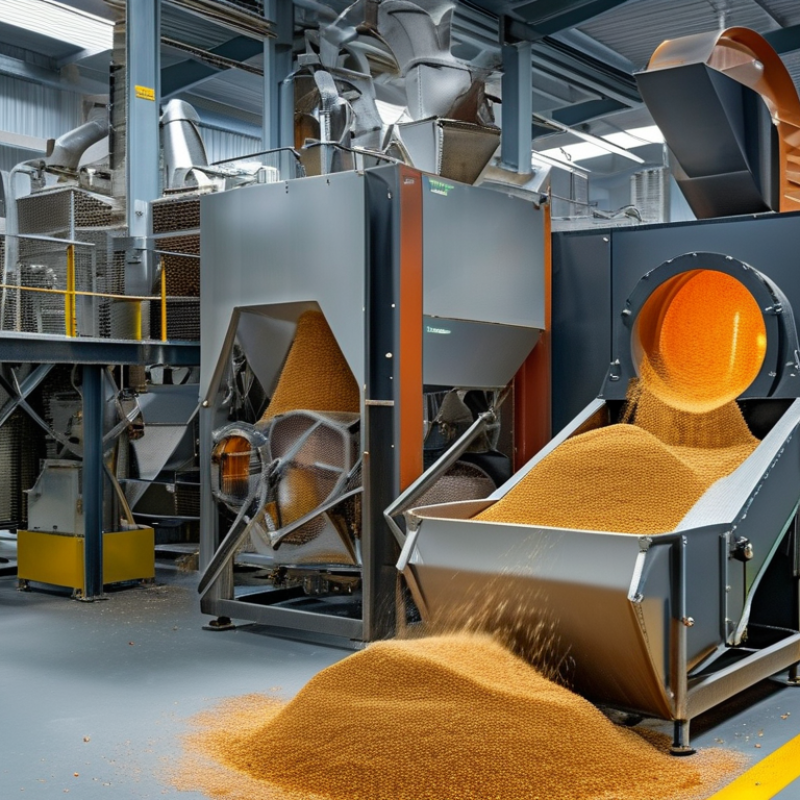
A vibratory dryer removes surface moisture while moving material across a perforated deck. Controlled vibration lifts and advances each piece in small, repeated movements. Warm air passes through the product bed and carries moisture away. The process is gentle compared with aggressive mechanical handling. It can reduce sticking, clumping, and uneven drying in many granular or particulate materials.

Drying performance depends on several linked settings. Air temperature affects moisture removal, but excessive heat may damage sensitive products. Vibration amplitude controls movement speed and bed depth. A deeper bed increases capacity, yet it can restrict airflow. Residence time also matters. If material exits too quickly, its core moisture may remain high. If it stays too long, energy use may rise without useful improvement. Operators should check inlet and outlet moisture, air pressure, product temperature, and visible movement during trials. The first setting is rarely perfect. Small changes can produce surprising results.

Tips: Begin with a moderate temperature and a thin product layer. Watch whether particles spread evenly across the deck. Clean the perforations regularly, because blocked openings reduce airflow. Test samples from different discharge points, not just one. Record each adjustment. This makes troubleshooting more reliable, although real production conditions may still require refinement. Surface appearance alone can mislead. Use moisture testing when consistent quality matters.

Which Material and Moisture Factors Matter Most

Choosing a vibratory dryer starts with the material, not the machine’s advertised capacity. Particle size, shape, bulk density, and flowability determine how evenly the bed moves. Granules may travel cleanly, while sticky flakes can form wet pockets. Fine powders may fluidize or escape with the exhaust. That difference matters.

Moisture deserves closer attention. Measure the starting moisture, target moisture, and whether water sits on the surface or inside each particle. Surface water usually leaves quickly. Bound moisture needs more heat and residence time. A heat-sensitive food ingredient may darken before its center dries. A mineral granule may tolerate stronger conditions, but excessive airflow can still carry away fines. In plant trials, operators should sample across the discharge stream, not only from the first bucket. That small habit exposes uneven drying. It is easy to miss.

Match the dryer to the material’s behavior under vibration. Test different amplitudes, frequencies, bed depths, and air temperatures using representative batches. Watch for breakage, agglomeration, dust, and changing discharge moisture. Initial calculations are useful, but they are not final truth. Material properties shift with season, supplier, and particle age. Record those changes. A reliable selection also considers cleanability, energy use, residence-time control, and safe temperature limits. Ask for measured trial data, not broad promises. Trial records should show inlet and outlet moisture, product temperature, airflow, and residence time.

How to Match Dryer Design to Production Requirements

How to Choose the Right Vibratory Dryer?

Matching dryer design to production requirements starts with the material, not the equipment catalogue. Define feed rate, moisture load, target moisture, particle size, and allowable temperature. A sticky powder may need wider vibration control and shorter residence time. Fragile granules usually require gentler movement and lower acceleration. For heat-sensitive products, indirect heating or staged air temperatures can reduce surface damage. Continuous designs suit stable, high-volume production. Batch systems offer better recipe flexibility, but often need more operator time.

Energy deserves careful attention. The U.S. Department of Energy reports that process heating represents about 51% of industrial energy use. Drying is only one part of that figure, yet poor airflow and excessive exhaust can waste substantial energy. The EU Best Available Techniques Reference Document for Food, Drink and Milk Industries also emphasizes moisture control, heat recovery, and efficient air management. Ask suppliers for measured evaporation capacity, outlet moisture variation, and energy use per kilogram of evaporated water. Marketing figures alone are not enough. The first estimate is rarely perfect.

Tips: Test your actual feed material. Record inlet moisture, particle temperature, residence time, and final moisture at several points. Check whether the dryer can handle seasonal changes. Leave space for cleaning and inspection. A small pilot trial can expose bridging, dust carryover, or uneven drying before installation. It may feel slower, but it prevents expensive redesigns. Include verified factory data, independent testing, and operator feedback in the final decision.

How to Compare Energy, Maintenance, and Operating Costs

Choosing the right vibratory dryer requires more than comparing purchase prices. Compare specific energy consumption, measured in kilowatt-hours per kilogram of water removed. The U.S. Department of Energy reports that process heating is a major industrial energy user, especially in heat-intensive plants. Therefore, test each dryer with your actual material, moisture range, and target capacity. A dryer using less heat may still perform poorly if it needs longer residence time. Small details matter.

Maintenance costs deserve equal attention. The DOE’s Operations and Maintenance Best Practices guide indicates that effective maintenance can reduce industrial energy use by approximately 5% to 20%. Ask about screen replacement, motor access, bearing life, cleaning time, and vibration inspection. Record labor hours and spare-part prices. A simple design is often cheaper over five years. Not always, though. Poor adjustment can increase noise, wear, and downtime.

Tips: Request a trial using production material. Measure inlet and outlet moisture, throughput, energy use, and cleaning time. Compare total cost per dry kilogram, not the quotation alone. ISO 50001 guidance also supports continuous energy measurement and review. Track seasonal changes, because colder feed material can increase drying demand. One overlooked issue is operator behavior. Settings are rarely perfect. Build realistic labor, electricity, maintenance, and downtime assumptions into the operating-cost model.

How to Choose the Right Vibratory Dryer? - How to Compare Energy, Maintenance, and Operating Costs

Comparison Dimension Open-Air Vibratory Fluid-Bed Dryer Enclosed Vibratory Fluid-Bed Dryer Vacuum Vibratory Dryer Selection Consideration
Typical product suitability Free-flowing granules, crystals, pellets, and particles that tolerate direct contact with heated air. Dust-sensitive, oxygen-sensitive, or contamination-controlled products requiring filtered and recirculated process air. Heat-sensitive, oxidation-sensitive, or solvent-containing products that benefit from lower drying temperatures. Start with product sensitivity, required atmosphere, and solvent-handling requirements before comparing price.
Indicative evaporation capacity Approximately 50–1,500 kg of water per hour, depending on deck area, air volume, and inlet conditions. Approximately 50–1,200 kg of water per hour, depending on air-recirculation rate and heat-recovery design. Approximately 10–500 kg of water per hour, depending on vacuum level, condenser capacity, and product behavior. Capacity must be confirmed with product moisture data and a pilot or test-bed evaluation.
Typical drying-air temperature 60–180 °C 50–160 °C 30–100 °C product-zone temperature, depending on vacuum pressure and product requirements. Use the lowest practical temperature that achieves the required final moisture and throughput.
Indicative thermal energy demand 700–1,200 kWh per tonne of water evaporated 550–950 kWh per tonne of water evaporated when air recirculation and heat recovery are properly applied. 800–1,400 kWh per tonne of water evaporated, including heating and vacuum-system losses. Actual consumption varies with feed moisture, exhaust humidity, insulation, ambient conditions, and heat-source efficiency.
Indicative electrical demand 8–25 kWh per tonne of water evaporated 12–35 kWh per tonne of water evaporated, mainly for fans, filters, controls, and air-recirculation equipment. 20–60 kWh per tonne of water evaporated, mainly for vacuum pumps, condensers, fans, and controls. Compare electricity separately from thermal energy because the local prices and carbon factors may differ significantly.
Heat-recovery potential Low to moderate; exhaust-air heat recovery can be added but may increase dust-handling complexity. High; recirculated air, exhaust-air heat exchangers, and controlled purge air can reduce thermal losses. Moderate; condenser heat may be recovered, but the useful temperature level can be limited. A heat-recovery system is most valuable where the dryer operates for many hours per year.
Main maintenance items Vibration exciter, bearings, springs, screen or perforated deck, fan, heater, seals, and dust filters. All open-air items plus recirculation fan, air-locks, higher-grade filters, dampers, ducting, and gas-tight seals. Vibration exciter, bearings, vacuum seals, condenser, vacuum pump, valves, instrumentation, and product-contact surfaces. Maintenance complexity rises with filtration, vacuum, solvent recovery, and gas-tight equipment.
Routine maintenance labor Approximately 4–8 technician-hours per operating month, excluding planned shutdowns. Approximately 6–12 technician-hours per operating month, depending on filter loading and cleaning frequency. Approximately 8–16 technician-hours per operating month, depending on vacuum-pump and condenser service needs. These are planning ranges; abrasive, sticky, or corrosive products can increase labor substantially.
Typical wear-part replacement interval Bearings and springs commonly require inspection every 3–6 months; replacement timing depends on load and vibration settings. Filters may require cleaning or replacement from weekly to quarterly; mechanical components usually follow a 3–6 month inspection cycle. Vacuum-pump service may be required every 3–12 months; seals and condenser cleanliness require regular inspection. Use the supplier’s service schedule and confirm availability of local spare parts before purchase.
Relative capital cost Low to medium Medium to high High Include fans, filters, heaters, condensers, controls, installation, utilities, and safety systems in the comparison.
Product quality and contamination control Good for products that can tolerate direct contact with ambient or filtered heated air. Very good when controlled air quality, dust containment, and reduced cross-contamination are required. Very good for oxygen-sensitive products and closed solvent recovery, provided the vacuum system is correctly designed. Validate residence-time distribution, final moisture uniformity, and product-temperature limits through testing.
Recommended operating profile High-volume, continuous operation with moderate product sensitivity and low to medium dust-control requirements. Continuous production where containment, air recirculation, and energy efficiency justify additional equipment. Batch or semi-continuous production where product quality and low-temperature drying are more important than maximum throughput. Calculate total cost of ownership using annual operating hours, energy prices, labor rates, and expected downtime.
Cost-comparison basis: The ranges above are indicative engineering values for preliminary selection only. Thermal energy is shown per tonne of water evaporated, not per tonne of wet feed. Actual results depend on feed moisture, final moisture, particle size, bed depth, inlet-air humidity, exhaust-air humidity, heat-source efficiency, product residence time, and required containment level.
Annual Cost Element Calculation Method What to Request During Supplier Evaluation
Thermal energy cost Annual tonnes of water evaporated × thermal kWh per tonne × delivered energy price. Guaranteed or tested evaporation rate, heat balance, exhaust humidity, and heat-recovery performance.
Electrical energy cost Annual operating hours × connected-load utilization × electricity price. Fan power, vibration-motor power, vacuum-pump power, heater auxiliaries, and control-system load.
Maintenance cost Technician-hours × labor rate + scheduled parts + consumables + external service. Preventive-maintenance schedule, expected wear-part life, spare-part pricing, and service response time.
Downtime and production loss Planned and unplanned downtime × contribution margin per production hour. Expected availability, changeover time, cleaning time, inspection access, and critical-component redundancy.
Total cost of ownership Capital investment + installation + utilities + maintenance + labor + downtime over the planned service life. A five- to ten-year ownership model using the same throughput, operating hours, and utility-price assumptions.

How to Validate Your Choice Through Testing and Safety Review

How to Choose the Right Vibratory Dryer?

How to Validate Your Choice Through Testing and Safety Review

A vibratory dryer should earn its place through measured testing, not attractive specifications. Begin with a representative material sample. Include variations in moisture, particle size, and feed rate. Small differences can change drying performance significantly.

Record inlet temperature, outlet temperature, residence time, vibration amplitude, airflow, and final moisture.

Check product uniformity at several discharge points. Watch for buildup around corners and screens. It often reveals design weaknesses. One short trial is rarely enough. Repeat tests under normal and demanding conditions. A qualified engineer should review the results and confirm that the measurements are reliable.

Safety testing must involve real operators and realistic maintenance tasks. Inspect guards, access doors, emergency stops, electrical grounding, hot surfaces, and dust-control measures. Confirm that interlocks prevent unsafe operation. Measure noise and surface temperatures near routine work areas. Ask operators how they would clear a blockage. Their answers may expose risks that drawings miss. Lockout procedures should be practical, visible, and tested.

Document every assumption, failure, and adjustment. Do not hide an unstable feed rate or an incomplete trial. I have seen promising results change after cleaning intervals were added. That is not a failure; it is useful evidence. A final decision should connect test data, risk controls, maintenance needs, and operating limits. Get independent review when the process involves heat, combustible dust, or complex automation.