How to Choose the Right Stainless Steel Wire for Your Project?
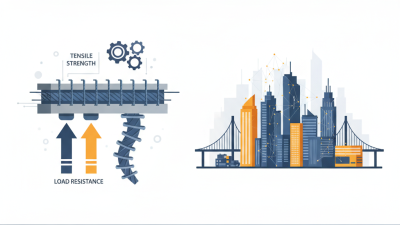
When embarking on a project, selecting the right stainless steel wire is crucial. Many factors come into play. These include diameter, tensile strength, and corrosion resistance. Each of these aspects impacts the final outcome.
For instance, not all stainless steel wires are identical. Some may work better in specific environments. The wrong choice can lead to project failures. Consider the wire's purpose before making a decision. Will it be exposed to harsh chemicals? Or will it be used in a structural application?
It's also important to note that price does not always indicate quality. Some of the cheapest options may disappoint. Balancing cost and quality is essential for any project. As you weigh your options, ask yourself if the choice aligns with your project goals. Think about these details carefully. The right stainless steel wire can make all the difference.
Understanding Stainless Steel Wire Types and Grades
When selecting stainless steel wire, understanding the types and grades is crucial. Stainless steel comes in various classifications, each serving a different purpose.
For instance, type 304 is widely used for its corrosion resistance, effective in various environments. Type 316, on the other hand, provides better resistance against saltwater, making it ideal for marine applications.
Grades indicate the alloy content. Higher nickel content typically offers improved strength and ductility. However, this can also affect the cost. While selecting a wire, consider your project's specific needs. Will it be exposed to harsh conditions? Think about potential wear and tear. Sometimes, opting for a less expensive grade may lead to future complications.
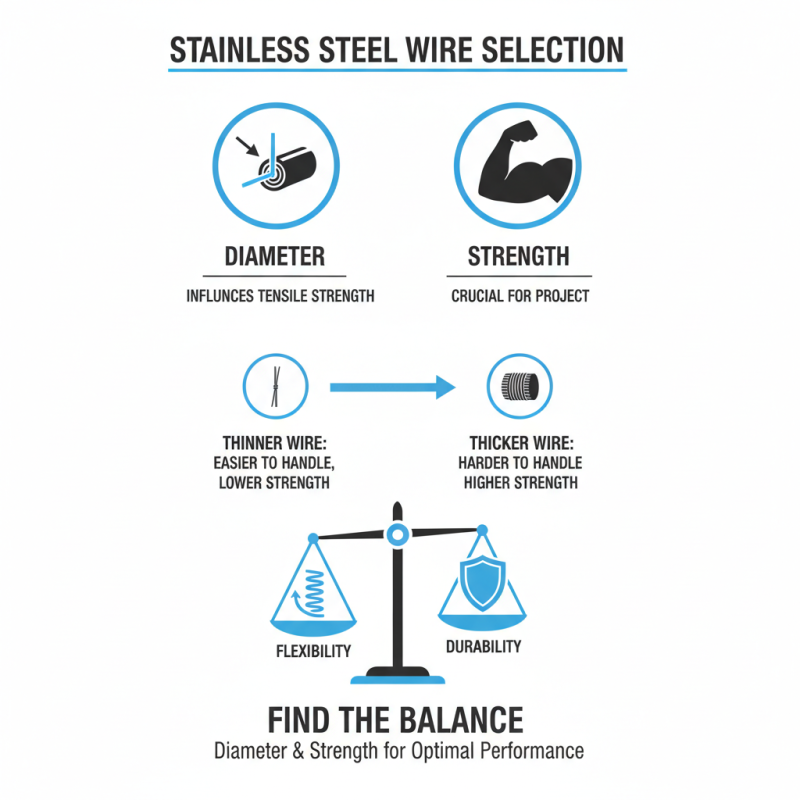
One common mistake is overlooking wire diameter. Thinner wires are easier to work with, but they can lack durability. Meanwhile, thicker wires may be more robust but can be challenging to manipulate. Don’t rush the decision. Ensure you weigh all factors, including application, environment, and longevity. Reflecting on your choices can lead to a more successful outcome.
Key Factors to Consider for Project Requirements
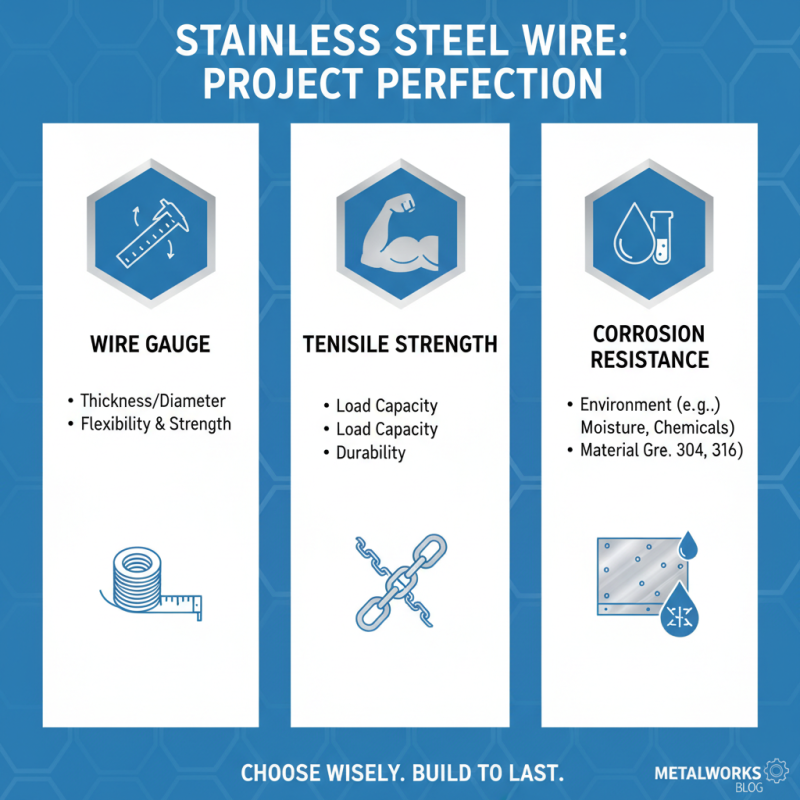
Choosing the right stainless steel wire for your project can be challenging. Consider the specific requirements of your application. Different projects may demand different wire gauges, tensile strength, and corrosion resistance.
Wire gauge is crucial. Thicker wires handle more load, while thinner options provide flexibility. Knowing the proper gauge ensures your project is safe and functional. Corrosion resistance is another key factor. In environments with moisture or chemicals, select stainless steel with adequate protection to prevent rust.
Another consideration is the wire's finish. A polished finish may be desirable for aesthetics, while a matte finish could enhance grip or reduce glare. Each project has unique needs, and overlooking these details can lead to issues. Ensure you weigh all options carefully. Making the wrong choice could be costly and time-consuming.
Evaluating Wire Diameter and Strength for Applications
When selecting stainless steel wire, evaluating the diameter and strength is crucial for your project. The wire diameter influences the wire's tensile strength. A thinner wire may be easier to handle, but it can compromise strength. It is essential to strike a balance between flexibility and durability.
Different applications require varying strengths. For instance, wire used in construction must withstand more stress than that used in art projects. You might find that a diameter of 0.5 mm works for lighter tasks, while something closer to 2 mm is better for heavy-duty use. It's important to consider the context of your project carefully.
However, choosing the right wire can be challenging. What might seem sufficient in one scenario could fall short in another. Don’t hesitate to purchase samples to test the wire in real conditions. This can save you from making costly mistakes. Reflecting on past experiences can also guide your choices, as every project holds lessons worth revisiting.
Comparing Different Coating and Finish Options
When selecting stainless steel wire, coating and finish options play a crucial role. Different projects require different qualities. Understanding these options helps ensure quality and longevity.
Electroplating is a common choice. It offers a shiny look and increases corrosion resistance. However, the plating can wear off over time. For projects exposed to harsh chemicals, consider a vinyl coating. This option provides an additional layer of protection, though it might not be as aesthetically pleasing.
Tips: Always think about your project’s environment. A finish that works in one setting might fail in another. If the wire is for outdoor use, prioritize UV protection.
Additionally, powder coating is another effective option. It adds color and durability. Yet, the application process can be inconsistent. Revisit your choice after considering both aesthetics and functionality. Ensuring a harmonious balance between looks and performance is key.
Assessing Costs and Availability for Your Project Needs
When selecting the right stainless steel wire, cost and availability are key considerations. According to a recent industry report, stainless steel prices fluctuate significantly based on market conditions. Prices can vary from $1,800 to $3,500 per ton, influenced by global demand and material scarcity. This means that assessing costs early in your project can prevent budget overruns.
Availability also impacts project timelines. Reports indicate that lead times for stainless steel wire can range from two weeks to several months. Factors include production rates and shipping constraints. During peak demand periods, such as construction booms, delays can be exacerbated. This can lead to decisions being rushed, potentially compromising quality or specifications.
It's vital to evaluate local suppliers for better availability. Regional markets may offer competitive pricing, reducing shipping costs. Still, it's crucial to analyze their inventory regularly. Lack of stock can be a red flag. If suppliers can’t meet your needs consistently, it may cause project disruptions. Make sure to weigh these elements carefully to ensure a successful outcome.
How to Choose the Right Stainless Steel Wire for Your Project? - Assessing Costs and Availability for Your Project Needs
| Wire Type |
Diameter (mm) |
Strength (N/mm²) |
Price ($ per kg) |
Availability (weeks) |
| AISI 304 |
1.0 |
600 |
3.50 |
2 |
| AISI 316 |
1.5 |
580 |
4.00 |
3 |
| AISI 430 |
0.8 |
450 |
2.80 |
1 |
| AISI 301 |
1.2 |
550 |
3.00 |
4 |
| AISI 420 |
1.0 |
700 |
3.75 |
5 |