How to Choose the Best Injection Molding Die in China?
Choosing the right Injection Molding Die in China can shape your product’s quality, cost, and delivery schedule. It is not simply a matter of comparing quotations. A die that looks affordable may require frequent repairs, longer cycle times, or expensive design changes later.
Practical evaluation starts with the part itself. Review its material, wall thickness, surface finish, draft angles, and expected production volume. Ask whether the supplier has experience with similar components. Request mold-flow analysis, steel specifications, cooling-channel layouts, and trial-shot reports. These details reveal more than polished factory photographs. A reliable manufacturer should explain tolerances clearly and identify risks before production begins. It should also provide inspection records, maintenance guidance, and transparent project milestones.
Look closely at the workshop. Check machining equipment, measurement systems, assembly areas, and quality-control procedures. Confirm how the supplier handles design revisions, spare parts, and after-sales support. Independent audits and verified customer references can strengthen your decision. However, no supplier is perfect. Communication may still fail, and early samples may expose overlooked issues. That is why staged approvals matter. Test the first trial parts under realistic production conditions, not only in a conference room.
The best Injection Molding Die is the one that remains stable after repeated cycles. It should match your product goals, budget, material, and compliance requirements. Careful questions protect the investment. Shortcuts often become visible later.
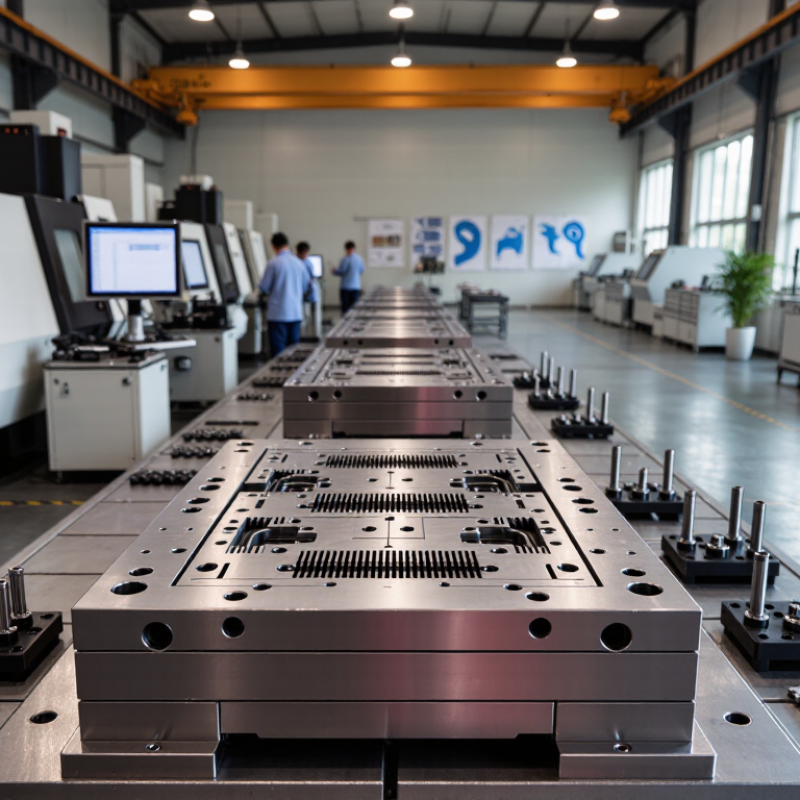
Understanding Injection Molding Dies and Their Applications
Choosing the best injection molding die in China starts with understanding its function, not its quotation. An injection molding die, commonly called a mold, shapes molten polymer inside a cavity under pressure. Two-plate molds suit many simple parts. Three-plate designs offer more flexible gating. Hot-runner systems reduce runner waste, while cold-runner tools are often easier to maintain. Fit matters. PlasticsEurope reported 400.3 million tonnes of global plastics production in 2022, with China contributing roughly 32 percent. This scale supports applications ranging from thin-wall packaging to automotive clips and medical housings.
Application defines the die architecture. A cosmetic cover may need polished steel and controlled ejection. A glass-filled structural component requires wear-resistant inserts, balanced cooling, and stronger support. For high-volume parts, a hot runner can shorten cycles but adds temperature-control points and maintenance risks. For short runs, a cold runner may be financially wiser. Ask for mold-flow analysis, cavity-pressure data, steel certificates, and dimensional results from trial shots. ISO 20430:2020 provides relevant safety requirements for injection molding machines. It does not replace a complete mold-validation plan. That distinction is easy to miss.
Professional selection also examines cooling-channel layout, vent depth, parting-line marks, spare inserts, and repair response. Request a written shot-life estimate based on resin, cycle time, and maintenance conditions. A low initial price can hide poor polishing limits or difficult disassembly. A recurring lesson in mold reviews is that “standard” designs may need costly changes after sampling. Treat the first trial as evidence, not ceremony. Measure warpage, flash, gate vestige, and cycle stability before approving production.
How to Choose the Best Injection Molding Die in China?
Understanding Injection Molding Dies and Their Applications
How to read this chart: Thermal conductivity influences mold cooling efficiency and cycle time. Aluminum and copper-alloy inserts transfer heat faster, while P20, H13, and stainless mold steels generally provide greater durability and wear resistance. The best die material depends on production volume, part geometry, surface requirements, corrosion risk, and budget.
Values shown are representative room-temperature thermal-conductivity figures in W/m·K. Actual values vary by grade, heat treatment, and supplier specification.
Defining Product Requirements and Die Specifications
Choosing the best injection molding die in China starts with a precise product requirement, not a supplier’s catalog.
In practical mold reviews, I define the resin grade, shrinkage rate, part dimensions, tolerance, surface finish, annual volume, and target cycle time. PlasticsEurope reported 413.8 million tonnes of global plastics production in 2023. That scale increases pressure on cost, repeatability, and material efficiency. A vague requirement can create expensive changes later. It happens more often than teams admit.
The die specification should match the product and the molding machine. Record the tie-bar spacing, maximum mold thickness, injection volume, and ejector stroke. Then select the cavity count. For 600,000 parts yearly, a four-cavity mold may reduce cycle pressure, but it also increases balancing risks. One detail matters greatly: the approved resin grade. Different grades may change shrinkage, cooling behavior, and gate design. Small omission. Big consequence.
Use ISO 20457 as a reference for plastic molded-part tolerances, while confirming stricter requirements with the customer. Specify steel hardness, cooling-channel diameter, gate location, ejection method, and expected mold life. A mold-flow analysis can reveal weld lines, air traps, and uneven filling before steel cutting. It is not perfect, though. Real production may expose cooling limits that simulations miss. Require trial-shot records, dimensional inspection data, and clear acceptance criteria. Photos alone are weak evidence.
Inspecting, Testing, and Maintaining the Selected Injection Molding Die
Selecting an injection molding die in China is only half the decision. Inspection and testing reveal whether the tool will remain stable after shipment. Grand View Research valued the global injection molding machine market at approximately USD 19.2 billion in 2023, showing the scale of production behind these tools. However, market growth does not guarantee die quality.
During a shop trial, inspect the parting line, ejector pins, cooling channels, vents, and cavity surfaces. Look for flash, drag marks, uneven gloss, and trapped air. Measure critical dimensions across at least 30 consecutive shots.
A process capability target of Cpk 1.33 is widely used for stable production, but it should match the customer’s specification. Check cavity balance, cycle time, mold temperature, and injection pressure. Small deviations matter. Sometimes, the first trial looks perfect.
Request steel certificates, hardness records, electrode reports, and a complete dimensional inspection report. ISO 20430:2020 provides useful guidance for injection molding machine safety, but it does not replace a practical die acceptance test. Maintenance records should define cleaning frequency, lubricant type, water-quality checks, and spare-part limits. For example, clogged cooling channels can increase cycle time and create warpage. In my experience, many failures begin with neglected vents, not dramatic structural damage. The uncomfortable lesson is simple: a lower purchase price may hide higher maintenance labor. Recheck the die after transport, because vibration and humidity can expose weaknesses missed during factory testing.