Best Industrial Steel Grades for Your Next Project?
When considering an industrial steel project, making the right choice of material is crucial. The type of steel you choose will directly impact the quality and durability of your work. Industrial steel comes in various grades, each with unique properties tailored for specific applications. Understanding these grades helps optimize performance and safety in your projects.
In the construction and manufacturing sectors, industrial steel is a backbone material. Its strength and versatility make it a popular choice. However, selecting the best grade requires careful consideration. Each project has unique requirements. Factors like load capacity, corrosion resistance, and weldability must be analyzed. Sometimes, what's readily available may not be the best fit for your needs.
Moreover, not all suppliers offer the same quality of industrial steel. It's essential to do thorough research. Understand the typical uses for each grade. This will help you reflect on the best choice for your specific project. In the end, the goal is to ensure that your project stands the test of time while being cost-effective. Choosing wisely is not just about the product itself, but also about your project’s long-term success.
Understanding Industrial Steel Grades and Their Importance
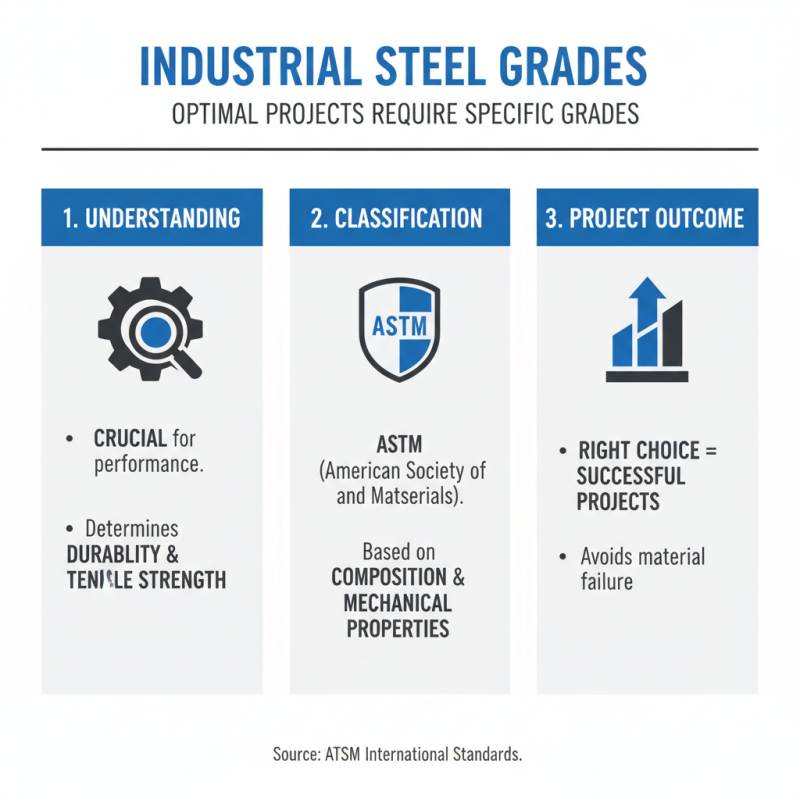
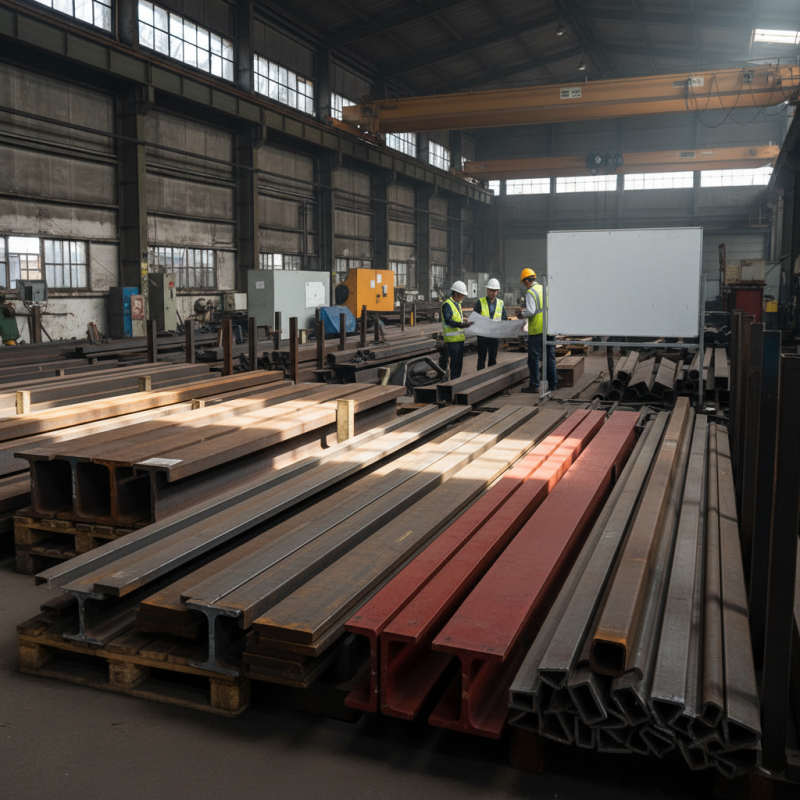
When engaging in industrial steel projects, understanding steel grades is crucial. Different projects require specific grades for optimal performance. For instance, the American Society for Testing and Materials (ASTM) classifies steel grades based on composition and mechanical properties. This classification influences durability and tensile strength. The right choice significantly affects project outcomes.
A report by the Steel Construction Institute shows that selecting appropriate steel grades can reduce costs by up to 15%. Missteps in choosing grades can lead to structural failures. A project using low-quality steel might seem economical upfront but can incur higher repair costs. This highlights the importance of thorough research before making decisions.
It’s also essential to consider environmental factors. Not all steel grades perform well under extreme weather conditions. Additionally, some industries require specific certifications for steel. Failure to comply can result in project delays and losses. Understanding these critical aspects will ultimately lead to more informed decisions and successful project completions.
Common Types of Steel Grades Used in Industrial Applications
When discussing industrial applications, steel grades play a crucial role. The most common types include
carbon steel,
stainless steel, and
alloy steel.
Carbon steel is favored for its strength and versatility. According to industry reports, it accounts for nearly 70% of all steel production.
Stainless steel, known for its corrosion resistance, is vital in food processing and medical applications. It typically represents about
10-20% of total consumption in industrial settings.
Alloy steel combines different elements to enhance specific properties. It often contains
chromium,
nickel, or
molybdenum. These additions improve toughness and strength. Reports indicate that alloy steel
can increase durability by up to 30% compared to carbon steel. However, choosing the right grade can be challenging.
Many projects face issues due to improper selection, resulting in increased costs and delays. Understanding the unique properties of each steel type is essential for optimizing performance and longevity in applications.
The decision-making process often requires careful reflection and analysis of project needs.
Key Properties of Steel Grades for Structural Integrity and Durability
When selecting the best steel grades for industrial projects, structural integrity is crucial. Steel grades such as S235, S275, and S355 are commonly used. Each grade has varying yield strengths, which significantly impact durability. For instance, S235 offers a yield strength of 235 MPa, while S355 provides 355 MPa. This difference means S355 can handle more stress, making it ideal for heavy construction.
Corrosion resistance is another vital property. Steel can corrode in harsh environments, leading to structural failure. Data from the American Institute of Steel Construction indicates that adding alloying elements can enhance corrosion resistance significantly. For example, weathering steel grades contain copper and chromium, which can improve lifespan in outdoor applications. However, using these materials also requires careful analysis, as improper choices can increase maintenance costs.
Weldability is an important factor too. Some steel grades are not suitable for welding processes, which can limit design options. A report from the Canadian Centre for Welding and Joining notes that low-carbon steels are typically more weldable. Nonetheless, high-strength steels can lead to brittle fractures if not handled correctly. Understanding each steel grade's properties is essential for achieving optimal results in structural applications.
Best Industrial Steel Grades for Your Next Project
This chart illustrates the tensile strength of various industrial steel grades, showing their suitability for different construction projects based on structural integrity and durability requirements.
Factors to Consider When Choosing Steel Grades for Projects
Choosing the right steel grade for your project is crucial. The selection process should be informed by various factors. The type of project, load requirements, and environmental conditions all play a role. Understanding these aspects helps in making an informed decision.
One important tip is to assess the mechanical properties of the steel. Tensile strength, yield strength, and ductility are key. Higher tensile strength often leads to better performance under stress. However, not all projects require the highest strength. Consider your specific use case to avoid overspending on unnecessary grades.
Another factor involves the welding and machining characteristics. Some steel grades are easier to work with than others. For example, stainless steel may be more resistant to corrosion. Yet, it can be harder to weld. Weigh the pros and cons carefully. Think about the tools and skills available to you. Sometimes, a simpler grade is more effective than one with superior characteristics.
Best Industrial Steel Grades for Your Next Project
| Steel Grade |
Tensile Strength (MPa) |
Yield Strength (MPa) |
Elongation (%) |
Applications |
| A36 |
400-550 |
250-400 |
20 |
Construction, Structural beams |
| S235 |
360-510 |
235 |
26 |
General fabrication, Engineering |
| 304 Stainless Steel |
520 |
215 |
55 |
Food processing, Chemical equipment |
| A572 Grade 50 |
450-620 |
345 |
21 |
Bridge, Heavy construction |
| EN10025 S355 |
470-630 |
355 |
22 |
Construction, Machinery |
Application-Specific Steel Grades: Matching Grade to Project Needs
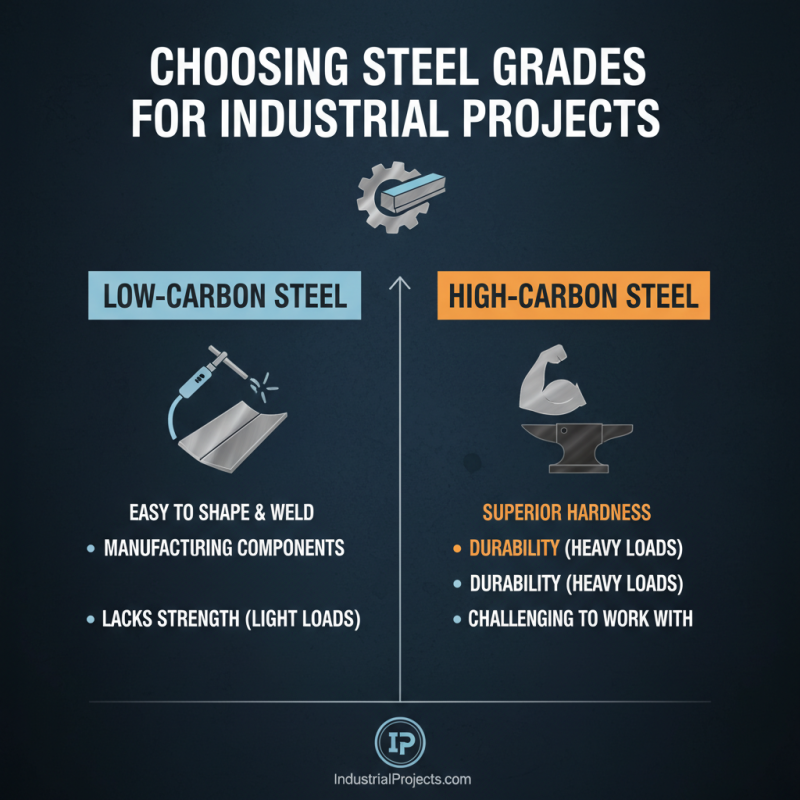
Choosing the right steel grade is crucial for your industrial project. Different applications require different strengths and properties. For example, low-carbon steel is often used for manufacturing components. It is easy to weld and shape, but lacks the strength needed for heavy loads. If your project demands durability, consider using high-carbon steel. It offers superior hardness, though it can be challenging to work with.
Other options include stainless steel grades, which resist corrosion effectively. This makes them ideal for projects in harsh environments. However, they can be more expensive and are harder to machine. It’s important to balance performance and cost when selecting a grade.
Sometimes, the choices can feel overwhelming. You might wonder if you selected the best option. Testing materials can be costly and time-consuming. It is essential to ask for feedback from those who use the material in real situations. Engaging with industry experts can provide valuable insights. Always evaluate if your steel choice aligns with the project's goals.