10 Best Hot Rolled Steel Suppliers for Global Buyers
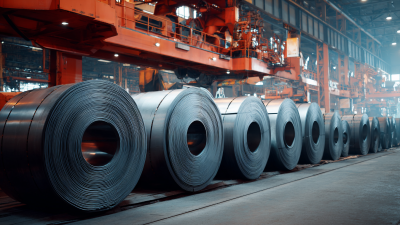
Choosing a global supplier is not just a price comparison. Hot rolled steel buyers must weigh grade availability, dimensional consistency, documentation, and delivery reliability. A low quotation can lose its appeal if coils arrive late or thickness varies beyond the buyer’s needs. Small details matter.
A useful materials-science perspective comes from William D. Callister Jr., a materials scientist and textbook author. Paraphrasing his teaching: “Processing shapes structure, and structure influences performance.” That principle helps explain why buyers should ask how steel is produced, tested, and documented—not only what it costs. Request current mill test certificates, confirm the applicable grade and tolerances, and check coil or plate dimensions against the intended fabrication process. Clear answers are a good sign. Vague promises are not.
This guide to the 10 best hot rolled steel suppliers for global buyers compares practical factors, including product range, export experience, quality controls, logistics, and customer support. It also recognizes that supplier fit depends on the order: a construction project, a machinery component, and a large-volume distributor may need different strengths. Regional stock, port access, and communication across time zones can shape the outcome. No ranking can replace direct verification. Even a reputable supplier may not suit every specification or schedule. That is worth keeping in mind.
Global Steel Context: 1,888.2 Mt of Crude Steel Produced in 2023
Global crude steel production reached 1,888.2 million metric tons in 2023, a striking measure of the industry’s scale. That is enormous. Yet this figure covers crude steel, not finished hot rolled coil or plate. Buyers should not treat it as a direct measure of available supply.
For global purchasing teams, the number offers useful context. Steelmaking is widespread, but supply depends on product grade, thickness, width, delivery schedule, and regional logistics. A supplier’s stated capacity may not reflect current availability. Ask for recent production details, realistic lead times, and inspection documents such as mill test certificates. Check that the stated dimensions and mechanical properties match the intended application.
Small details matter. A coil arriving with inconsistent thickness can disrupt a production line, even when its quoted price looks attractive. Compare suppliers on specification control, packaging, port access, and how they handle claims. Even experienced buyers can overlook the cost of inland transport or delays at transshipment ports. I would still leave room for uncertainty: market totals cannot tell you how reliable one shipment will be. Judge each offer on verifiable product data and delivery commitments.
How Buyers Compare Hot-Rolled Steel Suppliers: Grades, Capacity, and Delivery
When comparing hot-rolled steel suppliers, start with the grades your project actually needs. A structural frame, pressure vessel, and general fabrication job may require different strength, chemistry, and testing requirements. Ask for the applicable grade designation and a recent mill test certificate. Check that heat numbers on the certificate match the material labels. Small mismatches matter.
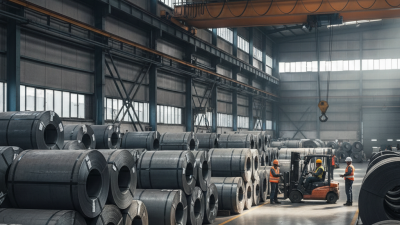
Then look beyond the supplier’s headline capacity. Ask how much material is available in your required thickness, width, and coil or sheet format. A supplier may have high monthly output but limited stock in a less common size. Confirm minimum order quantities and whether production can be scheduled around your forecast. I still find this easy to overlook.
Delivery estimates need the same scrutiny. Request a realistic lead time that separates production, inspection, and shipping. For overseas orders, confirm loading ports, packaging, and how shipment updates are shared. Ask what happens if a vessel is delayed or the delivered dimensions differ from the order. Get key specifications and delivery terms in writing. A quick quote is not a delivery plan. Good comparisons include price, but also document control, communication, and the supplier’s ability to resolve a discrepancy without leaving your project waiting.
Major Suppliers: ArcelorMittal, Baowu, Nippon Steel, POSCO, and Tata Steel
Global buyers often compare large integrated steelmakers when sourcing hot-rolled coil and plate. These suppliers can offer broad product ranges, substantial production capacity, and established export networks. Their scale may help buyers secure repeat orders, but availability still depends on grade, thickness, mill schedules, and delivery region. A supplier’s size is only one part of the decision.
Request specifications that match the intended use, such as steel grade, width, thickness tolerance, and surface condition. Review the mill test certificate and confirm how heat numbers connect to the delivered coils. Ask for realistic lead times and packaging details; a wet, poorly protected coil can arrive with avoidable surface problems. Compare freight terms and port access, too. A low quoted price may not reflect the landed cost.
Keep a record of any trial order, including edge condition and flatness after processing. Small defects matter.
One caution: paperwork can look complete while practical service remains uneven. A large supplier is not automatically the right fit. Check the details, and leave room to revise your assumptions.
Further Global Suppliers: JFE Steel, JSW Steel, SSAB, Nucor, and thyssenkrupp
For global buyers, supplier choice should match the mill’s strengths to the job: coil width, grade, thickness tolerance, and delivery route all matter. Japan-based producers offer established export experience, while India’s fast-growing steel sector adds scale and expanding supply options. World Steel Association’s World Steel in Figures 2024 reports 2023 crude-steel output of 87.0 million tonnes for Japan and 140.2 million tonnes for India. These are national totals, not individual mill capacities. Check each quotation against the actual production site.
Swedish producers are worth evaluating when a project needs high-strength or specialized grades; confirm availability, certification, and lead time for the exact hot-rolled specification. In the United States, large domestic producers can reduce ocean-freight exposure for North American buyers. The same report records 80.7 million tonnes of U.S. crude-steel output in 2023. Still, high national output does not guarantee the required coil is in stock. Ask for a current mill test certificate and a sample packing list.
German suppliers can suit buyers seeking European production and established technical documentation. Germany produced 35.4 million tonnes of crude steel in 2023, according to the same report. Compare offers using the same grade standard, dimensions, and Incoterm; otherwise, a low price may hide different freight or processing costs. A small detail matters: edge condition can affect cutting yield. Published product ranges are useful, but they can leave gaps. Request written confirmation before placing a trial order.
Technical Benchmarks: ASTM A36 at 36 ksi and EN S355 at 355 MPa Yield
Yield strength is a useful starting point, not a complete buying specification. ASTM A36 commonly carries a 36 ksi minimum yield strength, about 250 MPa, within applicable thickness limits. EN S355 specifies 355 MPa for product thicknesses up to 16 mm. Thickness matters. Above that range, the standard’s thickness table may set a lower minimum. Buyers comparing the grades should check the actual dimensions, not just the grade names.
These values describe the point where steel begins to deform permanently under load. They do not establish identical performance. Tensile strength, elongation, impact toughness, and weldability also affect whether a plate or beam suits its intended service.
A mill test certificate should state the standard, grade, thickness, heat number, and reported test results. Check that the certificate matches the markings on the delivered material.
A practical inquiry specifies the required yield strength alongside thickness, dimensions, and any impact-test temperature. Ask how substitutions will be reviewed before shipment. It is easy to overlook thickness-related limits when a quotation lists only “S355” or “A36.” That shorthand may be convenient, but it leaves room for a costly mismatch. I would also verify the standard edition and product form; these details are not always clear in a brief quote.